
Lapušnja Monastery
Lapušnja Monastery is a Serbian Orthodox monastery located on the slopes of Rtanj mountain, near the village of Lukovo. Founded in 1500/1501 by Duke Jovan Radul and Prefect Gergina, its church of St. Nicholas was painted in 1510. Although it fell into ruin over centuries, its preserved remains are recognized today as a cultural monument of great importance to Serbia.
Key Facts
- ›Founded in 1500/1501 by Duke Jovan Radul and Prefect Gergina.
- ›The church of St. Nicholas was fresco-painted in 1510.
- ›The monastery church features a triconchonal base with an eight-sided dome.
- ›The founding composition depicts Duke Radul, Prefect Gergina, and Prince Bogoje with his family.
- ›The ruins of Lapušnja Monastery were preserved in 1973.
- ›It is protected by the Republic of Serbia as a cultural monument of great importance.

Triconch, Ottoman
Triconchonal Church Base, Eight-Sided Dome, Stone Rosettes, Founding Composition Frescoes
Jovan Radul, Gergina, Prince Bogoj, Mara
Construction of the Monastery Church, Painting of the Church Frescoes, Destruction Over Centuries, Preservation of Ruins In 1973
About Lapušnja Monastery
What is Lapušnja Monastery?
Lapušnja Monastery is an ancient Serbian Orthodox monastic complex located on the scenic slopes of Rtanj mountain, near the village of Lukovo and the town of Boljevac in Serbia. The monastery's construction began in the years 1500/1501, initiated by Duke Jovan Radul and the esteemed prefect Gergina. The church dedicated to Saint Nicholas within the monastery complex was further adorned with fresco paintings in 1510, under the supervision of Prince Bogoj.
Historical Context and Significance
Despite its significant founding period, Lapušnja Monastery suffered destruction over the centuries, leading to its current state of ruin. However, the remnants of the monastery were preserved in 1973, ensuring that this historical and religious site would not be lost to time. Today, Lapušnja Monastery is recognized and protected by the Republic of Serbia as a cultural monument of great importance, highlighting its enduring historical and architectural value.
Architecture and Art
The church at Lapušnja Monastery is characterized by its triconchonal base, a distinctive architectural feature that includes a narthex to the west and a semicircular altar apse to the east. An eight-sided dome, resting on a square base, rises above the central part of the church. The only visible architectural embellishments found are stone rosettes in the dome's corners. The side apses are five-sided externally, with a smaller chapel integrated into the south wall of the church. While the fresco paintings have significantly faded due to extensive damage over time, fragments of the founding composition remain. This composition uniquely depicts the monastery's patrons, Duke Radul and Prefect Gergina, alongside Prince Bogoje, his wife Mara, and their children. Other surviving elements of the artwork include depictions of holy warriors, archbishops, major liturgical compositions, and prophets and evangelists in the dome.
Source: Wikipedia ↗
Frequently Asked Questions
Where is Lapušnja Monastery located?
Lapušnja Monastery is situated on the slopes of Rtanj mountain, close to the village of Lukovo and not far from Boljevac in Serbia.
When was Lapušnja Monastery founded?
The monastery was built in the years 1500/1501 by Duke Jovan Radul and the great parkalab, prefect Gergina.
What is the architectural style of the church?
The church at Lapušnja has a triconchonal base with an eight-sided dome. Its exterior features five-sided side apses, and a small chapel is attached to the south wall.
What is the current status of Lapušnja Monastery?
Today, Lapušnja Monastery exists in ruins but its remains were preserved in 1973 and it is under the protection of the Republic of Serbia as a cultural monument of great importance.
Are there any surviving frescoes from the monastery?
The fresco painting of the church has been preserved very poorly and has faded due to centuries of destruction. However, the founding composition, showing Radul and Gergina, as well as Prince Bogoje with his family, is partially visible.
Related Monasteries

Grnčarica Monastery
Grnčarica Monastery is a Serbian Orthodox women's monastery dedicated to Saint Nicholas, located in the village of Prnjavor, Serbia. While legend places its founding in the late 13th or early 14th century, historical consensus suggests a mid-16th century construction. The monastery has endured significant destruction and rebuilding throughout its history, notably during Turkish invasions, Kočina Krajina, and both World Wars, before re-establishing itself as a women's community in 1946.
Krušedol Monastery
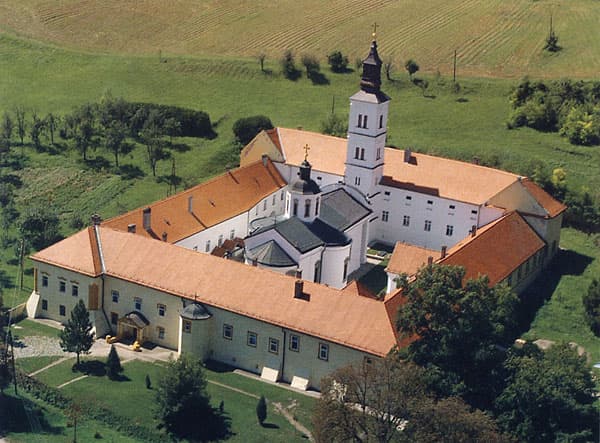
Krušedol Monastery is a Serbian Orthodox monastery located on Fruška Gora mountain, founded between 1509 and 1514 by Saint Maksim Branković and Saint Angelina of Serbia. It served as the spiritual center for the Branković family and later became the seat of the Metropolitanate of Krušedol. The monastery has endured numerous ransackings and fires throughout its history, particularly during Ottoman conflicts and World War II, but has been repeatedly rebuilt, preserving its rich artistic and historical legacy.
Vrdnik-Ravanica Monastery
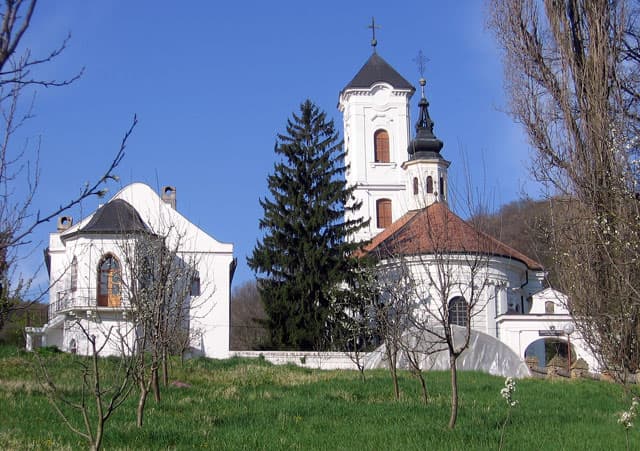
Vrdnik-Ravanica Monastery, also known as Little Ravanica, is a Serbian Orthodox monastery located in the Fruška Gora mountains of Vojvodina, Serbia. While its exact founding date is unknown, historical records suggest the original church was built in the latter half of the 16th century. The present-day church was constructed between 1801 and 1811, and its interior features were adorned with paintings by Dimitrije Avramović in 1853. The monastery was recognized for its cultural significance and declared a Monument of Culture of Exceptional Importance in 1990.