
Grnčarica Monastery
Grnčarica Monastery is a Serbian Orthodox women's monastery dedicated to Saint Nicholas, located in the village of Prnjavor, Serbia. While legend places its founding in the late 13th or early 14th century, historical consensus suggests a mid-16th century construction. The monastery has endured significant destruction and rebuilding throughout its history, notably during Turkish invasions, Kočina Krajina, and both World Wars, before re-establishing itself as a women's community in 1946.
Key Facts
- ›Dedicated to Saint Nicholas.
- ›Located in the village of Prnjavor, Serbia.
- ›Considered an immovable cultural asset as a cultural monument.
- ›Suffered significant damage and rebuilding due to historical conflicts.
- ›Became a women's monastery in 1946.
- ›The church features a triconchal base with an octagonal dome.

Byzantine
- Preserved Old Paintings
- Altar Made of Brick
- Pulpit Made of White and Blue Marble From Studenica
Abbot Maxim, Sultan Suleiman the Magnificent, HadžI Mustafa Pasha, Josif Veselić, Abbess Efrosini, Valerijan
- Reign of King Stefan Dragutin
- Turkish Invasion and Church Demolition
- Restoration of the Serbian Patriarchate of Peć
- Turkish Census of 1739/41
- Revival During the Reign of HadžI Mustafa Pasha
- Status Adjusted From Parish Church To Monastery
- Described By Josif Veselić
- Burned Down In KočIna Krajina
- Ravaged By Austro-Hungarian Army
- Exile of Monks and Fire During Wwii
- Re-Establishment As A Women's Monastery
About Grnčarica Monastery
Grnčarica Monastery is a significant Serbian Orthodox women's monastery dedicated to Saint Nicholas, situated in the village of Prnjavor, Serbia. Its history is marked by periods of construction, destruction, and revival, reflecting the turbulent past of the region. While legend points to an earlier founding during the reign of King Stefan Dragutin in the late 13th or early 14th century, historical consensus leans towards its construction in the mid-16th century under Sultan Suleiman the Magnificent, attributed to the efforts of Abbot Maxim.
History and Significance
The monastery's present location is believed to be a result of its relocation after an earlier church was demolished during Turkish invasions. Despite its designation as an immovable cultural asset and a cultural monument, Grnčarica has faced numerous adversities. It was recorded as deserted in the Turkish census of 1739/41 but experienced a resurgence in the late 18th century. By 1835, it was considered a parish church, but its status as a monastery was later restored. Historical accounts detail its damaged state and preserved old paintings in the mid-19th century, noting it was burned during Kočina Krajina, and later ravaged by foreign armies during both World Wars. Following extensive damage and the exile of its monks during World War II, Grnčarica was re-established as a women's monastery in 1946 with the arrival of Abbess Efrosini and four nuns.
Architecture and Art
The monastery church is characterized by its triconchal base, crowned with a slender octagonal dome. Both the altar apse and side conchs are semicircular. A substantial square belfry with four bifores stands to the west. The facades are notably devoid of decorative ornamentation, with the roof finished in galvanized sheet. The interior frescoes are the work of Valerijan (Stefanović), the first Bishop of Šumadija, painted in the latter half of the 20th century. The altar and pulpit showcase historical craftsmanship, with the latter made from marble originating from Studenica.
Source: Wikipedia ↗
Frequently Asked Questions
When was Grnčarica Monastery founded?
Legend attributes the founding of Grnčarica Monastery to the reign of King Stefan Dragutin, around the late 13th or early 14th century. However, historical evidence more strongly suggests it was built in the middle of the 16th century.
What is the religious affiliation of Grnčarica Monastery?
Grnčarica Monastery is a women's monastery belonging to the Serbian Orthodox Church. It is part of the Eparchy of Šumadija.
Has Grnčarica Monastery been damaged historically?
Yes, the monastery has a history of destruction and rebuilding. It was reportedly demolished during Turkish invasions, burned during Kočina Krajina, and ravaged by the Austro-Hungarian army in WWI and the Germans in WWII.
What are the architectural features of Grnčarica Monastery?
The monastery church has a triconchal base with a semi-shaped vault and a slender octagonal dome. The facades are plain, and it features a massive square belfry with four bifores.
When did Grnčarica Monastery become a women's monastery?
Grnčarica Monastery became a women's monastery in 1946, when Abbess Efrosini arrived with four nuns from the Monastery of Saint Petka in Izvor near Paraćin to revitalize the abandoned and destroyed site.
Related Monasteries
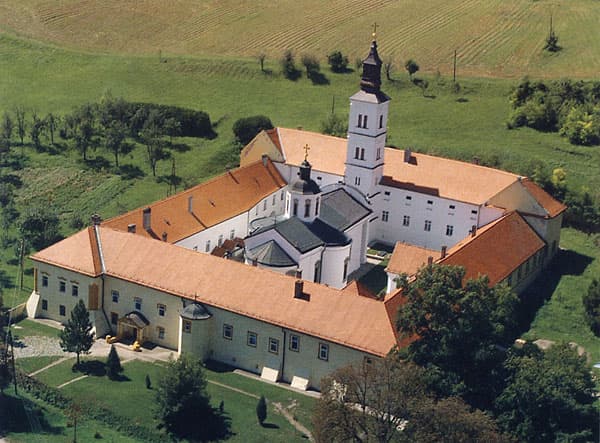
Krušedol Monastery
Krušedol Monastery is a Serbian Orthodox monastery located on Fruška Gora mountain, founded between 1509 and 1514 by Saint Maksim Branković and Saint Angelina of Serbia. It served as the spiritual center for the Branković family and later became the seat of the Metropolitanate of Krušedol. The monastery has endured numerous ransackings and fires throughout its history, particularly during Ottoman conflicts and World War II, but has been repeatedly rebuilt, preserving its rich artistic and historical legacy.
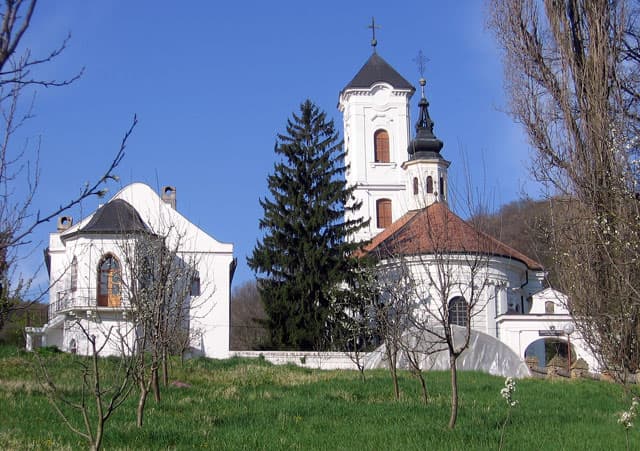
Vrdnik-Ravanica Monastery
Vrdnik-Ravanica Monastery, also known as Little Ravanica, is a Serbian Orthodox monastery located in the Fruška Gora mountains of Vojvodina, Serbia. While its exact founding date is unknown, historical records suggest the original church was built in the latter half of the 16th century. The present-day church was constructed between 1801 and 1811, and its interior features were adorned with paintings by Dimitrije Avramović in 1853. The monastery was recognized for its cultural significance and declared a Monument of Culture of Exceptional Importance in 1990.

Lapušnja Monastery
Lapušnja Monastery is a Serbian Orthodox monastery located on the slopes of Rtanj mountain, near the village of Lukovo. Founded in 1500/1501 by Duke Jovan Radul and Prefect Gergina, its church of St. Nicholas was painted in 1510. Although it fell into ruin over centuries, its preserved remains are recognized today as a cultural monument of great importance to Serbia.