
Kingarth Monastery
Kingarth Monastery, historically known as Cenn Garad in Old Irish, was a significant religious and ecclesiastical center on the Isle of Bute in Scotland during the Early Middle Ages. It served as the cult center for Saints Cathan and Bláán and was the primary religious site for the Cenél Comgaill kindred. Although the main monastic community likely relocated due to Viking attacks, the site persisted as an important parish church and ecclesiastical prebend for centuries.
Key Facts
- ›Site of a monastery and bishopric in the Early Middle Ages.
- ›Cult center for Saints Cathan and Bláán.
- ›Church ruins include 12th-century nave and chancel with a Romanesque chancel arch.
- ›Features two churchyards, one with a hogback tombstone traditionally linked to St. Blane.
- ›A thick-walled structure known as the 'Devil's Cauldron' may be part of the original monastery.
- ›Served as one of the two parish churches on the Isle of Bute.
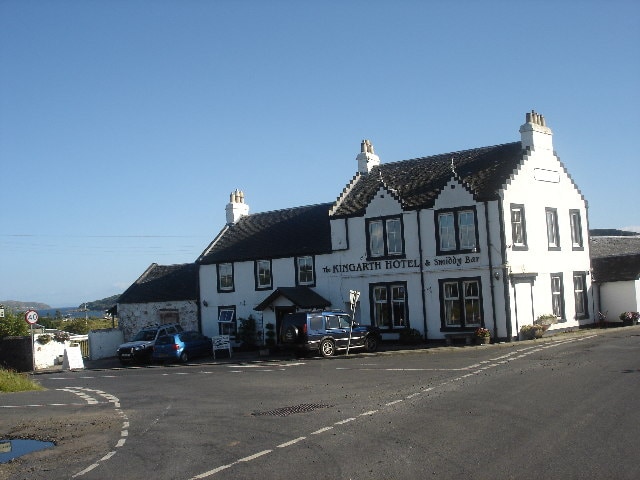
Romanesque
Church Ruins, Romanesque Chancel Arch, Two Churchyards, Hogback Tombstone, Devil's Cauldron Structure, Remains of A Manse
Cenn Garad, Ceann A' Gharaidh
Saint Cathan, Saint BlááN
- Viking Attacks In the 9th Century May Have Prompted Relocation of the Cult Center.
- Attempted Grant To Paisley Abbey In 1204.
- Became A Prebend For the Chapter of the Diocese of the Isles In 1463.
- Annexed To the Chapel Royal At Stirling In 1501.
- Became A Prebend For the Chancellorship of the Chapel Royal In 1509.
About Kingarth Monastery
Kingarth Monastery, historically known in Old Irish as Cenn Garad, was a prominent religious and ecclesiastical center located on the Isle of Bute in south-western Scotland. Flourishing in the Early Middle Ages, it served as a crucial cult center for Saints Cathan and Bláán and was the principal religious site for the Cenél Comgaill kindred of Dál Riata. The monastery's significance is underscored by its status as a bishopric and its role as a central hub for religious life in the region.
Religious and Historical Context
The monastery's physical remains, primarily the ruins of St. Blane's Church, offer insights into its history. The nave and chancel date to the 12th century, with later, less competent extensions in the 14th century. A notable feature is the Romanesque chancel arch, indicating architectural influences of the period. The site also includes two distinct churchyards – one for men and one for women – a rarity that highlights specific burial customs. The upper churchyard holds a hogback tombstone, traditionally identified as the burial place of Saint Blane, dating to around 1000 CE and suggesting the conversion of Norse inhabitants to Christianity.
Decline and Persistence
Evidence suggests that the primary monastic community and the cult center of Saint Bláán may have relocated to Dunblane on the mainland during the 9th century, likely as a response to Viking incursions. Despite this potential shift, Kingarth persisted as an important religious site. It continued to function as one of the two parish churches on the Isle of Bute for centuries, belonging to the diocese of the Isles. While an attempt was made in 1204 to grant the church to Paisley Abbey, it remained an independent parsonage until the 15th century. Subsequently, it became a prebend for the newly formed chapter of the diocese of the Isles and was later annexed to the Chapel Royal at Stirling, retaining its ecclesiastical importance well beyond the Scottish Reformation.
Source: Wikipedia ↗
Frequently Asked Questions
What is Kingarth Monastery known for?
Kingarth Monastery was a significant religious and ecclesiastical center in the Early Middle Ages, serving as the cult center for Saints Cathan and Bláán. Its surviving church ruins, particularly the Romanesque chancel arch, are notable historical features.
When was the monastery at Kingarth likely established?
While an exact founding date is not specified, it was active as a monastery and bishopric in the Early Middle Ages. The surviving church remnants date to the 12th century, with extensions in the 14th century.
What happened to the monastic community at Kingarth?
The center for Saint Bláán's cult may have moved to Dunblane on the mainland due to Viking attacks in the 9th century. Despite this, Kingarth survived as a significant religious site and parish church.
Are there any notable structures at the Kingarth site?
Yes, the site features ruins of a 12th-century church with a Romanesque chancel arch. Additionally, there is a structure called the 'Devil's Cauldron' with very thick walls, possibly part of the original monastery.
What is the significance of the gravestones at Kingarth?
The site has two churchyards, with the upper one containing a hogback tombstone from around 1000 CE. This tombstone is traditionally believed to be the burial place of St. Blane and suggests Norse conversion to Christianity.
Related Monasteries
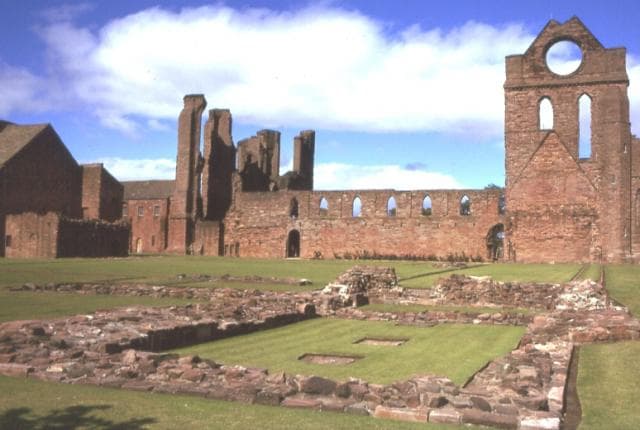
Arbroath Abbey
Arbroath Abbey, a ruined Cistercian monastery located in Arbroath, Scotland, was founded in 1178 by King William the Lion. It is renowned as the site where the Declaration of Scottish Independence was likely drafted in 1320. The Abbey, once the wealthiest in Scotland, is now managed by Historic Environment Scotland and is a popular tourist attraction, notable for its distinctive red sandstone ruins.
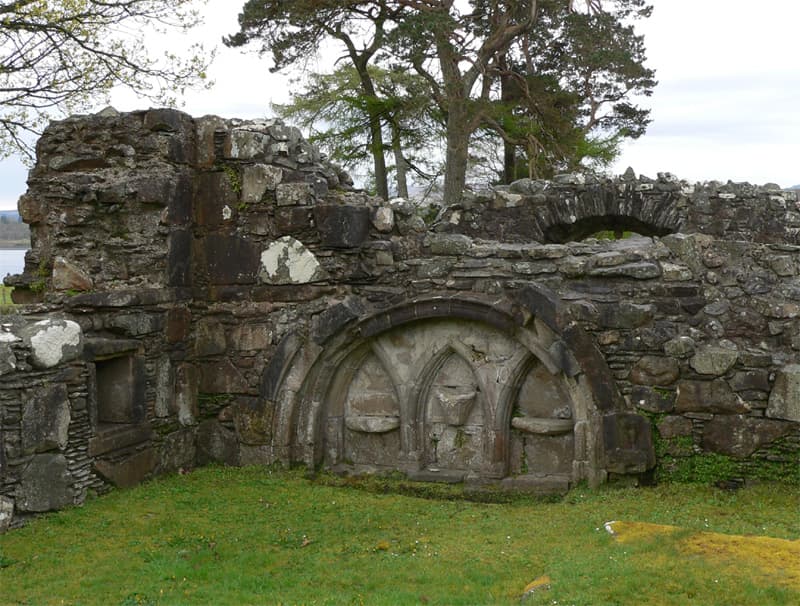
Ardchattan Priory
Ardchattan Priory was a Valliscaulian monastic community established in 1230 by Duncan Macdougall in Ardchattan, Argyll, Scotland. It holds historical significance as the site of a council of local chiefs held by Robert the Bruce in 1308, believed to be the last Gaelic-speaking parliament. Over time, the priory transitioned from its original monastic function, with parts converted into a dwelling and the church eventually falling into disuse and ruin.
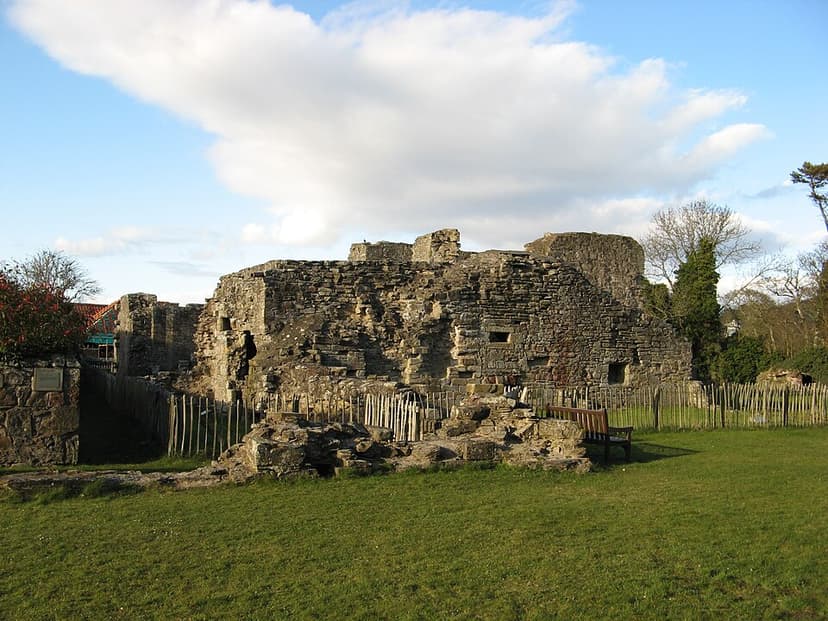
Balmerino Abbey
Balmerino Abbey, also known as St Edward's Abbey, was a Cistercian monastery located in Balmerino, Fife, Scotland. Founded between 1227 and 1229, it was patronized by Ermengarde de Beaumont and King Alexander II. The abbey suffered destruction during the War of the Rough Wooing and later during the Scottish Reformation, leading to its decline and eventual ruin by the 16th century. Today, the ruins are managed by the National Trust for Scotland.