
Jumièges Abbey
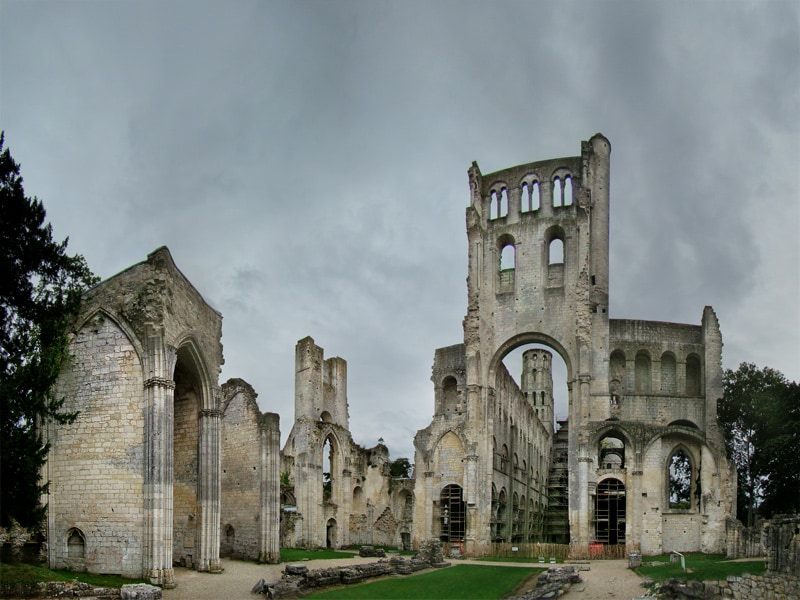
Jumièges Abbey, formally the Abbey of St Peter at Jumièges, was a significant Benedictine monastery founded in 654. Despite devastating raids by Vikings in 841, it was refounded and rebuilt under the patronage of the Dukes of Normandy, becoming a center of scholarship and a model for monastic life in the region. Today, its impressive ruins stand as a testament to its rich history, with notable surviving structures like its twin towers and western façade.
Key Facts
- ›Founded in 654 by Philibert on land granted by Clovis II of Neustria.
- ›Suffered a major destruction by Vikings in 841, leading to community exile.
- ›Rebuilt on a larger scale starting in the 10th century with support from the Dukes of Normandy.
- ›Became a notable center of scholarship, educating figures like the historian William of Jumièges.
- ›A new Romanesque church was consecrated in 1067 in the presence of William the Conqueror.
- ›The French Revolution led to its dispersal, leaving only ruins and some architectural fragments.
Romanesque
Twin Towers, Western FaçAde of the Church, Portions of the Cloisters, Ruins of the Library, 500-Year-Old Yew Tree In the Former Cloister
Monasterium Gemeticensis, Abbey of St Peter At JumièGes, Abbaye Saint-Pierre De JumièGes
Philibert, Balthild, Clovis Ii, Aichardus, Charlemagne, Tassilo Iii, Theodo, William Longsword, AdèLe of Normandy, William of Aquitaine, Martin, Annon, Dudo of Saint-Quentin, Orderic Vitalis, William of JumièGes, William of Volpiano, William the Conqueror, Robert Champart, Roger Martin Du Gard
- Founded In 654
- Tassilo Iii and His Son Theodo Held Under Arrest From 788
- Pillaged and Burnt By Vikings In 841
- Rebuilding Efforts Under William Longsword From the 10th Century
- Consecration of the Restored Church's High Altar On April 5, 942
- Introduction of Monastic Reforms By William of Volpiano In 1015
- Consecration of A New Romanesque Church In 1067
- Enlargement of the Church In 1256
- Suffered During the Hundred Years' War
- Restored In 1573
- Taken Over By the Maurists In 1649
- Monks Dispersed During the French Revolution
About Jumièges Abbey
Jumièges Abbey: A Merovingian Foundation and Norman Jewel
Jumièges Abbey, known in Latin as Monasterium Gemeticensis and formally as the Abbey of St Peter at Jumièges, was a prominent Benedictine monastery situated in the commune of Jumièges in Normandy, France. Its origins trace back to 654 when Philibert, a former nobleman, founded it on forested land granted by Clovis II of Neustria, with significant support from Queen Balthild. The abbey initially prospered, growing to house around 900 monks under its second abbot, Aichardus. However, its early history was marked by turmoil, including the imprisonment of Tassilo III, Duke of Bavaria, and a devastating raid by Vikings in 841 that led to its destruction and the temporary relocation of its community.
Norman Refoundation and Flourishing
The establishment of the Duchy of Normandy brought a period of renewed security and patronage to Jumièges Abbey. Under the impetus of William Longsword, the second Duke of Normandy, the monastery was extensively rebuilt. Twelve monks from the Abbey of Saint-Cyprien in Poitiers, led by Abbot Martin, were invited to assist in its restoration, a process that saw the abbey reconstructed on a grander scale. The restored church of Saint Peter was consecrated in 942. Jumièges became a vital center of learning, educating distinguished monks such as the historian William of Jumièges. In 1015, William of Volpiano introduced important monastic reforms, solidifying the abbey's status as a model for other monasteries in Normandy. A new Romanesque church, commenced in 1040, was consecrated in 1067 in the presence of William the Conqueror. The abbots of Jumièges also wielded considerable political influence, with some ascending to high ecclesiastical offices, including bishop and archbishop.
Decline and Legacy
The abbey continued to be enlarged, with further alterations in 1256. Despite suffering during the English campaigns in Normandy in the Hundred Years' War, it maintained its prosperity until the French Wars of Religion devastated the region. The church saw restoration in 1573. A recovery of reputation occurred when the Maurists took over the abbey in 1649. The French Revolution brought an end to its monastic life; the monks were dispersed, and the abbey was largely destroyed, leaving behind its evocative ruins. Today, the surviving twin towers and western façade of the church, along with remnants of the cloisters and library, stand as a powerful reminder of Jumièges Abbey's historical and architectural significance. A 500-year-old yew tree still grows in the center of the former cloister.
Source: Wikipedia ↗
Frequently Asked Questions
When was Jumièges Abbey founded?
Jumièges Abbey was founded in 654 by Philibert, a former nobleman and courtier. The land for the foundation was granted from royal holdings by Clovis II of Neustria, with additional support from his wife, Balthild.
What happened to Jumièges Abbey during the Viking raids?
In 841, the abbey was pillaged and burned to the ground by Vikings. The monastic community was forced to leave, seeking refuge first at the Abbey of Saint-Riquier and then at Haspres Abbey.
How was the abbey rebuilt after the Viking destruction?
Following the establishment of the Duchy of Normandy, Jumièges Abbey gradually gained security and support from the dukes. William Longsword, the second Duke of Normandy, was particularly instrumental in its rebuilding, inviting monks from Aquitaine to help restore the monastery.
What is notable about Jumièges Abbey's architectural history?
A new Romanesque church was begun in 1040 and consecrated in 1067. While much of the abbey is now in ruins, the twin towers and western façade of the church, along with portions of the cloisters and library, have survived.
What was the impact of the French Revolution on Jumièges Abbey?
During the French Revolution, the monks were dispersed, and the abbey suffered significant destruction. Only the ruins of the church, some cloister sections, and the library remain. The contents of the library were moved to Rouen.
Is Jumièges Abbey still an active monastery?
No, Jumièges Abbey is no longer an active monastery. It exists today as impressive ruins, attracting visitors interested in its historical and architectural significance.
Related Monasteries

Crespin Abbey
Crespin Abbey was a Benedictine monastery founded around 648 by Landelin of Crespin, a reformed brigand who became its first abbot. The abbey, dedicated to Saint Peter, flourished due to its reputation for miracles but was destroyed by Vikings in the 9th century. Although rebuilt, it housed secular priests before Benedictine monks returned in 1080, continuing until its dissolution in 1802.

Noirmoutier Abbey
Noirmoutier Abbey, also known as the Abbey of Saint Philibert, was a significant Benedictine monastery founded in 674 on the island of Noirmoutier. Established by Saint Philibert, the abbey faced numerous destructions and relocations due to Viking raids and other conflicts, eventually becoming a priory under the Abbey of Tournus. Despite its turbulent history, the Merovingian crypt beneath the modern parish church of Saint-Philibert is a notable surviving remnant.

Chelles Abbey
Chelles Abbey was a significant Frankish monastery founded around 657/660, initially for women and later expanding into a double monastery due to its reputation for learning. It held strong royal connections throughout the Carolingian era and was renowned for its scriptorium. The abbey was dissolved during the French Revolution in 1790 and subsequently destroyed, with its remains incorporated into the modern town hall of Chelles.