
Chelles Abbey
Chelles Abbey was a significant Frankish monastery founded around 657/660, initially for women and later expanding into a double monastery due to its reputation for learning. It held strong royal connections throughout the Carolingian era and was renowned for its scriptorium. The abbey was dissolved during the French Revolution in 1790 and subsequently destroyed, with its remains incorporated into the modern town hall of Chelles.
Key Facts
- ›Founded around 657/660 by Queen Balthild.
- ›Initially a monastery for women, it became a double monastery by the end of the 7th century.
- ›Housed an important scriptorium known for skilled copyists and authors.
- ›Held significant royal and aristocratic connections throughout the Carolingian period.
- ›Dissolved during the French Revolution in 1790 and destroyed in 1796.
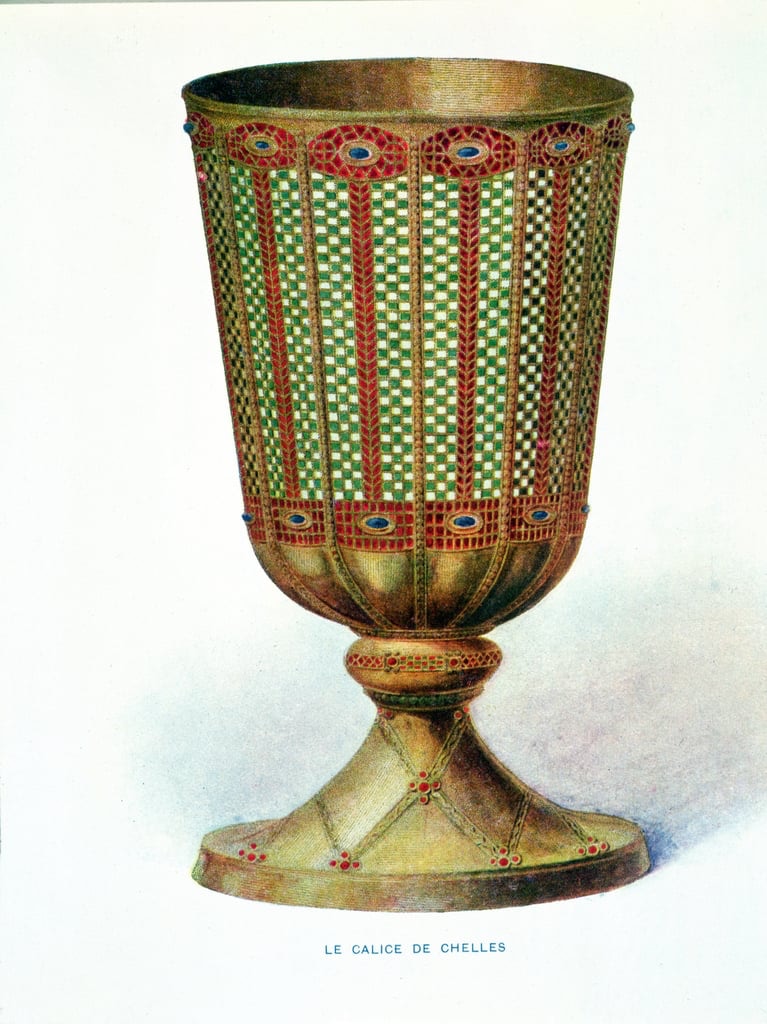
Scriptorium, Royal Connections, Merovingian Gold Chalice
Abbaye Notre-Dame-Des-Chelles
Queen Balthild, King Chilperic I, Queen Fredegund, Bertila, Gisela, Charlemagne, Alcuin, Hereseith of Northumbria, Hilda of Whitby, Swanachild, Rotrude
- Founding of the Abbey
- Conversion To A Double Monastery
- Visit of Charlemagne
- Attempted Reform By Stephen of Senlis
- Attempted Reform By Louis De Beaumont De La ForêT
- Reform Decree By Jean-Simon De Champigny
- Dissolution During the French Revolution
- Destruction of the Abbey Complex
About Chelles Abbey
Chelles Abbey, officially known as Abbaye Notre-Dame-des-Chelles, was a prominent Frankish monastery founded around 657/660 during the early medieval period. Initially established as a monastery for women, its reputation for learning led to the creation of a parallel male community, transforming it into a double monastery by the close of the 7th century. The abbey was strategically located in Chelles, near Paris, and benefited from significant royal patronage throughout the Carolingian era. Its scriptorium was particularly noted for the skill of its scribes, contributing to its intellectual importance.
History and Significance
The site of Chelles Abbey had prior historical significance, having been a royal Merovingian villa and featuring a chapel built by Queen Clotilde. The abbey itself was founded by Queen Balthild, wife of King Clovis II, who provided substantial endowments and established the Church of the Holy Cross. Queen Balthild retired to the abbey and was buried there, with her possessions becoming relics. The abbey's commitment to learning attracted monks and nuns, fostering an environment where royal and aristocratic women, including princesses from England and Frankish nobility, sought religious instruction.
Under the abbacy of Gisela, sister of Charlemagne, Chelles Abbey evolved into a political hub. It was a center for monarchic cults, where rulers and aristocrats convened, and vital political information was gathered. The abbey's scriptorium became a nucleus of intellectual activity, producing manuscripts of high quality and demonstrating the education of its scribes. Notable figures associated with the abbey include Saint Balthild, Gisela, and various royal nuns.
Later History and Dissolution
Over centuries, Chelles Abbey experienced periods where the abbesses, often drawn from royal families, influenced monastic discipline. Efforts to reform the abbey were made in the 12th and 15th centuries, with some success achieved in 1499 through a decree that limited abbess terms. However, royal appointment of abbesses was later reinstated. The abbey's existence came to an end during the French Revolution; it was dissolved in 1790 and subsequently destroyed in 1796. Today, the remains of Chelles Abbey are incorporated into the Hôtel de Ville, the town hall of modern Chelles.
Source: Wikipedia ↗
Frequently Asked Questions
When was Chelles Abbey founded?
Chelles Abbey was founded around 657/660 by Queen Balthild. The site itself had earlier been a royal Merovingian villa and had a chapel built by Queen Clotilde circa 511.
What was the religious tradition of Chelles Abbey?
Chelles Abbey was a Christian monastery. It was initially established under the Rule of Saint Columbanus, and later adopted the Rule of Saint Benedict.
What was Chelles Abbey known for?
Chelles Abbey was renowned for its great learning and housed an important scriptorium where nuns were skilled copyists and authors. It also benefited from powerful royal connections.
What happened to Chelles Abbey?
Chelles Abbey was dissolved in 1790 during the French Revolution and its complex was sold and destroyed in 1796. The remains are now incorporated into the Hôtel de Ville of Chelles.
Who founded Chelles Abbey?
The abbey was founded by Queen Balthild, wife of King Clovis II. She established it around 657/660 on the site of a former royal villa.
Was Chelles Abbey a monastery for men or women?
Chelles Abbey was initially founded as a monastery for women. As its reputation for learning grew, a parallel male community was established, making it a double monastery by the end of the 7th century.
Related Monasteries
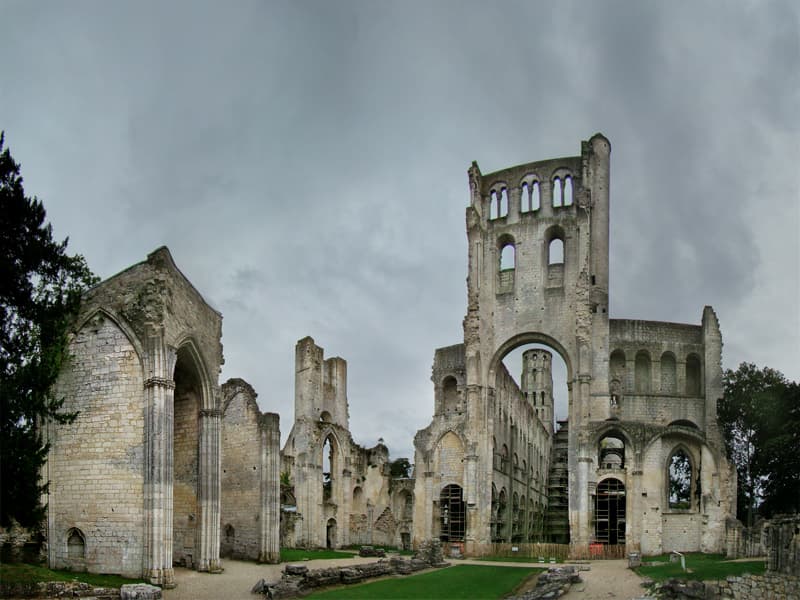
Jumièges Abbey
Jumièges Abbey, formally the Abbey of St Peter at Jumièges, was a significant Benedictine monastery founded in 654. Despite devastating raids by Vikings in 841, it was refounded and rebuilt under the patronage of the Dukes of Normandy, becoming a center of scholarship and a model for monastic life in the region. Today, its impressive ruins stand as a testament to its rich history, with notable surviving structures like its twin towers and western façade.

Remiremont Abbey
Remiremont Abbey, located near Remiremont, Vosges, France, was initially founded around 620 as a double monastery for men and women following the Rule of St. Columbanus. It later transitioned to a community of secular canonesses, becoming an exclusive institution for women of noble descent. The abbey gained significant power and influence, enjoying exemption from episcopal oversight and high status, though its autonomy was challenged by the Dukes of Lorraine.

Crespin Abbey
Crespin Abbey was a Benedictine monastery founded around 648 by Landelin of Crespin, a reformed brigand who became its first abbot. The abbey, dedicated to Saint Peter, flourished due to its reputation for miracles but was destroyed by Vikings in the 9th century. Although rebuilt, it housed secular priests before Benedictine monks returned in 1080, continuing until its dissolution in 1802.