
Hore Abbey
Hore Abbey, also known as St Mary's, is a ruined Cistercian monastery situated near the Rock of Cashel in County Tipperary, Ireland. Established in 1270 from Mellifont Abbey, it was the last Cistercian foundation in Ireland before the Dissolution of the Monasteries. Archbishop David Mac Cerbaill played a pivotal role in its founding, transferring it from Benedictine to Cistercian hands and later joining the order himself.
Key Facts
- ›Founded in 1270 from Mellifont Abbey.
- ›It was the last Cistercian foundation in Ireland before the dissolution of monasteries.
- ›Archbishop David Mac Cerbaill, who endowed the abbey, later joined the Cistercian order and was buried there.
- ›The cloister is unusually located to the north, possibly due to its proximity to the Rock of Cashel.
- ›The property was dissolved in 1540 and later granted to Sir Henry Radcliffe in 1561.
- ›The name 'Hore' is believed to derive from 'iubhair', meaning yew tree.
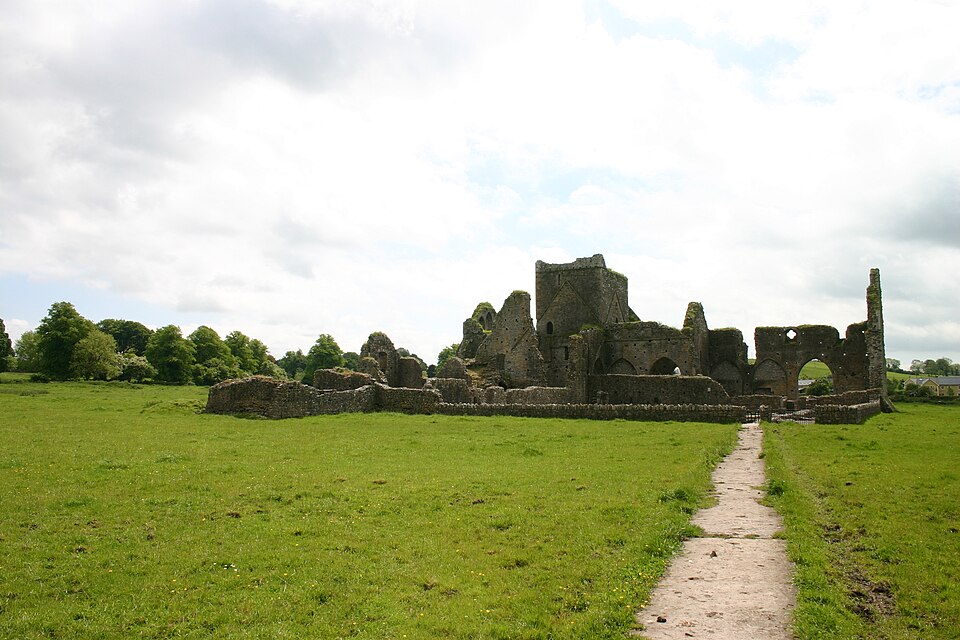
Cloister Located To the North
Hoare Abbey, St Mary's
David Mac Cerbaill
Founded From Mellifont Abbey, Dissolved By 1540, Lands Granted To Sir Henry Radcliffe In 1561
About Hore Abbey
Hore Abbey, also referred to as Hoare Abbey or St Mary's, is a significant ruined Cistercian monastery located in County Tipperary, Ireland, in close proximity to the iconic Rock of Cashel. Its establishment marked a notable point in Irish monastic history as the final Cistercian foundation on the island prior to the widespread dissolution of such religious institutions.
Founding and Early History
The abbey's transition to Cistercian rule occurred in 1270, when Archbishop David Mac Cerbaill of Cashel transferred the former Benedictine abbey to the Cistercian order. Archbishop Mac Cerbaill was deeply involved with the site, generously endowing it with lands and mills previously belonging to the town of Cashel. He later embraced the Cistercian rule himself, entering the monastery and eventually being buried there in 1289. Historical accounts suggest his actions regarding the abbey and his dealings with the city of Cashel were met with local resentment, partly due to his perceived favouritism towards the Irish and his interference with local commerce.
Dissolution and Later Use
Hore Abbey met its end as a monastic institution in 1540 with the Dissolution of the Monasteries. Its property was subsequently transferred to James Butler, the 9th Earl of Ormond. Despite the dissolution, monks continued to serve the local parish. The abbey's structures were later repurposed for private dwellings before its lands were formally granted to Sir Henry Radcliffe by Queen Elizabeth I in 1561.
Architectural Peculiarities
A distinctive feature of Hore Abbey, setting it apart from many other Cistercian monasteries in Ireland, is the placement of its cloister to the north. This unusual arrangement is often attributed to the abbey's geographical context, specifically its siting near the prominent Rock of Cashel to the north.
Source: Wikipedia ↗
Frequently Asked Questions
When was Hore Abbey founded?
Hore Abbey was founded in 1270. It was established from Mellifont Abbey and marked the last Cistercian foundation in Ireland before the monasteries were dissolved.
Who was instrumental in the founding of Hore Abbey?
Archbishop David Mac Cerbaill was instrumental in the founding of Hore Abbey. He gifted the former Benedictine abbey to the Cistercians in 1270 and later joined the order himself, being buried there in 1289.
What is unusual about Hore Abbey's architecture?
Hore Abbey is distinctive among Irish Cistercian monasteries because its cloister is situated to the north. This arrangement is thought to be influenced by the abbey's location near the Rock of Cashel.
What happened to Hore Abbey after the Dissolution of the Monasteries?
Following its dissolution in 1540, Hore Abbey's property was transferred to James Butler, 9th Earl of Ormond. The monks continued to serve the local parish, and the site was later occupied as private dwellings before its lands were granted to Sir Henry Radcliffe in 1561.
What is the origin of the name 'Hore Abbey'?
The name 'Hore' is believed to originate from the Irish word 'iubhair', which translates to 'yew tree'. The abbey is also sometimes known as St Mary's.
Related Monasteries
Abington Abbey
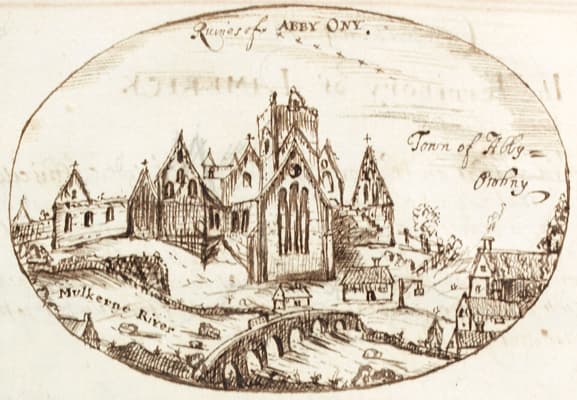
Abington Abbey, also known as the Cistercian Abbey of Woney, was founded in 1205 by Theobald Walter in County Limerick, Ireland. Situated on the banks of the Mulkear River, the abbey's charter granted extensive lands and judicial rights, establishing it as a significant religious and economic entity. Although the original buildings are now largely gone, traces of its architecture and layout can still be observed in the graveyard at Abington.

Tintern Abbey (Tintern Parva)
Tintern Abbey was a Cistercian monastic establishment founded around 1200 on the Hook Peninsula in County Wexford, Ireland. It was established by William Marshal, Earl of Pembroke, following a vow made during a perilous sea voyage. The abbey was initially populated by monks from its Welsh namesake and played a role in religious life until its dissolution, after which its ownership changed hands multiple times. Today, Tintern Abbey exists primarily in ruins, with some sections undergoing restoration and conservation efforts.

Abbey of Lerha
The Abbey of Lerha was a significant Cistercian monastery founded in 1205 by Risteárd de Tiúit. Although dissolved in 1539, its ruins remain visible and give the nearby village of Abbeylara its name. The monastery's historical presence is a defining characteristic of the region.