
Abington Abbey
Abington Abbey, also known as the Cistercian Abbey of Woney, was founded in 1205 by Theobald Walter in County Limerick, Ireland. Situated on the banks of the Mulkear River, the abbey's charter granted extensive lands and judicial rights, establishing it as a significant religious and economic entity. Although the original buildings are now largely gone, traces of its architecture and layout can still be observed in the graveyard at Abington.
Key Facts
- ›Founded in 1205 by Theobald Walter, brother of Archbishop Hubert Walter.
- ›Originally known as the Cistercian Abbey of Woney (Mainistir Uaithne).
- ›Received extensive land grants and judicial rights through its foundation charter.
- ›Its possessions in the 14th century included lands in Athnid parish, County Tipperary.
- ›In 1563, Queen Elizabeth I granted the abbey and its possessions to Captain Walshe.
- ›Traces of its architecture and layout are visible in the Abington graveyard.
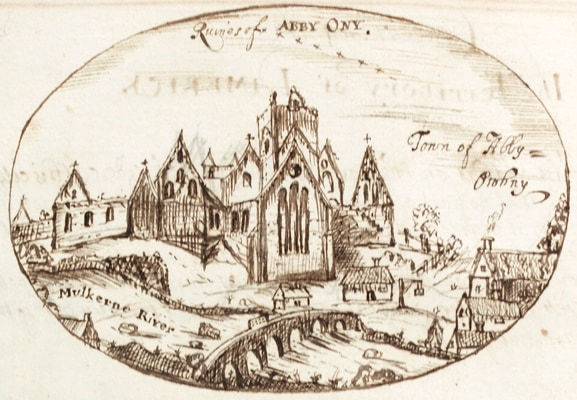
- Graveyard With Traces of Monastic Architecture and Layout
- Location On the Banks of the Mulkear River
Woney Abbey, Mainistir Uaithne, Wotheny Abbey, Owney Abbey
Theobald Walter, Hubert Walter, Captain Walshe, Sir Richard Boyle
- Foundation In 1205
- Grant of Possessions To Captain Walshe By Elizabeth I
- Conveyance of Lands By Sir E. Walsh To Sir Richard Boyle
- Forfeiture of Walshe Family Estates To the Crown During the War of 1641
About Abington Abbey
Abington Abbey, also known by its Irish name Mainistir Uaithne and variations such as Wotheny or Owney, was a significant Cistercian monastery located in Abington, County Limerick, Ireland. Founded in 1205 by Theobald Walter, the chief butler of Ireland and brother to Archbishop Hubert Walter, the abbey was established through a substantial land grant. This charter bestowed upon the abbot and monks extensive territories, including the 'theodum' of Woodenikuwice, half the stream of the Mulkear River, and a burgage in Limerick, along with significant judicial and economic privileges. These rights included jurisdiction over trials, fines, and exemptions from tolls, underscoring the abbey's considerable influence.
Historical Context and Later History
By the early fourteenth century, the abbey's possessions had expanded to include lands in Athnid parish, County Tipperary. The abbey's fortunes shifted significantly during the Tudor period. Around 1563, Queen Elizabeth I granted the abbey and all its holdings to a Captain Walshe, who subsequently erected a new residence near the older monastic structures. Further land transactions occurred in 1609 when Sir E. Walsh conveyed part of the former abbey lands to Sir Richard Boyle. The estates granted to the Walshe family were eventually forfeited to the Crown during the turbulent Irish Rebellion of 1641.
Present Day
Today, Abington Abbey exists primarily as ruins. However, tangible remnants of its past are still discernible. Traces of the monastery's original architecture and layout can be observed within the graveyard in the hamlet of Abington, providing a physical connection to its medieval past. The site's location on the banks of the Mulkear River remains a defining geographical feature.
Source: Wikipedia ↗
Frequently Asked Questions
When was Abington Abbey founded?
Abington Abbey was founded in 1205. The foundation charter was granted by Theobald Walter.
Who founded Abington Abbey?
The abbey was founded by Theobald Walter, who held the title of chief butler of Ireland. He was the brother of Hubert Walter, the Archbishop of Canterbury.
What religious order was Abington Abbey a part of?
Abington Abbey was a Cistercian monastery. It was also known as the Cistercian Abbey of Woney.
What significant rights were granted to Abington Abbey?
The foundation charter granted the abbot and monks extensive rights, including judicial powers such as 'sach and soch', 'tol', 'infangthef', and 'outfangthef'. They were also granted exemptions from various tolls and legal exactions.
What happened to Abington Abbey after the dissolution of the monasteries?
Around 1563, Queen Elizabeth I granted the abbey and its possessions to a Captain Walshe, who built a new house near the old monastic buildings. Later, in 1609, part of the lands were conveyed to Sir Richard Boyle.
Are there any visible remains of Abington Abbey today?
Traces of the architecture and layout of the monastery can still be seen in the graveyard located in the hamlet of Abington, south of Murroe.
Related Monasteries
Hore Abbey
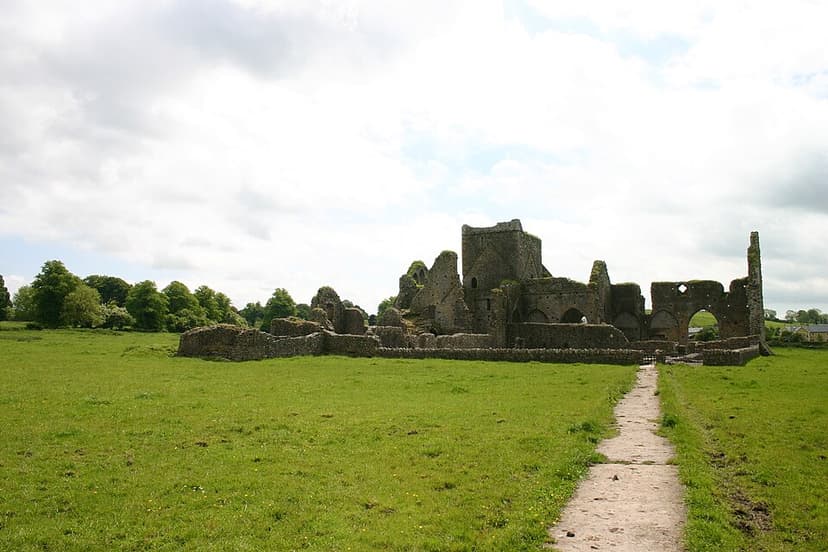
Hore Abbey, also known as St Mary's, is a ruined Cistercian monastery situated near the Rock of Cashel in County Tipperary, Ireland. Established in 1270 from Mellifont Abbey, it was the last Cistercian foundation in Ireland before the Dissolution of the Monasteries. Archbishop David Mac Cerbaill played a pivotal role in its founding, transferring it from Benedictine to Cistercian hands and later joining the order himself.

Tintern Abbey (Tintern Parva)
Tintern Abbey was a Cistercian monastic establishment founded around 1200 on the Hook Peninsula in County Wexford, Ireland. It was established by William Marshal, Earl of Pembroke, following a vow made during a perilous sea voyage. The abbey was initially populated by monks from its Welsh namesake and played a role in religious life until its dissolution, after which its ownership changed hands multiple times. Today, Tintern Abbey exists primarily in ruins, with some sections undergoing restoration and conservation efforts.

Abbey of Lerha
The Abbey of Lerha was a significant Cistercian monastery founded in 1205 by Risteárd de Tiúit. Although dissolved in 1539, its ruins remain visible and give the nearby village of Abbeylara its name. The monastery's historical presence is a defining characteristic of the region.