
Abbey of Lerha
The Abbey of Lerha was a significant Cistercian monastery founded in 1205 by Risteárd de Tiúit. Although dissolved in 1539, its ruins remain visible and give the nearby village of Abbeylara its name. The monastery's historical presence is a defining characteristic of the region.
Key Facts
- ›Founded in 1205 by Risteárd de Tiúit.
- ›Established for Cistercian monks.
- ›Dissolved during the monastic reforms of 1539.
- ›Its ruins are still visible near the village of Abbeylara.
- ›The village of Abbeylara is named after the monastery.

Ruins of the Monastery
Abbeylara
RisteáRd De TiúIt
Dissolution of the Monasteries In 1539
About Abbey of Lerha
The Abbey of Lerha, also known as Abbeylara, was a significant monastery established in 1205 within County Longford, Ireland. Its foundation was the work of the Hiberno-Norman magnate Risteárd de Tiúit, who established it for monks of the Cistercian order. The monastery played a role in the region's history until it was dissolved in 1539 as part of broader monastic reforms.
History and Significance
The establishment of the Abbey of Lerha in the 13th century marked an important religious and architectural presence in County Longford. The Cistercian monks who resided there contributed to the local landscape and community. The dissolution of the abbey in the 16th century led to its abandonment as an active monastic site. Despite its dissolution, the remains of the Abbey of Lerha are still apparent, serving as a historical marker and lending its name to the nearby village of Abbeylara. The presence of an ancient earthwork, the Duncla or Black Pig's Dyke, in the wider parish further contextualizes the historical depth of the area surrounding the abbey.
Source: Wikipedia ↗
Frequently Asked Questions
When was the Abbey of Lerha founded?
The Abbey of Lerha was founded in 1205. It was established by the Hiberno-Norman magnate, Risteárd de Tiúit.
Who founded the Abbey of Lerha?
The Abbey of Lerha was founded by Risteárd de Tiúit, a Hiberno-Norman magnate. He established the monastery for Cistercian monks.
What religious order was associated with the Abbey of Lerha?
The Abbey of Lerha was established for Cistercian monks. This order follows the Cistercian Rule.
What is the current status of the Abbey of Lerha?
The Abbey of Lerha was dissolved in 1539. While the monastery itself is no longer operational, its ruins are still apparent on approach to the village of Abbeylara.
What is the significance of the Abbey of Lerha today?
The Abbey of Lerha's primary significance today lies in its historical presence and the visible ruins that remain. The nearby village of Abbeylara derives its name directly from the monastery.
Related Monasteries
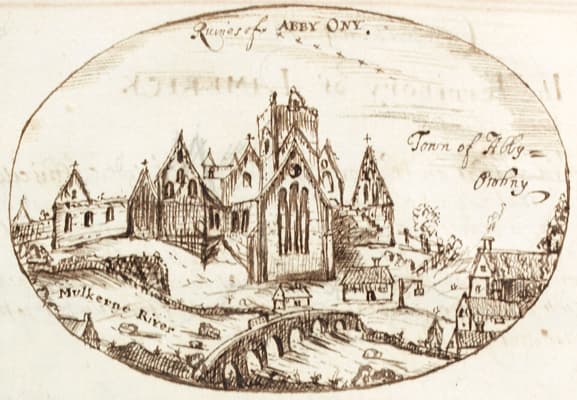
Abington Abbey
Abington Abbey, also known as the Cistercian Abbey of Woney, was founded in 1205 by Theobald Walter in County Limerick, Ireland. Situated on the banks of the Mulkear River, the abbey's charter granted extensive lands and judicial rights, establishing it as a significant religious and economic entity. Although the original buildings are now largely gone, traces of its architecture and layout can still be observed in the graveyard at Abington.
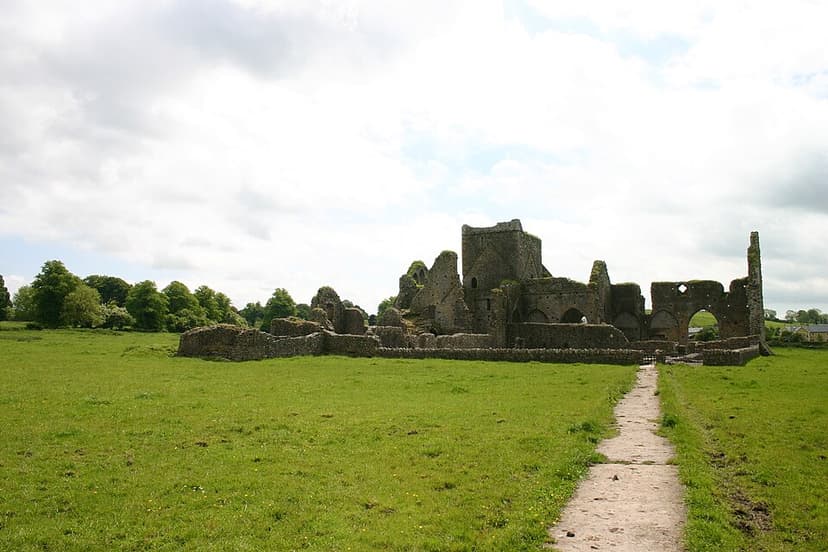
Hore Abbey
Hore Abbey, also known as St Mary's, is a ruined Cistercian monastery situated near the Rock of Cashel in County Tipperary, Ireland. Established in 1270 from Mellifont Abbey, it was the last Cistercian foundation in Ireland before the Dissolution of the Monasteries. Archbishop David Mac Cerbaill played a pivotal role in its founding, transferring it from Benedictine to Cistercian hands and later joining the order himself.

Kinalehin Charterhouse
Kinalehin Charterhouse, also known as Kinaleghin Friary, holds the distinction of being Ireland's sole Carthusian monastery, founded around 1252. Over its history, it transitioned from a Carthusian charterhouse to a Franciscan friary, experiencing periods of dissolution and refounding before its final closure. The surviving remains primarily reflect its Franciscan period, though some Carthusian earthworks are still visible.