
Mellifont Abbey
Mellifont Abbey was the first Cistercian abbey established in Ireland, founded in 1142 and serving as a model for subsequent Cistercian foundations in the country. It played a significant role in Irish ecclesiastical and political history, hosting the Synod of Kells-Mellifont in 1152 and later becoming the site of important historical events such as the Treaty of Mellifont in 1603. Though dissolved in 1539 and subsequently used as a manor house and military headquarters, its ruined remains are now a national monument and accessible to the public.
Key Facts
- ›Founded in 1142, it was the first Cistercian abbey in Ireland.
- ›Hosted the significant Synod of Kells-Mellifont in 1152.
- ›Became the mother abbey for many other Irish Cistercian houses.
- ›Dissolved in 1539 and later became a private manor house.
- ›The Treaty of Mellifont was signed on its grounds in 1603.
- ›Ruined remains are a national monument and open to the public.

Romanesque, Gothic
13th-Century Lavabo, Romanesque Arches, 14th-Century Chapter House
An Mhainistir MhóR
Saint Malachy, Archbishop of Armagh
- Synod of Kells-Mellifont
- Dissolution
- Treaty of Mellifont
- Irish Rebellion of 1641
- William of Orange's Headquarters During the Battle of the Boyne
About Mellifont Abbey
Mellifont Abbey, known in Irish as An Mhainistir Mhór (meaning 'the Big Monastery'), was the first Cistercian abbey established in Ireland and served as a pivotal religious and historical site. Founded in 1142 on the initiative of Saint Malachy, Archbishop of Armagh, it quickly grew to become a significant monastic center, by 1170 housing one hundred monks and three hundred lay brothers. Its formal architectural style, imported from French Cistercian abbeys, made it the model for many other Cistercian foundations in Ireland, often referred to as 'the daughters of Mellifont'.
Historical Significance
The abbey was the location of the important Synod of Kells-Mellifont in 1152, a notable ecclesiastical council attended by high-ranking clergy and royalty, which asserted Church authority. Following its dissolution in 1539, Mellifont transitioned from a monastic establishment to secular use. It was later fortified and became the setting for significant political events, including the signing of the Treaty of Mellifont in 1603 between the English Crown and Hugh O'Neill, Earl of Tyrone. Furthermore, it served as William of Orange's headquarters during the Battle of the Boyne in 1690.
Current Status
Today, Mellifont Abbey exists as a ruin and is recognized as a national monument of Ireland. Its remains, which include a 13th-century lavabo, Romanesque arches, and a 14th-century chapter house, are accessible to the public, offering a glimpse into its rich past. The name 'Mellifont' itself originates from the Latin 'Melli-fons', meaning 'Font of Honey'.
Source: Wikipedia ↗
Frequently Asked Questions
What does the name Mellifont Abbey mean?
The English name 'Mellifont' is derived from the Latin phrase 'Melli-fons', which translates to 'Font of Honey'.
When was Mellifont Abbey founded?
Mellifont Abbey was founded in the year 1142.
What was the significance of the Synod of Kells-Mellifont?
The Synod of Kells-Mellifont, held at the abbey in 1152, was an important ecclesiastical gathering attended by bishops, kings, and the Papal Legate. It asserted Church authority and is recorded in historical annals.
What happened to Mellifont Abbey after its dissolution?
Following its dissolution in 1539, Mellifont Abbey was repurposed. It became a private manor house, was fortified, and later served as a headquarters during significant historical events like the Battle of the Boyne.
Can visitors see Mellifont Abbey today?
Yes, the ruined abbey is a national monument of Ireland and is accessible to the public, allowing visitors to explore its historical remains.
Related Monasteries

Baltinglass Abbey
Baltinglass Abbey, a ruined medieval Cistercian monastery in County Wicklow, Ireland, was founded in 1148 by Diarmait Mac Murchada. It served as a daughter house of Mellifont Abbey and later became the mother house of Jerpoint Abbey. The abbey was suppressed in 1536 during the Dissolution of the Monasteries and is now a National Monument.
Bective Abbey
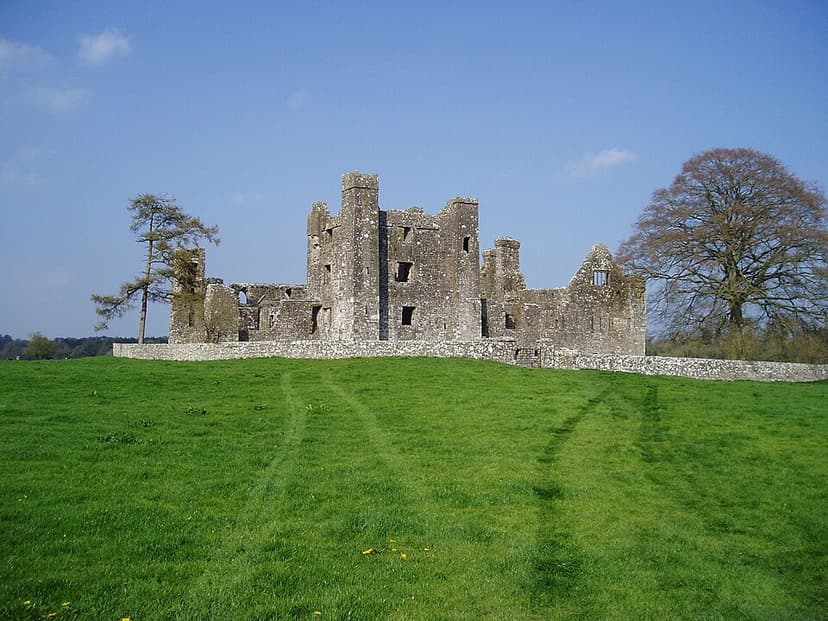
Bective Abbey is a well-preserved Cistercian abbey located on the River Boyne in County Meath, Ireland. Founded in 1147 as a daughter house of Mellifont Abbey, its remaining structures and ruins primarily date from the 15th century, though it also features an early 13th-century church and a 16th-century tower. The abbey's lands were confiscated during the Dissolution of the Monasteries and its buildings were later partially converted into a manor house.

Boyle Abbey
Boyle Abbey is a ruined Cistercian friary in County Roscommon, Ireland, founded by Saint Malachy in 1161. Despite interruptions from invasions and fires, its construction was completed and consecrated in 1218. The abbey became a significant Cistercian foundation in Ireland, known for its impressive architecture featuring influences from Burgundy and the West of England, and its squat square tower added in the thirteenth century.