
Boyle Abbey
Boyle Abbey is a ruined Cistercian friary in County Roscommon, Ireland, founded by Saint Malachy in 1161. Despite interruptions from invasions and fires, its construction was completed and consecrated in 1218. The abbey became a significant Cistercian foundation in Ireland, known for its impressive architecture featuring influences from Burgundy and the West of England, and its squat square tower added in the thirteenth century.
Key Facts
- ›Founded by Saint Malachy in 1161, consecrated in 1218.
- ›Ruined Cistercian friary located in Boyle, County Roscommon, Ireland.
- ›Construction was delayed and damaged by the Anglo-Norman invasion and a fire in 1202.
- ›Architectural styles show influences from Burgundy and the West of England.
- ›Features a notable squat square tower added above the crossing in the thirteenth century.
- ›Currently a national monument in state care, open to the public.

Cistercian, Burgundian, West of England
Squat Square Tower, Cistercian Plan Layout, Cylindrical Piers of the South Arcade, Inventive Architectural Sculpture
Mainistir Na BúIlle
Saint Malachy, Peter O’Mordha, Gelasius O’Cullenan, Bartholomew Higgins
Founded By Saint Malachy, Interrupted By Anglo-Norman Invasion, Burned In 1202, Consecrated In 1218, Involved In 'the Conspiracy of Mellifont', Attacked In 1235 and 1284, Suppressed Under Queen Elizabeth, Last Abbot Executed, Turned Into Barracks By Elizabethans, Besieged By Cromwellians
About Boyle Abbey
Boyle Abbey, known in Irish as Mainistir na Búille, is a significant ruined Cistercian friary situated in the town of Boyle, County Roscommon, Ireland. Its establishment was initiated by Saint Malachy in 1161, with the intention of introducing new monastic orders to reform the existing Irish church. The abbey's construction faced considerable challenges, including interruptions from the Anglo-Norman invasion of Ireland and a destructive fire in 1202, leading to its consecration only in 1218. Despite these setbacks, Boyle Abbey became a prominent Cistercian foundation, contributing to the order's presence in Ireland with its own daughter houses.
History and Significance
Saint Malachy's vision led to the introduction of Cistercians to Ireland, with Mellifont Abbey being the first Cistercian foundation in 1142. For Boyle Abbey, arrangements were made for Irish aspirants to train in Clairvaux, France. The Cistercians were invited to found an abbey in Moylurg as a daughter house of Mellifont, and after exploring several sites, they settled near the River Shannon. They were granted land by local chieftain Taoiseach McGreevy, who offered the existing Celtic monastery of Eas Mic nEirc (Assylin). The Cistercians, seeking a site conducive to their needs, eventually built on the present location, which offered better access to running water and facilities for mills and fish ponds. Over time, Boyle Abbey received substantial land grants, accumulating approximately 50,000 acres scattered across 27 granges west of the River Shannon. By 1174, it had been elevated to the status of an abbey. The abbey's history was marked by periods of prosperity, including making foundations of its own, such as Knockmoy Abbey and Assaroe Abbey. However, it also endured conflict, notably during the 'Conspiracy of Mellifont' in the 1220s, and was attacked on several occasions. The rise of mendicant orders like the Franciscans and Dominicans led to a decline in lay brothers working the granges, resulting in many being leased out. In the late 13th and early 14th centuries, abbots of Boyle were frequently appointed bishops of Elphin. By the end of the 15th century, local chieftains' families appear to have exerted control over the abbey's leadership. The abbey was suppressed under Queen Elizabeth, with its assets granted to Patrick Cusack in 1569. The last abbot, Gelasius O’Cullenan, was executed in Dublin in 1580.
Architecture
The architectural layout of Boyle Abbey follows the typical Cistercian plan, with a church positioned north of a rectangular cloister. Adjacent to the cloister were a chapter house, refectory, and kitchen. The cloister itself has largely not survived, having been converted into barracks by the Elizabethans and later the Cromwellians. Despite this, the ruins are notable for a prominent squat square tower that was added above the crossing in the thirteenth century. The church features a nave with side aisles, a transept with chapels on its eastern wall, and a chancel. The original windows of the chancel were updated in the thirteenth century. The design incorporates influences from Burgundy, with stylistic elements from the West of England particularly evident in the nave and the cylindrical piers of the south arcade. The decorated corbels and capitals are attributed to local masons, part of the 'School of the West,' renowned for inventive architectural sculpture in early thirteenth-century western Ireland.
Present Day
Today, Boyle Abbey stands as a national monument under state care. It is accessible to the public, with an inexpensive admission fee, allowing visitors to explore its historic ruins and appreciate its architectural heritage. A unique connection to Australia exists, with a small piece of stone from the Abbey incorporated into the headstone of Bartholomew Higgins in Sydney's Rookwood Necropolis.
Source: Wikipedia ↗
Frequently Asked Questions
When was Boyle Abbey founded?
Boyle Abbey was founded in the year 1161 by Saint Malachy. However, its construction was not completed until around 1218, when the abbey was consecrated. The work was interrupted by events such as the Anglo-Norman invasion of Ireland and fires.
Who founded Boyle Abbey?
Boyle Abbey was founded by Saint Malachy. He was instrumental in introducing the Cistercian and Augustinian orders to Ireland in an effort to reform the old Irish church.
What is the architectural style of Boyle Abbey?
The architecture of Boyle Abbey shows influences from Burgundy, where the Cistercians originated. Detailing in the nave and the cylindrical piers of the south arcade have strong echoes of the West of England. The abbey is also characterized by a squat square tower added in the thirteenth century.
Is Boyle Abbey still in use today?
Boyle Abbey is now a ruined national monument in state care. While it no longer houses an active monastic community, its impressive ruins are preserved and are open for visitors.
What notable features does Boyle Abbey have?
The abbey is dominated by a squat square tower added in the thirteenth century. Its church follows the Cistercian plan with a nave, side aisles, and a transept. The detailing of the nave and south arcade, along with decorative corbels and capitals, showcase inventive architectural sculpture.
Related Monasteries

Baltinglass Abbey
Baltinglass Abbey, a ruined medieval Cistercian monastery in County Wicklow, Ireland, was founded in 1148 by Diarmait Mac Murchada. It served as a daughter house of Mellifont Abbey and later became the mother house of Jerpoint Abbey. The abbey was suppressed in 1536 during the Dissolution of the Monasteries and is now a National Monument.
Bective Abbey
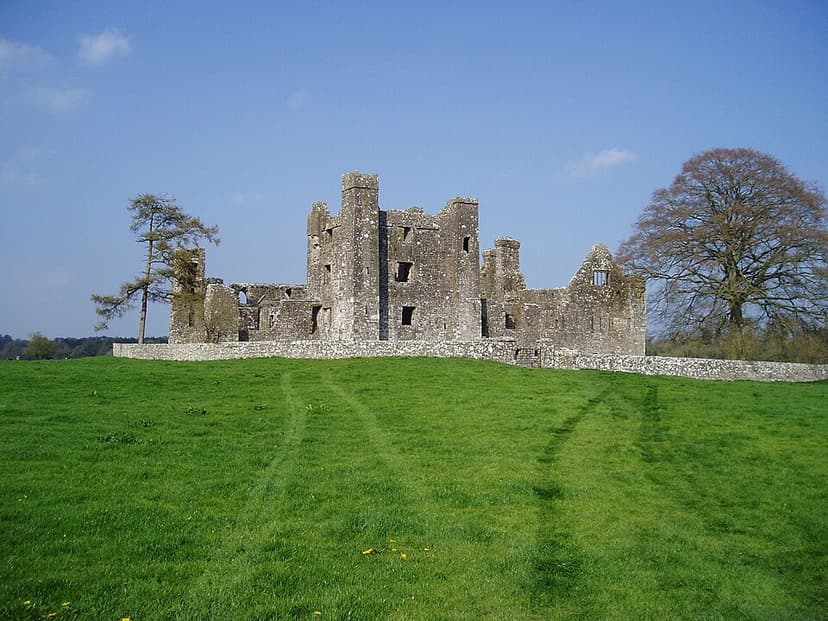
Bective Abbey is a well-preserved Cistercian abbey located on the River Boyne in County Meath, Ireland. Founded in 1147 as a daughter house of Mellifont Abbey, its remaining structures and ruins primarily date from the 15th century, though it also features an early 13th-century church and a 16th-century tower. The abbey's lands were confiscated during the Dissolution of the Monasteries and its buildings were later partially converted into a manor house.

Corcomroe Abbey
Corcomroe Abbey is an early 13th-century Cistercian monastery situated in the Burren region of County Clare, Ireland. Renowned for its exceptionally fine Gothic stone carvings, it was once known as "St. Mary of the Fertile Rock." Despite its historical significance and architectural merit, documentary evidence regarding its founding and early history is scarce, with its operational decline attributed to factors such as monastic reforms, family control of lands, and the English Reformation.