
Corcomroe Abbey
Corcomroe Abbey is an early 13th-century Cistercian monastery situated in the Burren region of County Clare, Ireland. Renowned for its exceptionally fine Gothic stone carvings, it was once known as "St. Mary of the Fertile Rock." Despite its historical significance and architectural merit, documentary evidence regarding its founding and early history is scarce, with its operational decline attributed to factors such as monastic reforms, family control of lands, and the English Reformation.
Key Facts
- ›Founded in the early 13th century, with founding dates varying between 1180–1200.
- ›Known for its Gothic architectural style and intricate stone carvings, considered among the best in Cistercian churches in Ireland.
- ›Associated with the O'Brien dynasty, including the burial of King Conor O'Brien within the abbey.
- ›The abbey church was significantly shortened in the 15th century, indicating a decline in its fortunes.
- ›Acquired by the Office of Public Works in 1879 and is now a public tourist attraction.
- ›The ruins feature a cruciform church with a vaulted sanctuary and the tomb effigy of King Conor O'Brien.

Gothic
Stone Carvings, Tomb of Conor O'Brien, Vaulted Sanctuary Ceiling, O'Loughlin King of the Burren Family Tomb
Mainistir Chorca Mrua, St. Mary of the Fertile Rock
Donal MóR Ua Briain, Donough Cairbreach, Conor O'Brien, Conor Carrach O'Loughlain, Dermot O'Brien, John, Murrough O'Brien, William, Donat O'Brien, Father Daniel O'Griffy, Reverend John O'Dea
Battle of SiudáIne In 1268, Battle Nearby In 1317, Dissolution of Catholic Monasteries
About Corcomroe Abbey
Corcomroe Abbey: A Gothic Jewel in the Burren
Corcomroe Abbey, known in Irish as Mainistir Chorca Mrua, stands as a significant early 13th-century Cistercian monastery nestled within the unique landscape of the Burren in County Clare, Ireland. Once referred to as "St. Mary of the Fertile Rock," a nod to the region's fertile soil, the abbey is renowned for its remarkably preserved Gothic ruins, featuring stone carvings that are considered among the finest in any Cistercian church across Ireland. Its architectural beauty and historical context make it a point of interest for visitors to the area.
History and Foundation
The abbey's origins trace back to a group of Cistercian monks who arrived from Inislounaght Abbey in County Tipperary during the late 12th century. While precise founding dates are debated, scholarly estimates place the establishment between 1180 and 1200, with some suggesting a founding around 1205–10 based on stylistic analysis. The foundation is often attributed to Donal Mór Ua Briain, a notable patron of religious structures in the Thomond region, or his successor Donough Cairbreach. Documentary evidence of Corcomroe's early history is notably scarce. The abbey's integration into the broader Cistercian network is confirmed by papal mandates in the 13th century, though it also experienced shifts in its hierarchical relationships, at one point becoming subservient to Furness Abbey.
Architectural Significance and Decline
Constructed using local limestone, Corcomroe Abbey exemplifies the standard Cistercian plan but on a more modest scale. The cruciform church, though roofless, remains largely intact, featuring a vaulted sanctuary adorned with columns and capitals. A key highlight is the tomb effigy of Conor O'Brien, King of Thomond, a rare contemporary depiction of an Irish chieftain. Despite its architectural splendor, the abbey faced a period of decline. By the 15th century, the church was intentionally shortened, and evidence suggests the monks' dormitory fell into disuse, reflecting a reduction in the monastic community and fortunes. This decline was exacerbated by factors such as hereditary succession of abbots, the use of abbey resources by powerful families, and ultimately, the English Reformation, which led to the dissolution of monasteries. In 1554, the abbey and its lands were granted to the Earl of Thomond.
Corcomroe Abbey Today
Designated a National Monument, Corcomroe Abbey is now a protected ruin and a popular public tourist attraction. The Office of Public Works acquired the ruins in 1879, ensuring their preservation for future generations. Visitors can explore the Gothic architecture and appreciate the surviving stone carvings, offering a tangible connection to Ireland's medieval monastic past amidst the striking scenery of the Burren.
Source: Wikipedia ↗
Frequently Asked Questions
When was Corcomroe Abbey founded?
Sources vary on the exact founding date of Corcomroe Abbey, with estimates ranging from 1180 to 1200. Some stylistic analysis suggests a founding period around 1205–10.
What is Corcomroe Abbey known for architecturally?
Corcomroe Abbey is celebrated for its Gothic architectural style and its detailed stone carvings, which are considered some of the finest found in a Cistercian church in Ireland. These include intricate work on columns, capitals, and ceiling ribs.
Who is buried at Corcomroe Abbey?
The tomb of Conor O'Brien (Conor na Siudane Ua Briain), King of Thomond, is located within Corcomroe Abbey. His limestone effigy is one of the few contemporary representations of an Irish chieftain and is situated in an arched recess in the sanctuary.
What happened to Corcomroe Abbey historically?
The abbey's history includes periods of integration into the Cistercian network, changes in its subservience to mother houses, and eventual decline due to factors like family control of lands and the English Reformation. By the 15th century, the church was shortened, and by the 17th century, it had commendatory abbots, indicating a loss of its monastic community.
Is Corcomroe Abbey open to the public today?
Yes, Corcomroe Abbey is a National Monument and is open to the public, serving as a significant tourist attraction in the Burren region of County Clare.
Related Monasteries

Baltinglass Abbey
Baltinglass Abbey, a ruined medieval Cistercian monastery in County Wicklow, Ireland, was founded in 1148 by Diarmait Mac Murchada. It served as a daughter house of Mellifont Abbey and later became the mother house of Jerpoint Abbey. The abbey was suppressed in 1536 during the Dissolution of the Monasteries and is now a National Monument.
Bective Abbey
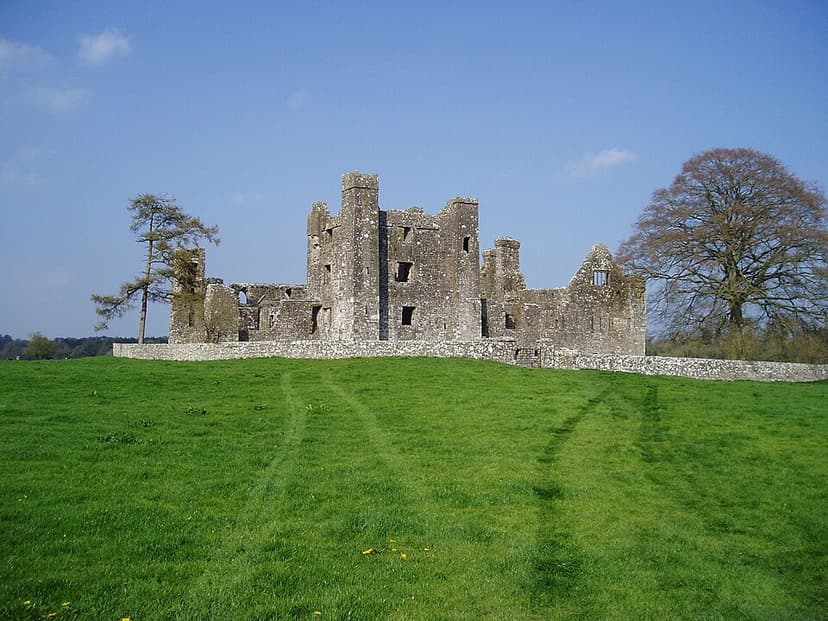
Bective Abbey is a well-preserved Cistercian abbey located on the River Boyne in County Meath, Ireland. Founded in 1147 as a daughter house of Mellifont Abbey, its remaining structures and ruins primarily date from the 15th century, though it also features an early 13th-century church and a 16th-century tower. The abbey's lands were confiscated during the Dissolution of the Monasteries and its buildings were later partially converted into a manor house.

Boyle Abbey
Boyle Abbey is a ruined Cistercian friary in County Roscommon, Ireland, founded by Saint Malachy in 1161. Despite interruptions from invasions and fires, its construction was completed and consecrated in 1218. The abbey became a significant Cistercian foundation in Ireland, known for its impressive architecture featuring influences from Burgundy and the West of England, and its squat square tower added in the thirteenth century.