
Hermitage of St. Peter Koriški
The Hermitage and Monastery of Saint Peter Koriški is a ruined monastic complex located in Kosovo, historically significant as the dwelling of Saint Peter of Koriša. It was donated to King Stefan Dušan in 1343 and later abandoned in 1453 following a Turkish invasion. The site is recognized for its ancient frescoes depicting Serbian Orthodox art and has been a declared cultural monument.
Key Facts
- ›The hermitage was the final home of Saint Peter of Koriša.
- ›Donated to King Stefan Dušan on May 19, 1343.
- ›Abandoned in 1453 after the Turkish invasion.
- ›The remains of St. Peter Koriški were moved to Crna Reka monastery in 1572.
- ›Features frescoes dating from 1220 and 1350, indicative of Serbian Orthodox art.
- ›Declared a cultural monument in 1950 and registered as a Protected Monument of Culture in 1990.

Cave Dwelling, Frescoes Dating From 1220 and 1350, Cells For Monks, Communal Dining Space
Isposnica I Manastir Svetog Petra KorišKog, Vetmia E ShëN Petrit KorishëS
Peter of KorišA, King Stefan DušAn
- Donated To King Stefan DušAn On May 19, 1343
- Abandoned In 1453 After Turkish Invasion
- Remains of St. Peter KorišKi Moved To Crna Reka Monastery In 1572
- Declared A Cultural Monument On December 16, 1950
- Registered As A Protected Monument of Culture In 1990
- Theft of Archaeological Remains In February 2021
- Illegal Construction Causing Damage Reported In February 2025
About Hermitage of St. Peter Koriški
Hermitage and Monastery of Saint Peter Koriški
The Hermitage and Monastery of Saint Peter Koriški, also known by its Serbian name Isposnica i manastir Svetog Petra Koriškog and Albanian name Vetmia e Shën Petrit Korishës, is a ruined monastic complex situated in the village of Korishë, within the Prizren municipality of Kosovo. This ancient site is primarily recognized as the hermitage where Saint Peter of Koriša resided until his death.
History and Significance
The history of the monastery is marked by several significant events. On May 19, 1343, the hermitage was formally donated to King Stefan Dušan, after which it developed into an important monastic center. Its active monastic life, however, ceased in 1453 when it was abandoned following a Turkish invasion. Subsequently, in 1572, the relics of Saint Peter Koriški were transferred to the monastery at Crna Reka for safekeeping. The site's historical and artistic value was formally acknowledged when it was declared a cultural monument on December 16, 1950, and later registered as a Protected Monument of Culture in 1990 under the protection of the Republic of Serbia.
Architectural and Artistic Features
The hermitage itself is an ancient cave dwelling, incorporating cells for monks and a communal dining space. The surviving structures contain frescoes that date between 1220 and 1350, offering a valuable glimpse into Serbian Orthodox art of the medieval period. These artistic remains underscore the site's importance as a center of religious and cultural life.
Recent Developments
In recent years, the site has faced challenges related to heritage preservation. In February 2021, local authorities arrested four individuals for stealing archaeological remains. More recently, in February 2025, reports from the Serbian Orthodox Church indicated that illegal construction activities had taken place at the hermitage, resulting in significant damage to the shrine. These incidents highlight ongoing concerns regarding the preservation of Serbian heritage in the region.
Source: Wikipedia ↗
Frequently Asked Questions
Where is the Hermitage of St. Peter Koriški located?
The Hermitage and Monastery of Saint Peter Koriški is located in the village of Korishë, within the Prizren municipality in Kosovo. It is situated at the site of an ancient cave dwelling.
When was the monastery of St. Peter Koriški active?
The monastery was active and became important after its donation to King Stefan Dušan in 1343. However, it was abandoned in 1453 after a Turkish invasion.
What is notable about the art found at the hermitage?
The site contains frescoes dating from 1220 and 1350. These frescoes are significant as they represent a depiction of Serbian Orthodox art from that period.
Has the site experienced any recent issues?
Yes, in February 2021, individuals were arrested for stealing archaeological remains. More recently, in February 2025, the Serbian Orthodox Church reported illegal construction that caused significant damage to the shrine, contributing to ongoing concerns about the destruction of Serbian heritage in Kosovo.
Related Monasteries

Banjska Monastery
Banjska Monastery is a Serbian Orthodox monastery located in Kosovo, founded between 1313 and 1317 by King Stefan Milutin as his intended mausoleum. Despite its early grandeur and status as a royal endowment, it suffered significant damage and abandonment over centuries, including a fire that destroyed its library and eventual repurposing as a mosque. Significant conservation efforts have been undertaken, and it remains a protected Monument of Culture of Exceptional Importance.
Budisavci Monastery
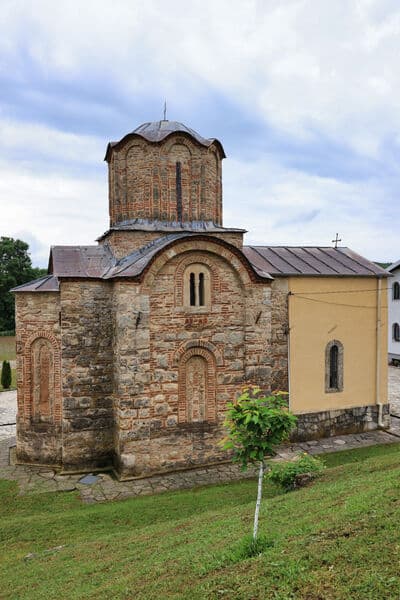
Budisavci Monastery is a medieval Serbian Orthodox monastery located in the village of Budisavci, near Klina and Peja. Founded in the early 14th century, the church is dedicated to the Transfiguration of Jesus Christ and is considered an important religious and cultural monument of medieval Serbian heritage. While its original frescoes are lost, significant repainting occurred in the 16th century, and the monastery remains an active spiritual center.
Devič Monastery
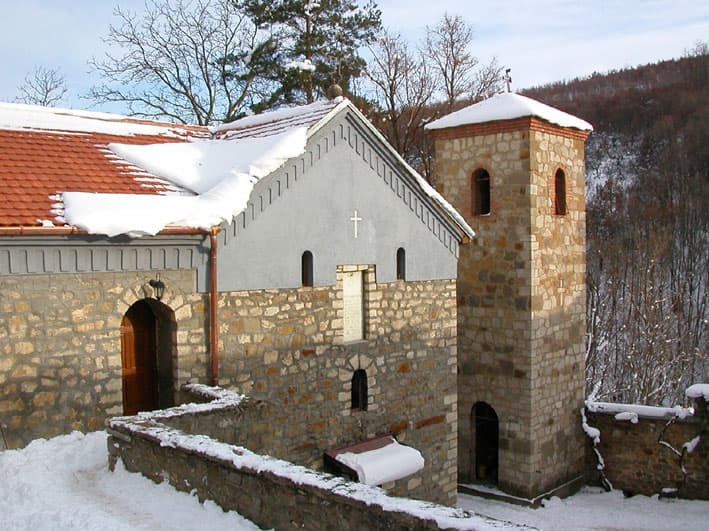
Devič Monastery is a Serbian Orthodox abbey in Kosovo, founded in 1434 and dedicated to Saint Joanikije of Devič. It has a long and turbulent history, having been destroyed and rebuilt multiple times, most notably during Ottoman rule, World War II, and the Kosovo unrest of 1999 and 2004. Despite significant damage and desecration, the monastery has been consistently reconstructed and remains a significant cultural monument.