
Devič Monastery
Devič Monastery is a Serbian Orthodox abbey in Kosovo, founded in 1434 and dedicated to Saint Joanikije of Devič. It has a long and turbulent history, having been destroyed and rebuilt multiple times, most notably during Ottoman rule, World War II, and the Kosovo unrest of 1999 and 2004. Despite significant damage and desecration, the monastery has been consistently reconstructed and remains a significant cultural monument.
Key Facts
- ›Founded in 1434 by Despot Đurađ Branković.
- ›Dedicated to Saint Joanikije of Devič.
- ›Declared a Monument of Culture of Exceptional Importance in 1990.
- ›Destroyed and rebuilt several times throughout its history.
- ›Targeted by vandalism and attacks in 1999 and 2004.
- ›Currently under the protection of KFOR troops.
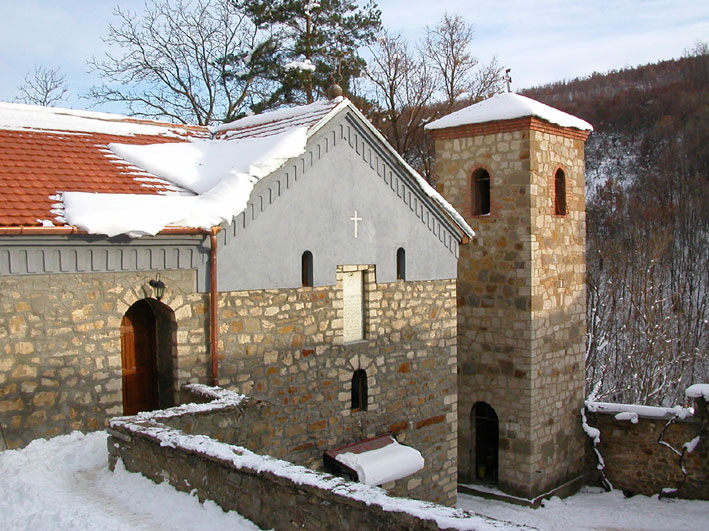
Grave of Saint Joanikije of Devič, Monument of Culture of Exceptional Importance
Manastir Devič, Manastiri I DeviçIt
Despot đUrađ Branković, St Joanikije of Devič, Damaskin BošKović
- Founded In 1434.
- Mentioned In Ottoman Census of 1455.
- Reconstructed and Painted In 1578 After Being Pulled Down.
- Destroyed and Burnt Down In 1941 During World War Ii.
- Rebuilt In 1947.
- Vandalized and Food Stolen In 1999 By Kla.
- Marble Tomb of Patron Saint Desecrated In June 1999.
- Pillaged and Torched In March 2004 Unrest.
About Devič Monastery
Overview
Devič Monastery, known in Serbian as Manastir Devič and in Albanian as Manastiri i Deviçit, is a significant Serbian Orthodox abbey situated in Kosovo. Its establishment dates back to 1434, commissioned by Despot Đurađ Branković, who intended it as a memorial to his daughter. The monastery is dedicated to Saint Joanikije of Devič, and his grave is a notable feature at the site.
Historical Context and Significance
The monastery's history is marked by periods of destruction and reconstruction. It is mentioned in an Ottoman census from 1455 as the church of the Theotokos. During the period of Ottoman occupation, the monastery was pulled down, but the church and the site of Saint Joanikije's grave were later rebuilt and adorned with new frescoes in 1578. It was declared a Monument of Culture of Exceptional Importance in 1990, underscoring its cultural and historical value.
Recent Conflicts and Resilience
Devič Monastery has faced considerable hardship in recent history. During World War II, it was destroyed and burned down in 1941 by forces of the Albanian Fascist Party, with the prior Damaskin Bošković losing his life. Following the war, it was rebuilt in 1947. More recently, the monastery became a target during the Kosovo unrest. In 1999, it was vandalized by the Kosovo Liberation Army (KLA), and the tomb of its patron saint was desecrated. The most serious unrest occurred on March 18, 2004, when the monastery was pillaged and torched, leading to the evacuation of the nuns. Since the events of 1999, the monastery has been under the constant protection of French KFOR troops.
Source: Wikipedia ↗
Frequently Asked Questions
When was Devič Monastery founded?
Devič Monastery was founded in 1434. It was commissioned by Despot Đurađ Branković as a memorial to his daughter.
Who is Devič Monastery dedicated to?
The monastery is dedicated to Saint Joanikije of Devič. His grave is located at the site and was reconstructed after periods of destruction.
What is the historical significance of Devič Monastery?
Devič Monastery holds significant cultural and religious importance as a Serbian Orthodox abbey in Kosovo. It is recognized as a Monument of Culture of Exceptional Importance and has been a site of historical events due to its frequent destruction and reconstruction.
Has Devič Monastery faced destruction?
Yes, Devič Monastery has been destroyed and rebuilt multiple times. It was pulled down during Turkish occupation, burnt down in World War II, and vandalized and pillaged during the Kosovo unrest in 1999 and 2004.
What is the current status of Devič Monastery?
Following significant damage in 2004, the monastery has been under constant protection by French KFOR troops. It has been rebuilt, though details about its current operational status as an active community are not extensively provided.
Related Monasteries

Gornjak
Gornjak Monastery is a 14th-century Serbian Orthodox monastery situated in the Gornjačka gorge, Serbia. Founded in 1379 by King Lazar of Serbia, it served monks led by Gregory of Sinai and has endured multiple destructions and rebuildings. The monastery is notable for its church dedicated to the Entrance of the Theotokos and the nearby hermitage caves associated with Gregory of Sinai.
Gornjak Monastery
Gornjak Monastery is a 14th-century Serbian Orthodox monastery situated in the Gornjacka gorge, near Petrovac, Serbia. Founded in 1379 by King Lazar of Serbia, it was established for monks serving under Gregory of Sinai and completed in 1380. The monastery has a history of destruction and rebuilding, most recently its church was reconstructed starting in 1953 on its original foundations.

Banjska Monastery
Banjska Monastery is a Serbian Orthodox monastery located in Kosovo, founded between 1313 and 1317 by King Stefan Milutin as his intended mausoleum. Despite its early grandeur and status as a royal endowment, it suffered significant damage and abandonment over centuries, including a fire that destroyed its library and eventual repurposing as a mosque. Significant conservation efforts have been undertaken, and it remains a protected Monument of Culture of Exceptional Importance.