
Halsnøy Abbey
Augustinian Canons·Norway·Ruins and museum site·12th century
Halsnøy Abbey was a prominent Augustinian priory in medieval Norway, founded around 1163-1164 by Jarl Erling Skakke to support his son's claim to the throne. It became one of the wealthiest monasteries in the country before being dissolved in 1536 during the Reformation. While most monastic buildings were demolished in the 19th century, significant remnants of ancillary structures have been preserved as ruins.
Key Facts
- ›Founded between 1163 and 1164 by Jarl Erling Skakke.
- ›One of the wealthiest monasteries in medieval Norway.
- ›Buildings were rebuilt in Gothic style around 1300 after a fire.
- ›Dissolved in 1536 during the Reformation.
- ›Most monastic buildings were demolished around 1840.
- ›Preserved remains primarily consist of ancillary buildings, unusual for Norwegian monastic sites.
Gothic
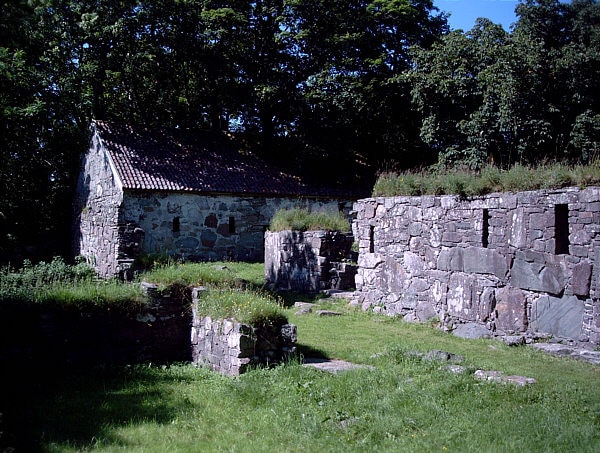
Preserved Remains of Ancillary Buildings, West Wing Ruins
HalsnøY Kloster
Erling Skakke, Magnus Erlingsson, Archbishop øYstein, Andreas Juel, Gerhard Fischer, Hans-Emil LidéN
- Founding of the Monastery
- Fire Damage and Rebuilding In Gothic Style
- Dissolution During the Reformation
- Demolition of Remaining Monastic Buildings and Construction of A New House
- Acquisition By Sunnhordland Museum
About Halsnøy Abbey
Halsnøy Abbey, known in Norwegian as Halsnøy kloster, was a significant Augustinian priory situated on the island of Halsnøya within the Hardangerfjord, in Kvinnherad Municipality, Vestland county, Norway.
History and Significance
The monastery is believed to have been founded between 1163 and 1164 by the influential jarl Erling Skakke. Its establishment was intended as an inducement to Archbishop Øystein to crown Erling's young son, Magnus Erlingsson, as King of Norway. This strategic foundation quickly attracted generous endowments, leading Halsnøy Abbey to become one of the wealthiest monastic institutions in medieval Norway. Approximately a century after its founding, the abbey's buildings suffered severe damage from a fire. They were subsequently rebuilt around 1300 in the Gothic architectural style.
Dissolution and Later History
The monastery met its end in 1536 during the Reformation, at which point its lands and assets were confiscated by the Crown. For more than two centuries, the property was administered as state land. In 1758, the estate was purchased by chamberlain Andreas Juel, and it remained within his family until 1956. A descendant, Lt. Andreas Juel, took steps to demolish the remaining monastic structures around 1840, utilizing the stone to construct a new residence in 1841.
Preservation and Modern Status
In 1956, the site was acquired by Sunnhordland Museum, which has since undertaken the conservation of the surviving building remnants. Archaeological studies were conducted in the late 1930s and early 1960s by architects Gerhard Fischer and Hans-Emil Lidén, respectively. Halsnøy Abbey is notable among Norwegian monastic sites for the preservation of its ancillary buildings rather than the main monastic structures like the church or chapter house. These preserved ancillary remains are exceptional, as they are found at only two other pre-Reformation monastic sites in Norway: Selje Abbey and Hovedøya Abbey. The site is now managed as a museum, with parts of the west wing preserved as ruins, and is open to the public.
Source: Wikipedia ↗
Frequently Asked Questions
When was Halsnøy Abbey founded?
Halsnøy Abbey is believed to have been founded in either 1163 or 1164. This was initiated by Jarl Erling Skakke.
What religious order was Halsnøy Abbey a part of?
Halsnøy Abbey was a house of Augustinian Canons. This order followed the Rule of Saint Augustine.
What happened to Halsnøy Abbey during the Reformation?
During the Reformation in 1536, the monastery was dissolved. Its lands and assets were subsequently confiscated by the Crown.
What remains of Halsnøy Abbey today?
What primarily survives are parts of the west wing and ancillary buildings, preserved as ruins. This is unusual as most principal monastic structures are not intact at other Norwegian monastic sites.
Who owns Halsnøy Abbey site now?
The site was purchased in 1956 by Sunnhordland Museum, which has since conserved the remaining building structures. The museum operates as the historic-cultural museum for the Sunnhordland region.
Related Monasteries

Reichersberg Priory
Reichersberg Priory is an Augustinian monastery located in Reichersberg, Upper Austria, on the Inn River. Founded in the 11th century by Wernher von Reichersberg and his wife Dietburga, it has been continuously owned by Augustinian Canons since its inception. The priory has undergone significant architectural transformations, from its original Romanesque-Gothic structure to a large Baroque replacement after a fire in 1624, and today serves as a vibrant cultural center with an extensive library and art collection.

Congregation of Windesheim
The Congregation of Windesheim was a significant monastic reform movement within the Catholic Church in the century preceding the Protestant Reformation. Originating from the Brethren of the Common Life, it established a centralized system of Augustinian canons dedicated to a strict, contemplative life with an apostolate of hospitality. The congregation played a crucial role in revitalizing religious life across the Netherlands and parts of Germany, though many of its houses were eventually suppressed due to the Reformation and later political upheavals.

Hovedøya Abbey
Hovedøya Abbey was a significant medieval Cistercian monastery located on the island of Hovedøya in the Oslofjord, Norway. Founded in 1147 by monks from England, it quickly became one of the wealthiest institutions in Norway during the medieval period. The abbey's existence was brought to an end by political turmoil and the Reformation, with its buildings later quarried for stone, leaving behind some of the most complete monastic ruins in Norway.