
Guingamp
Guingamp is a commune in northwestern France, historically marked by successive castles, the last of which was razed in the early 17th century. It is particularly known for its professional football team, En Avant Guingamp, which has competed in Ligue 1 and won the Coupe de France multiple times. The town also hosts the Saint Loup festival, a significant event for Breton dances and Celtic music, and has a tradition of honoring a 'Black Virgin' at the Basilica of Notre Dame de Bon Secours.
Key Facts
- ›Guingamp is a commune in the Côtes-D'Armor department of Brittany, France.
- ›It is recognized for its professional football club, En Avant Guingamp, a participant in Ligue 1.
- ›The town features the remains of three historical castles.
- ›Guingamp hosts the annual Saint Loup festival, a national competition for Breton dances.
- ›The Basilica of Notre Dame de Bon Secours is a site of pilgrimage for the 'Black Virgin'.

Remains of Three Successive Castles, Stade De Roudourou, Basilica of Notre Dame De Bon Secours
Gwengamp
Vincent De Bourbon, Cardinal Richelieu, Joseph Guy Ropartz, ThéOphile Marie BréBant, éLie Le Goff
- Razing of the Last Castle By Order of Cardinal Richelieu In the Early 17th Century.
- En Avant Guingamp Winning the Coupe De France In the 2008–09 Season.
- En Avant Guingamp Returning To Ligue 1 For the 2013–14 Season.
- En Avant Guingamp Winning the French Cup In 2013–14 and Qualifying For the 2014–15 Uefa Europa League.
About Guingamp
Guingamp is a commune situated in the Côtes-d'Armor department of Brittany in northwestern France. Historically, the town's landscape was shaped by a series of three castles, with the final fortification being dismantled in the early 17th century by order of Cardinal Richelieu, leaving behind remnants of its defensive past. Today, Guingamp is recognized internationally for its professional football club, En Avant Guingamp, which has competed in France's top tier, Ligue 1, and achieved notable successes in cup competitions.
Cultural Significance
The town's cultural vibrancy is highlighted by the annual Saint Loup festival, a prominent event dedicated to Breton dances and featuring international Celtic musicians. This festival culminates in a traditional dance known as la Dérobée de Guingamp. Guingamp also maintains a spiritual tradition, with pilgrims visiting the Basilica of Notre Dame de Bon Secours to pay homage to the 'Black Virgin' during an annual 'pardon.' The municipality has also actively promoted the Breton language, with initiatives like Ya d'ar brezhoneg being launched in 2008.
Urban and Historical Context
Guingamp functions as an urban commune and is part of a larger urban unit comprising several other nearby cities. Its infrastructure includes a railway station served by high-speed and regional trains, connecting it to major cities like Rennes and Paris. The town's history is also marked by noble figures, such as Vincent de Bourbon, who served as Count of Guingamp in the mid-18th century. With a population of 7,115 as of 2020, Guingamp is noted for being one of Europe's smaller towns to have a top-tier professional football team, a testament to its community's sporting passion.
Source: Wikipedia ↗
Frequently Asked Questions
What is Guingamp known for in terms of sports?
Guingamp is well-known for its professional football team, En Avant de Guingamp. This team has played in Ligue 1 and has won the Coupe de France, qualifying for the UEFA Europa League in the 2014–15 season.
What cultural events take place in Guingamp?
The Saint Loup festival is a significant annual event in Guingamp, featuring a national competition of Breton dances and international Celtic musicians. The town also observes an annual 'pardon' that draws pilgrims to the Basilica of Notre Dame de Bon Secours.
What historical structures are found in Guingamp?
Guingamp contains the remnants of three castles that were built successively. The most recent of these fortifications was demolished by Cardinal Richelieu's order in the early 17th century, leaving behind three towers.
Does Guingamp have a significant population?
As of 2020, Guingamp had a population of 7,115 inhabitants. It is noted as one of the smaller towns in Europe to have hosted a top-tier professional football team.
Related Monasteries

Avignon
Avignon, also known as 'La Cité des Papes' (The City of the Popes), is a historic city in southern France renowned for its papal history and well-preserved medieval architecture. Between 1309 and 1377, it served as the residence for seven successive popes, significantly shaping its urban development and cultural landscape. The city's historic center, including the Palais des Papes and its ramparts, is a UNESCO World Heritage Site, drawing millions of visitors annually for its architectural grandeur and vibrant arts scene, particularly the annual Festival d'Avignon.

Paimpont
Paimpont is a commune in northwestern France, named from Old Breton words meaning "head of the bridge." The town's origins are deeply tied to the Abbey of Our Lady of Paimpont, established in 645 CE by Saint Judicael. This significant abbey, founded on the shores of a lake, became the nucleus around which the modern commune developed.
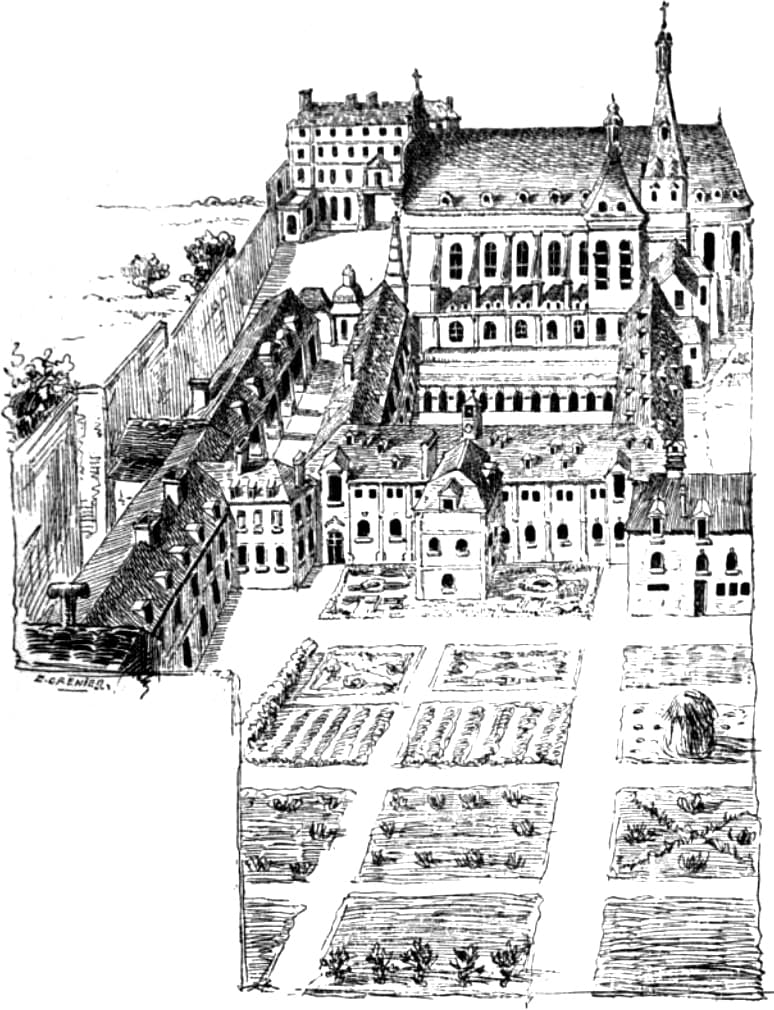
Congregation of the Feuillants
The Congregation of the Feuillants was a Catholic reform movement that emerged in the 1570s from the Cistercian Abbey of Les Feuillants in France, eventually declaring itself an independent order. Known for its extreme asceticism, the congregation separated in 1630 into French and Italian branches, with the French order being suppressed during the Revolution and the Italian branch later reintegrating with the Cistercians. The congregation's former Parisian monastery lent its name to the influential political Club des Feuillants.