
Rennes
Rennes is a historic city in Brittany, France, with origins dating back over 2,000 years to a Gallican village named "Condate." Once a parliamentary and administrative center for the province, it experienced significant rebuilding after a major fire in 1720, transitioning from medieval timber-framed structures to stone architecture. In the 20th century, Rennes transformed into a hub for modern industry, telecommunications, and digital innovation, while retaining a rich heritage as a city of art and history.
Key Facts
- ›Founded over 2,000 years ago as the Gallican village "Condate."
- ›Served as a parliamentary, administrative, and garrison city for the province of Brittany.
- ›Experienced a major destructive fire in 1720, leading to partial rebuilding in stone.
- ›Became a significant center for telecommunications and high-tech industry from the 1980s onward.
- ›Recognized as a city of art and history with over 90 buildings protected as historic monuments.

Classical, Renaissance, Gothic, Baroque
Parlement De Bretagne, Rennes Cathedral, Place Des Lices, Place Saint-Anne, Thabor Park, Jardin Botanique Du Thabor, Les Champs Libres, Fine Arts Museum of Rennes, Canal D'Ille-Et-Rance Locks, OberthüR Park
Condate
Nathalie AppéRé, Daniel Delaveau, Edmond Hervé, Henri FréVille, EugèNe Quessot, Yves Milon, Jean Janvier, Edgar Le Bastard, Toussaint-FrançOis Rallier Du Baty, Pierre Charles Lenoir, Christian De Portzamparc, Norman Foster, Jean Leperdit
- Stamped Paper Revolt In 1675
- Destructive Fire of 1720
- Rebuilding After the 1720 Fire
- Significant Development In the Twentieth Century
- Fire In the Parlement De Bretagne In 1994
About Rennes
Rennes is a historic city situated in the east of Brittany in Northwestern France, at the confluence of the Ille and Vilaine rivers. Its history spans over two millennia, originating as a Gallican village known as "Condate." The city rose to prominence as a significant parliamentary, administrative, and garrison center for the historic province of Brittany.
History and Development
The city's urban fabric was significantly altered by a destructive fire in 1720, which necessitated the partial rebuilding of its medieval core in stone, often following a grid plan. While remaining primarily rural until the mid-20th century, Rennes underwent substantial development, particularly from the 1950s onwards, driven by rural migration and industrial expansion. It has since become a key center for telecommunications and high-tech industries, recognized as a significant digital innovation hub in France.
Heritage and Modern Significance
Designated as a city of art and history, Rennes has preserved a notable medieval and classical heritage, with over 90 buildings recognized as historic monuments. The city is also a major educational center, hosting a large student population and multiple universities. Its cultural vibrancy is evident through numerous festivals, concert halls, and museums, including the Musée des Beaux-Arts and the Les Champs Libres complex, which houses the Museum of Brittany, a regional library, and a science center. Rennes is also known for its traditional food specialties, such as galette-saucisse and crêpes, often found at its large weekly market, the Marché des Lices.
Source: Wikipedia ↗
Frequently Asked Questions
What is the historical origin of Rennes?
Rennes traces its history back over 2,000 years to a small Gallican village named "Condate." It was an important city for the ancient Duchy of Brittany and later a parliamentary and administrative center for the province within the Kingdom of France.
What caused significant changes to Rennes's urban landscape?
A destructive fire in 1720 led to the partial rebuilding of the city's medieval center in stone. This event shaped the architectural character of the northern part of the city, which was rebuilt on a grid plan.
How has Rennes evolved economically in recent history?
While remaining largely rural until World War II, Rennes experienced significant development in the 20th century, particularly since the 1950s. It has become a major center for telecommunications, high-tech industry, and digital innovation in France.
What is Rennes known for in terms of its cultural heritage?
Rennes is celebrated as a city of art and history, preserving a substantial medieval and classical heritage. Over 90 buildings within its historic center are designated as historic monuments, showcasing its rich architectural past.
What is the current significance of Rennes in France?
Rennes is the prefecture of the Brittany region and a major urban center, noted for its growing metropolitan area, its role as a digital innovation hub, and its designation as a city of art and history. It is also ranked as a highly liveable city in France.
Related Monasteries
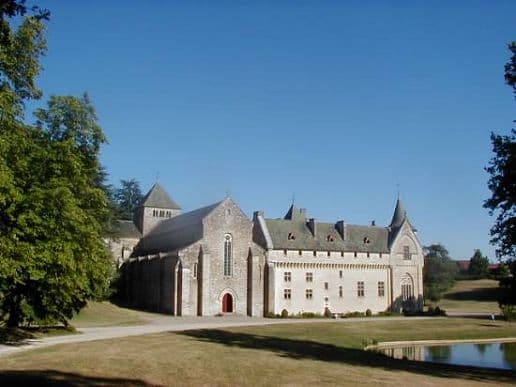
Abbey of Loc-Dieu
Abbey of Loc-Dieu is a Cistercian abbey situated in Aveyron, France, founded in 1123 on a site historically known as "devil's place" before being renamed "place of God" by its monastic inhabitants. Despite facing destruction and rebuilding, it became a significant Gothic architectural site and, during World War II, served as a safe haven for artworks from the Louvre, including the Mona Lisa. Today, the abbey and its park are open to the public.

Abbey of Saint-Germain-des-Prés
The Abbey of Saint-Germain-des-Prés, originally a Benedictine abbey founded in 558, is one of the oldest churches in Paris. It served as a significant center for scholarship, producing illuminated manuscripts, and was a royal necropolis. Despite destruction by Vikings and damage during the French Revolution, the church has undergone numerous rebuilds and restorations, incorporating Romanesque, Gothic, and later decorative styles, and remains an active Catholic parish church.

Abbey of Sénanque
Sénanque Abbey is a Cistercian monastery founded in 1148 in Provence, France, renowned for its remarkably preserved Romanesque architecture. Initially thriving, it experienced decline and was suppressed during the French Revolution, only to be re-established in 1854 and later reactivated in 1988. Today, it houses an active monastic community and is known for its lavender fields and spiritual retreats.