
Paimpont
Paimpont is a commune in northwestern France, named from Old Breton words meaning "head of the bridge." The town's origins are deeply tied to the Abbey of Our Lady of Paimpont, established in 645 CE by Saint Judicael. This significant abbey, founded on the shores of a lake, became the nucleus around which the modern commune developed.
Key Facts
- ›The name "Paimpont" derives from Old Breton "pen" (head) and a Latin borrowing "pont" (bridge).
- ›It is first attested in the 9th century in the Latinized form "Caput Pontis" and in 870 CE as "Penpont."
- ›The town grew around the Abbey of our Lady of Paimpont.
- ›The abbey was founded by the Breton king and Catholic Saint Judicael.
- ›The founding date of the abbey is 645 CE.
- ›The abbey was established on the shore of a lake now known as the Étang de Paimpont.

Abbey of Our Lady of Paimpont, éTang De Paimpont
Caput Pontis, Penpont
Judicael
About Paimpont
Paimpont is a commune located in the Ille-et-Vilaine department of Brittany in northwestern France. Its name, derived from Old Breton "pen" (head) and the Latin "pont" (bridge), is first documented in the 9th century in Latinized and Old Breton forms. The historical significance of Paimpont is intrinsically linked to the founding of the Abbey of Our Lady of Paimpont.
Founding and Development
The Abbey of Our Lady of Paimpont was established in 645 CE by Judicael, a notable figure who served as both a Breton king and a Catholic saint. The abbey was strategically situated on the shore of a small lake, which is now recognized as the Étang de Paimpont. This religious foundation served as the central point around which the town of Paimpont gradually grew and developed over the centuries.
Source: Wikipedia ↗
Frequently Asked Questions
What is the origin of the name Paimpont?
The name Paimpont is a combination of Old Breton words. 'Pen' means 'head,' and 'pont' is a Latin borrowing for 'bridge.' Therefore, the name essentially signifies 'head of the bridge.'
When was the Abbey of Our Lady of Paimpont founded?
The Abbey of Our Lady of Paimpont was founded in 645 CE. This religious institution played a crucial role in the development of the town.
Who founded the Abbey of Our Lady of Paimpont?
The abbey was founded by Judicael, who was both a Breton king and a Catholic saint. His religious and royal authority marked the establishment of this significant monastic site.
Where is Paimpont located?
Paimpont is a commune situated in the Ille-et-Vilaine department in the Brittany region of northwestern France.
Related Monasteries

Avignon
Avignon, also known as 'La Cité des Papes' (The City of the Popes), is a historic city in southern France renowned for its papal history and well-preserved medieval architecture. Between 1309 and 1377, it served as the residence for seven successive popes, significantly shaping its urban development and cultural landscape. The city's historic center, including the Palais des Papes and its ramparts, is a UNESCO World Heritage Site, drawing millions of visitors annually for its architectural grandeur and vibrant arts scene, particularly the annual Festival d'Avignon.

Guingamp
Guingamp is a commune in northwestern France, historically marked by successive castles, the last of which was razed in the early 17th century. It is particularly known for its professional football team, En Avant Guingamp, which has competed in Ligue 1 and won the Coupe de France multiple times. The town also hosts the Saint Loup festival, a significant event for Breton dances and Celtic music, and has a tradition of honoring a 'Black Virgin' at the Basilica of Notre Dame de Bon Secours.
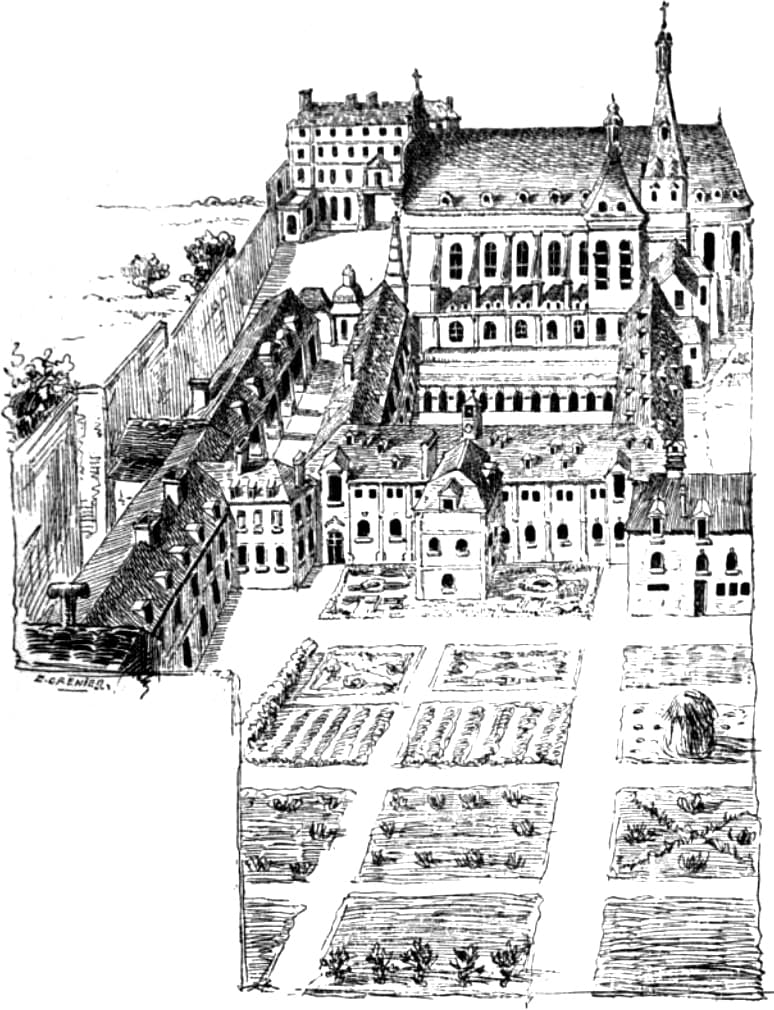
Congregation of the Feuillants
The Congregation of the Feuillants was a Catholic reform movement that emerged in the 1570s from the Cistercian Abbey of Les Feuillants in France, eventually declaring itself an independent order. Known for its extreme asceticism, the congregation separated in 1630 into French and Italian branches, with the French order being suppressed during the Revolution and the Italian branch later reintegrating with the Cistercians. The congregation's former Parisian monastery lent its name to the influential political Club des Feuillants.