
Fearn Abbey
Christian·Scotland·Historic building, no longer used for regular church services·13th century
Fearn Abbey, historically known as "The Lamp of the North," is one of Scotland's oldest pre-Reformation church buildings, originally founded by Premonstratensian canons. Though its monastic community is no longer active, the historic structure, significantly rebuilt in 1772 and restored in the late 20th and early 21st centuries, continued to serve as a parish church until 2023. It remains a significant historical and architectural site, with parts of the medieval structure still incorporated into the present building.
Key Facts
- ›Originally established in the 1220s by Premonstratensians from Whithorn Priory.
- ›Moved to its current location in 1238 due to clan turbulence and for better agricultural land.
- ›The south wing, a chapel dedicated to St. Michael, was added by Abbot Finlay Mcfead (D. 1485).
- ›The flagstone roof collapsed during a service in 1742, killing nearly fifty people.
- ›The current building largely dates from a 1772 restoration, incorporating medieval elements.
- ›Ceased to be used for regular church services in 2023.

Gothic, Scottish Gothic
- "the Lamp of the North" Moniker
- South Wing Chapel Dedicated To St. Michael
- Canopied Monument To Abbot Finlay Mcfead
- Incorporation of Medieval Structure Into 1772 Restoration
- Crevice In Wall Worn By Church Bell Rope
the Lamp of the North
Fearchar, 1st Earl of Ross, Malcolm of Nigg, Abbot Mark, Abbot Donald Pupill, Abbot Finlay Mcfead, Patrick Hamilton, Robert Cairncross, Nicholas Ross, Walter Ross of Morangy, Sir Patrick Murray, Bishop David Lindsay, Bishop Patrick Lindsay, Bishop John Maxwell, General Charles Ross of Balnagown, Sir John Lockhart-Ross, 6th Baronet
- Original Establishment In the 1220s
- Move To Current Site In 1238
- Rebuilding Initiated In 1338, Completed 1372
- Commendatorship Assumed By Patrick Hamilton In Early 16th Century
- Robert Cairncross Appointed Abbot In 1539
- Nicholas Ross Voted For Abolition of Catholicism In 1560
- Lands Resumed By the Crown In 1587
- Erected Into Barony of Geanies In 1598
- Annexed To the See of Ross In 1609 and 1616
- Flagstone Roof Collapsed In 1742 During A Service
- Part of Ruined Abbey Rebuilt In 1772
- Restored In 1971 By Ian G. Lindsay & Partners
- Further Restoration In 2002–2003
- Ceased To Be Used For Church Services In 2023
About Fearn Abbey
Fearn Abbey, historically renowned as "The Lamp of the North," stands as a significant example of Scotland's pre-Reformation ecclesiastical architecture. Its origins trace back to the 1220s when Premonstratensian canons, known as white canons, were established there from Whithorn Priory. The original settlement was founded by Fearchar, 1st Earl of Ross, around 1220, but a decade later, in 1238, the abbey was relocated ten miles to the southeast. This move was necessitated by the prevailing clan conflicts in the region and was also advantageous due to the richer soil available for agriculture.
Medieval Foundations and Development
The abbey flourished under the protection of the Earls of Ross. During the abbacy of Mark in the mid-14th century, rebuilding efforts began, continuing under Abbot Donald Pupill until 1372. A period of significant enrichment occurred during the long tenure of Abbot Finlay McFaed (1442–1485), who oversaw the addition of a cloister and the acquisition of valuable embellishments from Flanders, including an organ and ornate tabernacles.
Reformation and Later Use
The Reformation era brought considerable change. Patrick Hamilton, an early proponent of Reformation principles, held the commendatorship in the early 16th century before being martyred. Later, in 1539, King James V recommended Robert Cairncross, Bishop of Ross, for the abbacy, hoping his wealth would facilitate the restoration of buildings that had fallen into disrepair. Nicholas Ross, who held the abbacy after Cairncross, is believed to have served in a secular capacity, voting for the abolition of Catholicism in Scotland in 1560.
Following the Reformation, Fearn Abbey continued to function as a parish church. A tragic event occurred in 1742 when the flagstone roof collapsed during a service, causing nearly fifty fatalities. Although a new church was constructed nearby, it too succumbed to ruin. Consequently, in 1772, parts of the original ruined Abbey were rebuilt, and it once again served as the parish church for the Church of Scotland.
Modern Preservation and Status
The current structure of Fearn Abbey largely dates from the 1772 restoration, though it judiciously incorporates elements of the medieval fabric. Significant restoration work was undertaken in 1971 and again in 2002–2003 under the guidance of Historic Scotland. While the historic building ceased its use for regular church services in 2023, it remains a vital part of Scotland's heritage, with its associated parish now united with neighboring churches to form the Easter Ross Peninsula Church of Scotland. The abbey is notable for housing the burial vault of the Ross family of Balnagown and for being the resting place of several notable figures, including Fearchar, 1st Earl of Ross.
Source: Wikipedia ↗
Frequently Asked Questions
When was Fearn Abbey founded?
The original Fearn Abbey was established in the 1220s during the reign of Alexander II by Premonstratensian canons. It was later moved to its present location in 1238.
What is the architectural style of Fearn Abbey?
The church is of a simple oblong design with tall lancet windows. The south wing, dedicated to St. Michael, is a notable addition, featuring an archway and a canopied monument. The current structure incorporates parts of the medieval building and dates substantially from a 1772 restoration.
What is the significance of the name "The Lamp of the North"?
Fearn Abbey was historically known as "The Lamp of the North," a title reflecting its importance and prominence in its region during the pre-Reformation era.
Has Fearn Abbey always been used as a parish church?
Following the Reformation, the Abbey remained in use as a parish church. After a roof collapse in 1742 and subsequent disrepair of a later church, part of the original Abbey was rebuilt in 1772 to once again serve as the parish church for the established Protestant Church of Scotland.
What happened to Fearn Abbey in recent years?
The historic building underwent restoration in 1971 and further work in 2002–2003 under Historic Scotland. While it continued as a parish church, regular services ceased in 2023, with local church activities moving to an adjacent modern hall.
Related Monasteries
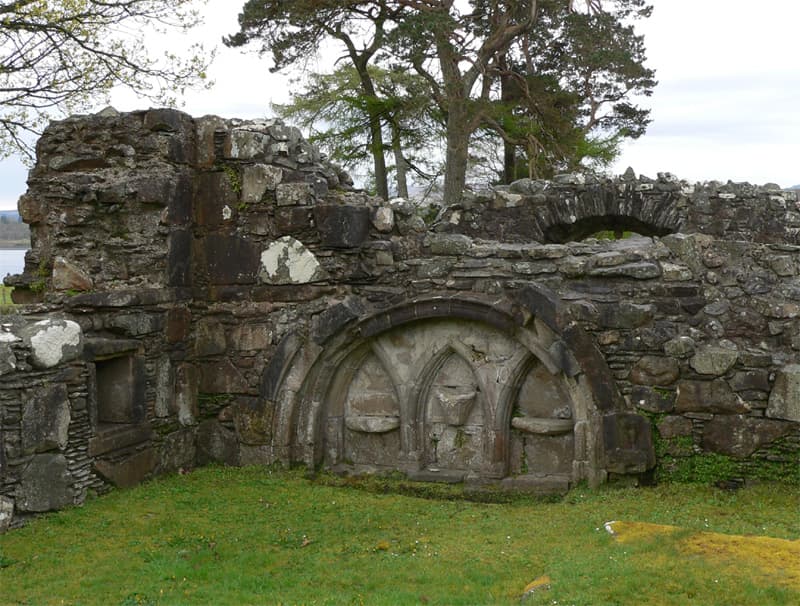
Ardchattan Priory
Ardchattan Priory was a Valliscaulian monastic community established in 1230 by Duncan Macdougall in Ardchattan, Argyll, Scotland. It holds historical significance as the site of a council of local chiefs held by Robert the Bruce in 1308, believed to be the last Gaelic-speaking parliament. Over time, the priory transitioned from its original monastic function, with parts converted into a dwelling and the church eventually falling into disuse and ruin.
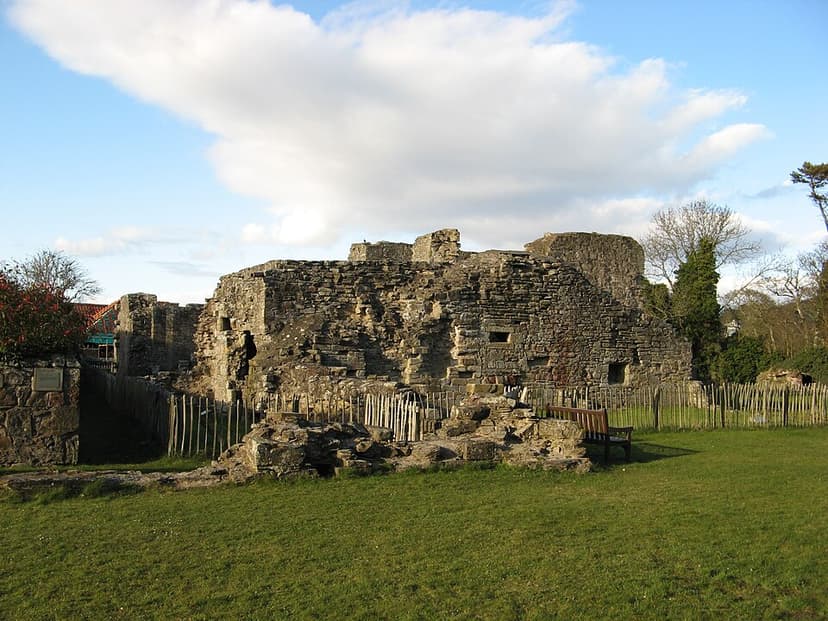
Balmerino Abbey
Balmerino Abbey, also known as St Edward's Abbey, was a Cistercian monastery located in Balmerino, Fife, Scotland. Founded between 1227 and 1229, it was patronized by Ermengarde de Beaumont and King Alexander II. The abbey suffered destruction during the War of the Rough Wooing and later during the Scottish Reformation, leading to its decline and eventual ruin by the 16th century. Today, the ruins are managed by the National Trust for Scotland.
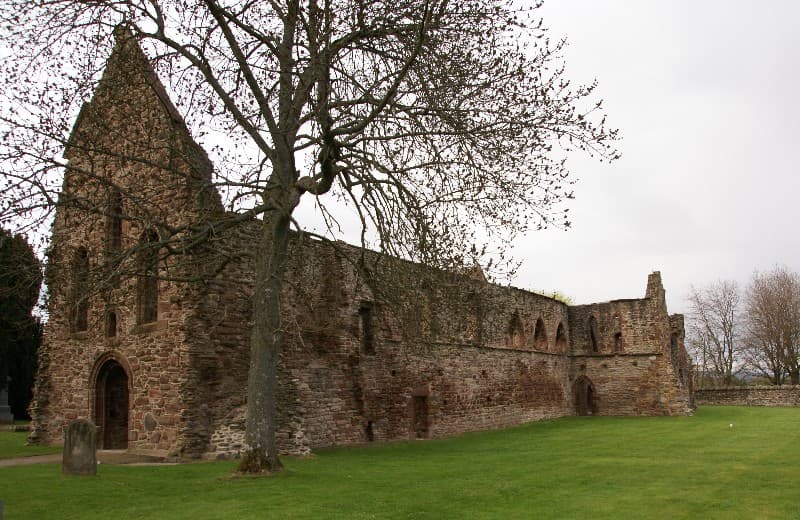
Beauly Priory
Beauly Priory was a monastic community established likely in 1230 in what is now Beauly, Inverness-shire. Originally founded by the Valliscaulian Order, it later became Cistercian in 1510 following the suppression of its original order. Today, the priory's extensive ruins are a significant visitor attraction, protected as a scheduled monument.