
Easby Abbey
Easby Abbey, formally the Abbey of St Agatha, is a ruined Premonstratensian abbey situated on the eastern bank of the River Swale near Richmond, North Yorkshire. Founded in 1152 by Roald, Constable of Richmond Castle, it was home to White Canons, known for their austerity and pastoral work. The abbey suffered from Scottish raids and was eventually dissolved by Henry VIII in the late 1530s, leaving behind significant ruins that are now Grade I listed.
Key Facts
- ›Founded in 1152 by Roald, Constable of Richmond Castle.
- ›Inhabited by Premonstratensian canons, known as the White Canons.
- ›A daughter house of Newsham Abbey in Lincolnshire.
- ›Suffered damage from Scottish raids and was affected by the English army's billeting in 1346.
- ›Dissolved in the late 1530s during the reign of Henry VIII.
- ›Ruins are Grade I listed and can be visited via a riverside walk from Richmond Castle.

- Still-Active Parish Church Within the Precinct
- 13th-Century Wall Paintings In the Parish Church
- Fine Canopied Choir Stalls
Abbey of St Agatha
Roald, Constable of Richmond Castle
- Founded In 1152
- Suffered From Scottish Raids
- Damaged When English Army Billeted There In 1346
- Dissolved In the Late 1530s
About Easby Abbey
Easby Abbey, officially known as the Abbey of St Agatha, stands as a significant ruin on the eastern bank of the River Swale, just outside Richmond in the county of North Yorkshire, England. The site, though privately owned, is managed by English Heritage and is accessible to the public through a pleasant riverside walk originating from Richmond Castle. Within the abbey precinct, the parish church remains active and offers visitors a glimpse into the past with its preserved 13th-century wall paintings.
History and Founding
The Abbey of St Agatha was established in 1152 by Roald, who served as the Constable of Richmond Castle. The community consisted of canons rather than monks, belonging to the Premonstratensian order, and were consequently known as the White Canons. Easby Abbey was a daughter house of Newsham Abbey in Lincolnshire and represented the third Premonstratensian foundation in England. The White Canons adhered to a strict code of austerity, comparable to that of Cistercian monks, and enjoyed an exemption from episcopal authority. Their mission included preaching and pastoral care within the surrounding region, which involved charitable distribution of food and drink, alongside agricultural pursuits such as sheep farming.
Challenges and Dissolution
Like many monastic institutions in northern England during the Middle Ages, Easby Abbey faced challenges, including frequent raids by Scottish forces. The abbey sustained considerable damage in 1346 when the English army was temporarily housed there en route to the Battle of Neville's Cross. The abbey's active religious life came to an end in the late 1530s with the dissolution of the monasteries under Henry VIII. Following its abandonment, Easby Abbey gradually fell into ruin. Fortunately, some of its most valuable features, notably the ornate canopied choir stalls, were salvaged and are now preserved in Richmond's parish church.
Legacy and Accessibility
The ruins of Easby Abbey are a testament to its historical importance and are recognized with Grade I listing. The site continues to attract visitors interested in monastic history and architecture. The presence of the still-functioning parish church within the abbey's former precinct adds a unique dimension to the site, bridging past and present. The Scrope family, prominent in the region, also has several members buried within the abbey grounds, further enriching its historical narrative.
Source: Wikipedia ↗
Frequently Asked Questions
What religious order was Easby Abbey part of?
Easby Abbey was established by the Premonstratensian order. Its inhabitants were canons, often referred to as White Canons due to their white habit, and they followed a code of austerity similar to Cistercian monks.
When was Easby Abbey founded?
The Abbey of St Agatha, Easby, was founded in the year 1152. Its establishment was initiated by Roald, who held the position of Constable of Richmond Castle.
What happened to Easby Abbey?
Easby Abbey was dissolved in the late 1530s under Henry VIII's monastic dissolution. After its abandonment, it fell into ruins, although some notable features, such as the choir stalls, were relocated.
Can I visit Easby Abbey?
Yes, the ruins of Easby Abbey are accessible to the public. The site is privately owned but maintained by English Heritage and can be reached via a scenic riverside walk from Richmond Castle.
Are there any notable burials at Easby Abbey?
Several members of the Scrope family were buried at Easby Abbey. This includes Henry le Scrope, William le Scrope, Richard le Scrope (1st Baron Scrope of Bolton) and subsequent Barons of Bolton.
Related Monasteries

Ankerwycke Priory
Ankerwycke Priory was a small and relatively poor Benedictine nunnery established around 1160 in Buckinghamshire, England. Dedicated to St. Mary Magdalene, it held lands across several counties. Dissolved in 1536, its revenues were transferred to Bisham Abbey, and the priory site later saw the construction of a manor house. Today, only a small section of ruins remains, situated in Berkshire.
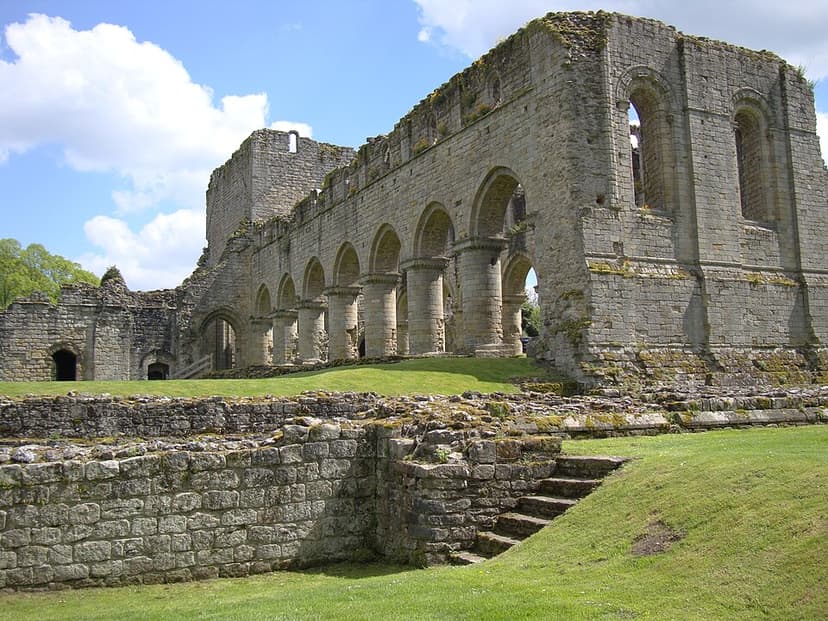
Buildwas Abbey
Buildwas Abbey was a significant Cistercian monastery in Shropshire, England, founded in 1135. It experienced periods of substantial growth and wealth, becoming a center of learning with a notable library. Despite facing challenges from economic crises and conflict, it played a role in royal administration, particularly concerning Ireland and Wales, before its suppression in 1536. Today, substantial remains of the abbey church and monastic buildings are maintained by English Heritage.

Byland Abbey
Byland Abbey was a Savigniac and later Cistercian monastic institution founded in 1135 in North Yorkshire, England. Despite an unstable early history with multiple relocations, it eventually settled at its final site near Coxwold. Once established, it became a significant religious and economic center, renowned for its sheep rearing and wool exports, and boasting a church described as one of the finest 12th-century structures in Europe. Though dissolved in 1538, extensive ruins remain, including the west front of the church with its notable rose window, and the site is maintained by English Heritage.