
Dunblane Monastery
Church of Scotland (Presbyterian)·Scotland·Active parish church and historic site·11th century
Dunblane Cathedral, located in Dunblane, Scotland, is a significant historical church primarily built in the Gothic style during the 13th century, though it incorporates an earlier 11th-century pre-Romanesque tower. Once the seat of the bishops of Dunblane, it is no longer a functioning cathedral due to the Presbyterian nature of the Church of Scotland. The building is notable for its surviving medieval ecclesiastical woodwork and its ownership by the Crown, being maintained by Historic Scotland.
Key Facts
- ›The lower tower section dates back to the 11th century, while the majority of the building is 13th-century Gothic.
- ›It was the historical seat of the bishops of Dunblane until the abolition of bishops in 1689.
- ›The cathedral is dedicated to the 6th-century Saint, St Blane.
- ›It houses the largest surviving collection of medieval Scottish ecclesiastical woodwork after King's College Chapel, Aberdeen.
- ›The building is owned by the Crown and managed by Historic Scotland, with no entrance fee.
- ›A standing stone in the nave commemorates the Dunblane Massacre of 1996.

Gothic, Pre-Romanesque
- Medieval Scottish Ecclesiastical Woodwork
- 11th-Century Pre-Romanesque Tower
- 13th-Century Gothic Choir and Nave
- Chapter House and Sacristy
- Graves of the Drummond Sisters
- Standing Stone Commemorating the Dunblane Massacre
St Blane, Bishop Clement, Margaret Drummond, Robert Rowand Anderson, Sir Robert Lorimer
- Abolition of Bishops
- Restoration of the Nave Roof
- Dunblane Massacre
- Union With Kilmadock and Kincardine-In-Menteith Parishes
About Dunblane Monastery
Dunblane Cathedral
Dunblane Cathedral, situated in the town of Dunblane, Scotland, is a historically significant ecclesiastical building with a rich architectural and religious past. The structure showcases a blend of styles, with its lower tower dating from the 11th century in a pre-Romanesque style, and the majority of the building being a fine example of 13th-century Gothic architecture. The tower itself was later enhanced in the 15th century with late Gothic windows.
History and Significance
Originally dedicated to the 6th-century saint, St Blane, the church gave its name to the settlement. For centuries, Dunblane Cathedral served as the seat of the bishops of Dunblane. However, following the Glorious Revolution in 1689 and the subsequent abolition of bishops, the Church of Scotland adopted a Presbyterian structure, meaning the building is no longer technically a cathedral, although it retains its historical designation. After this period, only the choir continued as the parish church, while the nave fell into disuse and its roof collapsed.
The cathedral is renowned for its collection of medieval Scottish ecclesiastical woodwork, featuring 15th-century choir stalls commissioned by Bishop Ochiltre and more elaborate stalls from Bishop Chisholm's time. The building also holds the graves of notable figures, including Margaret Drummond, a mistress of King James IV of Scotland, and her two sisters.
Ownership and Accessibility
An unusual aspect of Dunblane Cathedral is its ownership by the Crown. It is currently maintained by Historic Scotland, and visitors can explore its grounds and interiors without an entrance charge. The cathedral also contains a standing stone in the nave that commemorates the tragic events of the Dunblane Massacre on March 13, 1996.
Architectural Features and Later Works
The cathedral's construction spans several centuries, with the 13th-century choir housing a vaulted chamber that served as a chapter house and sacristy. Within the choir lies the mural tomb of Bishop Clement, the cathedral's founder. Significant restoration efforts took place in the late 19th century, overseen by architects Robert Rowand Anderson and later completed by Sir Robert Lorimer. The church also features several notable stained-glass windows from the late 19th and early 20th centuries, created by artists such as Clayton and Bell, Douglas Strachan, Louis Davis, and Charles Eamer Kempe.
In recent times, on June 13, 2024, the charge of Dunblane Cathedral united with the parishes of Kilmadock and Kincardine-in-Menteith to form Dunblane Cathedral, Kilmadock and Blair Drummond Church, continuing its role as a centre of worship and community life.
Source: Wikipedia ↗
Frequently Asked Questions
What is the history of Dunblane Cathedral?
Dunblane Cathedral's earliest surviving part is an 11th-century tower, with most of the current Gothic structure dating from the 13th century. It served as the episcopal seat until 1689 and later underwent significant restoration in the late 19th century.
Why is it no longer technically a cathedral?
Following the Glorious Revolution and the abolition of bishops in 1689, the Church of Scotland adopted a Presbyterian structure. As there are no longer bishops in this denomination, the building is no longer considered a cathedral in the strict sense, though it retains its historical name.
Who is Dunblane Cathedral dedicated to?
The cathedral is dedicated to St Blane, a 6th-century saint. The name 'Dunblane' itself means 'hill of St Blane,' reflecting this dedication.
What are the notable architectural features of Dunblane Cathedral?
Key features include the 11th-century pre-Romanesque lower tower, the 13th-century Gothic nave and choir, and the 15th-century Gothic upper section of the tower. It also contains a 13th-century chapter house and sacristy.
Are there any significant burials or monuments within Dunblane Cathedral?
The cathedral contains the graves of Margaret Drummond and her two sisters, who were allegedly poisoned. Bishop Clement of Dunblane, and Malise II, Earl of Strathearn, are also commemorated.
Who currently manages Dunblane Cathedral?
Unusually, Dunblane Cathedral is owned by the Crown and is maintained by Historic Scotland. There is no entrance charge for visitors.
Related Monasteries
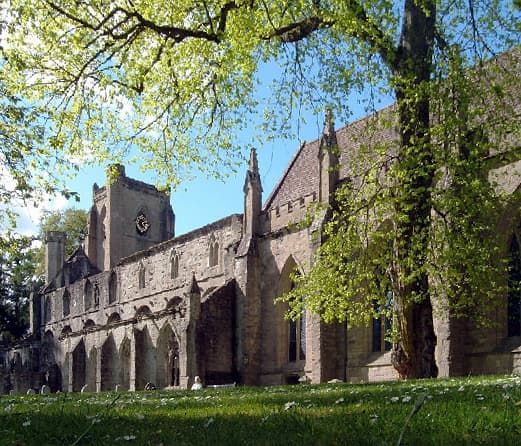
Dunkeld Monastery
Dunkeld Monastery, originally a Culdee monastery, evolved into Dunkeld Cathedral, a significant religious site on the north bank of the River Tay in Scotland. Its construction began in 1260 and concluded in 1501, showcasing a blend of Gothic and Norman architectural styles. Although partly in ruins, the cathedral remains an active Church of Scotland parish church and is open to the public, housing relics and notable burials.
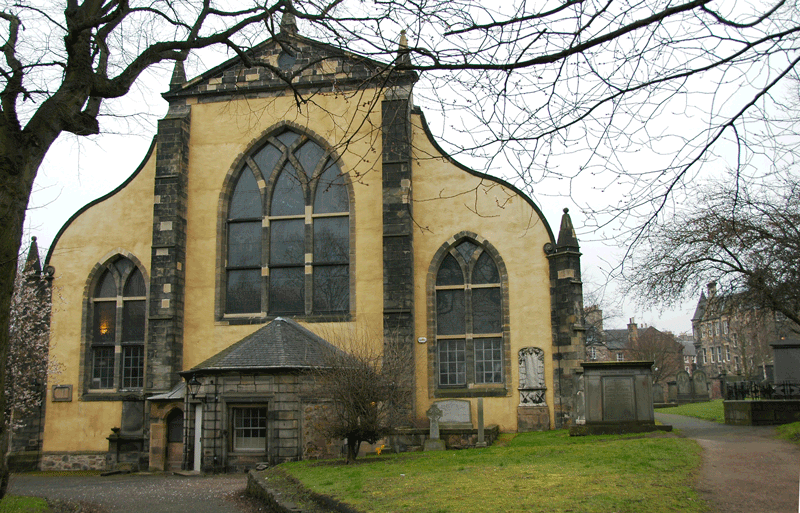
Edinburgh Greyfriars
Greyfriars Kirk, located in Edinburgh's Old Town, originated from the 1598 founding of the south-west parish of Edinburgh, though its name derives from the 15th-century Franciscan friary that once occupied the site. Constructed between 1602 and 1620, the church has been a pivotal site for significant historical events, including the signing of the National Covenant in 1638 and occupation by Oliver Cromwell's troops. Over centuries, it has undergone multiple reconstructions and partitions to accommodate changing congregations, notably after a fire in 1845 and the union of Old and New Greyfriars in 1929.
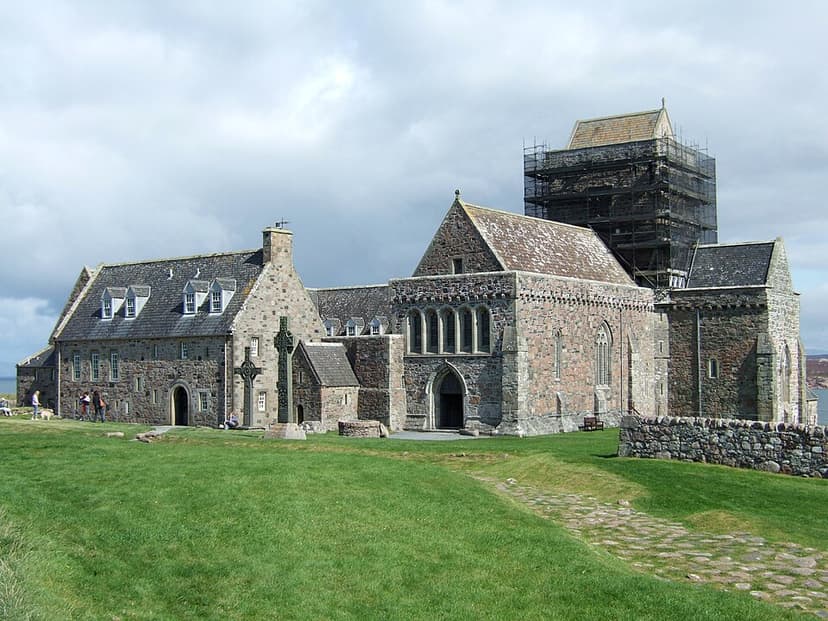
Iona Abbey
Iona Abbey is one of the oldest Christian centers in Western Europe, established on the island of Iona off the west coast of Scotland. Founded by Saint Columba in 563, it served as a crucial hub for the spread of Christianity throughout Scotland. After periods of Viking raids and rebuilding, it became a Benedictine abbey and later the ecclesiastical capital for the Macdonald Lords of the Isles. Today, it is the spiritual home of the Iona Community, an ecumenical Christian order, and remains a significant site for Christian pilgrimage.