
Dunblane Cathedral
Dunblane Cathedral is a historic Church of Scotland church located in Dunblane, Scotland, with parts dating back to the 11th century. Originally the seat of the bishops of Dunblane, it is now a parish church and a significant historical site, known for its largely 13th-century Gothic architecture and its collection of medieval woodwork. The cathedral is notable for being owned by the Crown and maintained by Historic Scotland, with no entrance fee.
Key Facts
- ›The oldest surviving part of the cathedral is the lower section of the tower, dating from around 1100 AD, with an upper section added around 1500.
- ›Most of the main building is Gothic, originating from the 13th century.
- ›It was the seat of the bishops of Dunblane until the abolition of bishops in 1689.
- ›The cathedral contains the graves of Margaret Drummond and her two sisters, allegedly poisoned.
- ›It houses one of the largest surviving collections of medieval Scottish ecclesiastical woodwork.
- ›The building is owned by the Crown and maintained by Historic Scotland, with free entry.

- 11th-Century Pre-Romanesque Lower Tower
- 13th-Century Gothic Nave and Choir
- Collection of Medieval Scottish Ecclesiastical Woodwork
- Mural Tomb of Bishop Clement
- Graves of the Drummond Sisters
- Commemorative Stone For the Dunblane Massacre
Robert Rowand Anderson, Sir Robert Lorimer
About Dunblane Cathedral
Dunblane Cathedral is a significant historical and religious site located in Dunblane, Scotland, belonging to the Church of Scotland. Its origins trace back to the 6th century with Saint Blane, after whom both the cathedral and the settlement are named. The structure itself showcases a fascinating layering of architectural periods, with its oldest surviving element being the lower portion of the tower, dating from approximately 1100 AD. This pre-Romanesque section was originally a free-standing bell tower.
The majority of the cathedral's present form, however, is attributed to 13th-century Gothic construction. This period saw the development of the main body of the church, including the choir, which served as the chapter house and sacristy. Later, in the 15th century, the tower was heightened, a modification evident in the change of stonework and the addition of late Gothic windows.
Historically, Dunblane Cathedral was the seat of the bishops of Dunblane until the abolition of episcopacy in Scotland following the Glorious Revolution of 1689. Although technically no longer a cathedral in the Presbyterian tradition, it continues to function as a vital parish church. Uniquely, the building is owned by the Crown and is maintained by Historic Scotland, allowing for free public access.
Architectural and Historical Significance
Among its notable features are the remains of the episcopal palace vaults to the south and the impressive collection of medieval Scottish ecclesiastical woodwork, second only to King's College Chapel in Aberdeen. This includes intricately carved misericords on the 15th-century choir stalls commissioned by Bishop Ochiltre. The cathedral also holds the mural tomb of its founder, Bishop Clement, who died in 1258. Further elaborations to choir stalls were added by Bishop Chisholm.
The cathedral is also a repository of historical burials, most famously that of Margaret Drummond, a mistress of King James IV of Scotland, along with her two sisters, who are said to have met their end through poisoning. In more recent times, a standing stone by monumental sculptor Richard Kindersley was erected in the nave to commemorate the Dunblane Massacre of 1996, bearing poignant quotations.
Restoration efforts have played a crucial role in preserving the cathedral's heritage. Key works were undertaken in the late 19th century under architect Robert Rowand Anderson, with later contributions by Sir Robert Lorimer. The building continues to be an active place of worship, having recently united with neighbouring parishes to form Dunblane Cathedral, Kilmadock and Blair Drummond Church.
Source: Wikipedia ↗
Frequently Asked Questions
What is Dunblane Cathedral?
Dunblane Cathedral is a Church of Scotland church in Dunblane, Scotland. It is a historic building with parts dating back to the 11th century and is notable for its 13th-century Gothic architecture and medieval woodwork.
What is the history of Dunblane Cathedral?
Originally dedicated to St Blane, the cathedral was once the seat of bishops until their abolition in 1689. While the choir remained in use as a parish church, the nave fell into disrepair for centuries before restoration.
Who is buried at Dunblane Cathedral?
Notable burials include Margaret Drummond, a mistress of King James IV of Scotland, who is interred with her two sisters, all reputed to have been poisoned. The cathedral also contains the tomb of Bishop Clement, its founder.
What are the architectural highlights of Dunblane Cathedral?
Key architectural features include the 11th-century lower tower, the 13th-century Gothic nave and choir, and extensive medieval Scottish ecclesiastical woodwork, including choir stalls commissioned by various bishops.
Who owns and manages Dunblane Cathedral?
Unusually, Dunblane Cathedral is owned by the Crown and is managed by Historic Scotland. There is no entrance charge to visit the cathedral.
What significant events are commemorated at Dunblane Cathedral?
A standing stone in the nave commemorates the Dunblane Massacre of March 1996, featuring quotations that reflect on childhood and connection.
Related Cathedrals

Cimiez Cathedral
Cimiez Cathedral, also known as Cathédrale Sainte-Marie de Cimiez or Cathédrale Notre-Dame du Château, was a significant Roman Catholic church located on the Château de Nice hill in Nice, France. It served as the episcopal seat for the Diocese of Cimiez and later the Bishops of Nice before the bishop's seat was formally transferred to the present Nice Cathedral in 1590. The original structure, dating back to the late 10th century, underwent several rebuilds and additions before its eventual demolition in 1706 following damage sustained during the Siege of Nice.
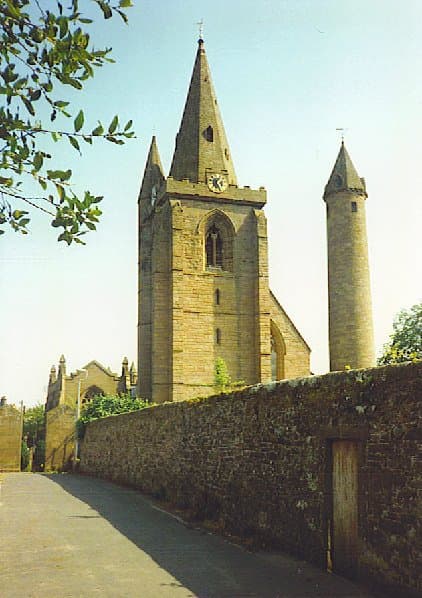
Brechin Cathedral
Brechin Cathedral is a historic Scottish church building with origins in the 13th century. Once the seat of the Roman Catholic Diocese of Brechin, it ceased to function as a cathedral after the Scottish Reformation in the 16th century. Today, it stands as a Category A listed building, notable for its surviving medieval architecture and the adjacent ancient Round Tower.
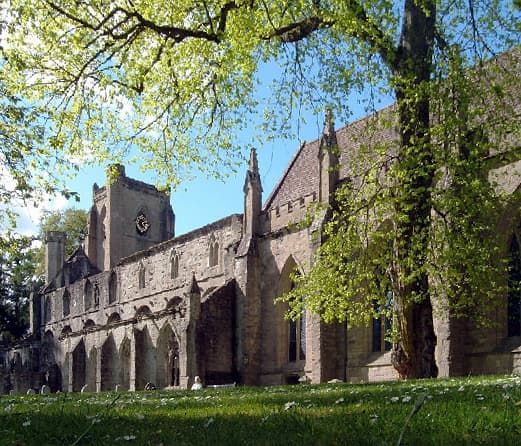
Dunkeld Cathedral
Dunkeld Cathedral is a historic Church of Scotland place of worship situated on the north bank of the River Tay in Dunkeld, Scotland. While no longer formally a cathedral with bishops, it retains the name and stands on the site of a former Culdee monastery, showcasing a blend of Gothic and Norman architectural elements. The cathedral is a significant historical site, believed to have once housed relics of Saint Columba, and is still an active parish church.