
Brechin Cathedral
Brechin·Church of Scotland·Scotland
Brechin Cathedral is a historic Scottish church building with origins in the 13th century. Once the seat of the Roman Catholic Diocese of Brechin, it ceased to function as a cathedral after the Scottish Reformation in the 16th century. Today, it stands as a Category A listed building, notable for its surviving medieval architecture and the adjacent ancient Round Tower.
Key Facts
- ›Dates from the 13th century, serving as the former cathedral for the Diocese of Brechin.
- ›Ceased to function as a cathedral following the Scottish Reformation in the 16th century.
- ›Suffered significant alterations during restorations in 1806 and 1902.
- ›The surviving original elements include the western gable, nave pillars, and clerestory.
- ›Features modern stained glass in the chancel, considered among the finest in Scotland.
- ›The attached Round Tower, dating to circa 1000 AD, is a unique Scottish example of this architectural form.
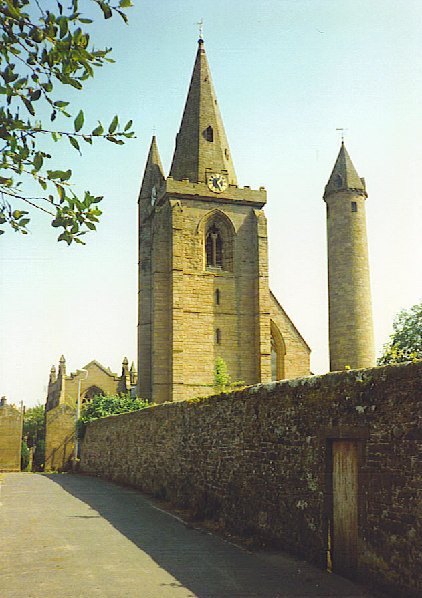
Pointed Style, Gothic
Adjacent Round Tower, Western Gable With Flamboyant Window, Gothic Door, Massive Square Tower, Nave Pillars and Clerestory, Modern Stained Glass In the Chancel, Brechin Hogback Stone Sculpture, St. Mary's Stone Cross-Slab
About Brechin Cathedral
Brechin Cathedral is a historic Scottish church building with origins dating back to the 13th century. It formerly served as the cathedral for the Roman Catholic Diocese of Brechin but has not held this ecclesiastical function since the Scottish Reformation in the 16th century. The building is noted for its surviving medieval architecture, despite undergoing significant, and at times detrimental, restoration efforts, particularly in 1806 and later in 1902.
Architecture and Features
The cathedral is primarily constructed in the Pointed style, characteristic of Gothic architecture. Key surviving elements of the original edifice include the western gable, which features a flamboyant window and a Gothic door, as well as the nave pillars and clerestory. The modern stained glass installed in the chancel is highly regarded and considered among the finest in Scotland.
Adjacent to the cathedral to the southwest stands the remarkable Round Tower, an ancient structure believed to have been built around AD 1000. This tower, standing 86 feet (26.21 m) high with a circumference of 50 feet (15.3 m) at its base, is one of only two such structures in Scotland, the other being at Abernethy. The tower is capped with a hexagonal spire added in the 14th century. Its masonry is of superior quality, and its narrow, raised doorway is exceptionally fine, enriched with two bands of pellets and a well-preserved monolithic arch depicting the Crucifixion. The splayed sides of the doorway feature relief sculptures of ecclesiastics.
Within the cathedral, two significant medieval monuments are preserved: the 'Brechin hogback', a unique stone sculpture combining Celtic and Scandinavian motifs, and 'St. Mary's Stone', a cross-slab with an inscribed central motif of the Virgin and Child, echoing the design on the Round Tower.
Historical Context and Current Status
Brechin Cathedral has undergone various phases of restoration and alteration throughout its history. While it ceased to function as a Roman Catholic cathedral after the Reformation, it continued as a church. In recent years, its future as a place of worship has changed. Between 1999 and 2009, Scott Rennie served as the minister. In February 2020, the Presbytery of Angus approved a dissolution motion leading to the transfer of ownership to the General Trustees of the Church of Scotland, with plans to sell the building. However, a committee worked to mark the cathedral's 800th anniversary in 2020. The cathedral held its final service as a sanctified church on November 28, 2021. A committee of Trustees, led by Caroline Carnegie, Duchess of Fife, has since been established to manage the cathedral's care and development, with the intention of restoring it as a community and tourist focal point.
Source: Wikipedia ↗
Frequently Asked Questions
When was Brechin Cathedral built?
The Scottish Church building that is Brechin Cathedral dates from the 13th century. However, the adjacent Round Tower, a significant part of the site, was built around AD 1000.
What is the significance of the Round Tower at Brechin Cathedral?
The Round Tower, built about AD 1000, is one of only two such structures in Scotland, the other being at Abernethy. It is noted for its superior masonry quality and features a finely preserved doorway with relief sculptures.
Has Brechin Cathedral always been part of the Church of Scotland?
No, Brechin Cathedral was originally the cathedral of the Roman Catholic Diocese of Brechin. It has not served that function since the Scottish Reformation in the 16th century.
What is the current status of Brechin Cathedral?
Brechin Cathedral closed its doors as a sanctified church on November 28, 2021. A committee of Trustees has been established to oversee its care and development with the aim of making it a community and tourist hub.
What architectural styles are present at Brechin Cathedral?
The cathedral is described as being in the 'Pointed style,' which is a characteristic of Gothic architecture. The Round Tower is a distinct pre-Gothic architectural form.
Related Cathedrals
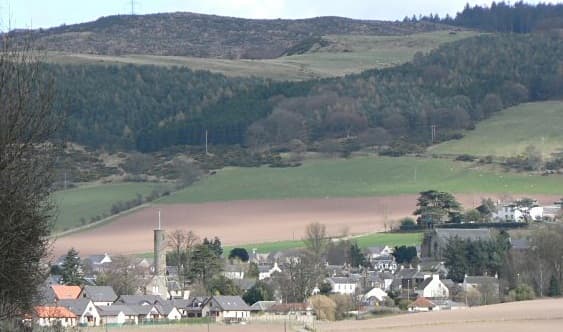
Abernethy, Perth and Kinross
Abernethy, Perth and Kinross, is a historic village in Scotland that was a significant religious and political center for the Picts. Its most prominent surviving medieval structure is the Abernethy Round Tower, one of only two such Irish-style towers remaining in Scotland, which likely served a monastic purpose. The village's strategic location near the confluence of the Rivers Earn and Tay and its historical importance are key to understanding its development.
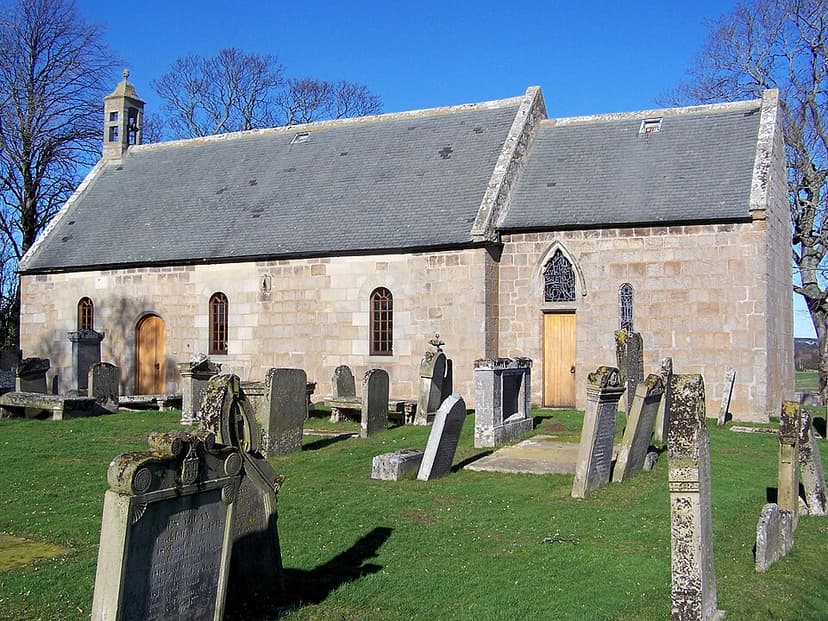
Birnie Kirk
Birnie Kirk is a rare 12th-century Norman parish church in Moray, Scotland, notable for being the first cathedral of the Bishop of Moray and one of Scotland's oldest churches in continuous use. While it served as a cathedral from 1107 to 1184, it later became a parish church. The building and its surrounding archaeological remains are a scheduled monument.
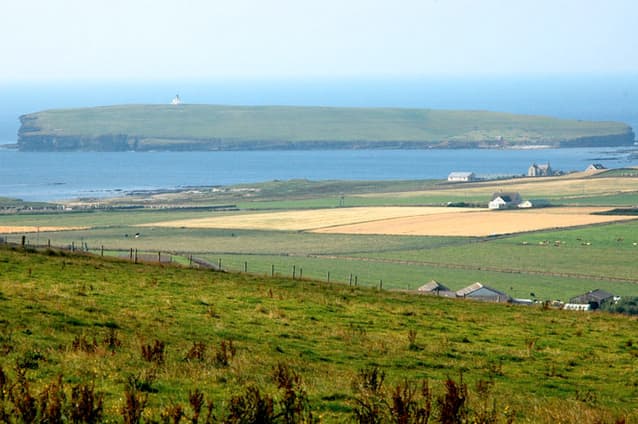
Birsay
Birsay is a parish in Orkney, Scotland, notable for its ancient monuments and historical significance as the potential site of Orkney's first cathedral. The area features prehistoric and Norse settlements on the Brough of Birsay and the ruins of the 16th-century Earl's Palace.