
Drongtse Monastery
Tibetan Buddhism·China·partially restored, with many main buildings in ruins
Drongtse Monastery was a significant Gelug Tibetan Buddhist monastery located in Tsang, Tibet, historically situated northwest of Gyantse. Though severely damaged during the Cultural Revolution, it has seen partial restoration, with its Assembly Hall rebuilt in the 1980s, although many main structures remain in ruins. The monastery was notable for its congregation hall containing old gilt images and historical depictions, and it was associated with prominent figures in Tibetan Buddhism.
Key Facts
- ›Formerly a major Gelug monastery in Tsang, Tibet.
- ›Located 19 km northwest of Gyantse.
- ›Almost completely destroyed during the Cultural Revolution.
- ›Assembly Hall was rebuilt in the 1980s.
- ›Associated with figures like the 5th Dalai Lama, Lhatsun Chenpo, and Tsultrim Chopel.
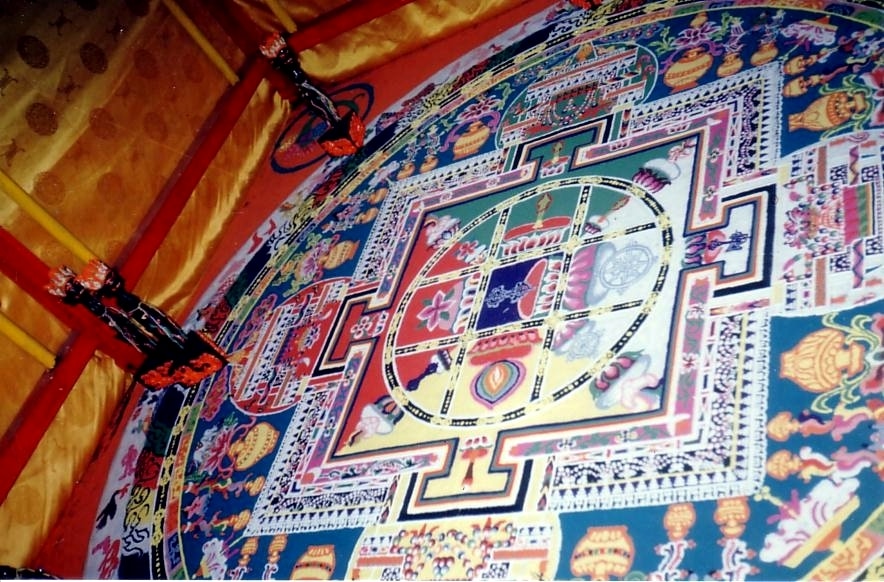
- Assembly Hall
- Congregation Hall With Old Gilt Images
- Picture of the 5th Dalai Lama and GüShi Khan
- Chapel With Rock-Carved Images of Padmasambhava, Tara, and Amitayus
Zhongze
Lhatsun Chenpo, Rinchen Gyatso, Lobsang Palden Chophel, 5th Dalai Lama, GüShi Khan, Tsultrim Chopel, Lobzang Tsultrim
Deposition of the King of Tsang In 1642, Destruction During the Cultural Revolution
About Drongtse Monastery
Drongtse Monastery, also known by the Pinyin name Zhongze, was a historically significant Gelug Tibetan Buddhist monastery situated in the Tsang region of Tibet. Its strategic location placed it northwest of Gyantse and on the route towards Shigatse, near the site of early Tsi Nesar temples. The monastery was once considered one of the most important institutions of its tradition in the area.
History and Significance
According to some traditions, Drongtse Monastery was founded by Lhatsun Chenpo (Je Lha-tsun), while other sources attribute its establishment to the yogin and ascetic Rinchen Gyatso. Later, it was integrated into the monastic network as a branch of Tashilhunpo. The monastery's congregation hall, the du-khang, was capable of accommodating around eighty monks and contained notable ancient gilt images, including a representation of Jowo Shakyamuni said to be an Indian artist's copy of the revered image in Lhasa's Jokhang Temple. Historical accounts also mention a depiction within the hall showing the 5th Dalai Lama, Lozang Gyatso, receiving political authority over Tibet from Güshi Khan following the deposition of the King of Tsang in 1642. A small chapel behind the main monastery features rock-carved images of deities such as Padmasambhava, Tara, and Amitayus.
Destruction and Restoration
Drongtse Monastery endured severe damage during the Cultural Revolution, with its structures being almost entirely destroyed. Since that period, efforts have been made towards its partial restoration. The Assembly Hall was rebuilt in the 1980s, though a significant portion of the monastery's original main buildings remain in a ruined state. The monastery's original four-storied complex was situated on a rocky eminence approximately 91 meters (300 ft) above the local village.
Associated Figures
Several prominent figures in Tibetan Buddhist history are associated with Drongtse Monastery. It is recognized as the birthplace of Lobsang Palden Chophel, also known as the Sengchen ('Lion') Lama. The Thirty-Second Ganden Tripa, Tsultrim Chopel (1561-1623), received his early monastic education at Drongtse. Furthermore, Lobzang Tsultrim (1745 - 1800) commenced his training at the monastery at the age of ten. The presence of an image related to the 5th Dalai Lama and Güshi Khan further underscores its historical connections to key events in Tibetan governance and religious development.
Source: Wikipedia ↗
Frequently Asked Questions
When was Drongtse Monastery founded?
Historical accounts suggest differing origins for Drongtse Monastery. Some sources attribute its founding to Lhatsun Chenpo (Je Lha-tsun), while other traditions credit the yogin and ascetic Rinchen Gyatso with its establishment in the same year, fulfilling a prophecy.
What is the current condition of Drongtse Monastery?
Drongtse Monastery suffered extensive destruction during the Cultural Revolution. While the Assembly Hall was reconstructed in the 1980s and some restoration has occurred, many of the main buildings of the original four-storied structure remain in ruins.
What was the significance of Drongtse Monastery?
Drongtse Monastery was once one of the most important Gelug monasteries in the Tsang region of Tibet. Its congregation hall housed significant old gilt images, including one of Jowo Shakyamuni, and historical depictions related to Tibetan political history.
Which notable individuals are associated with Drongtse Monastery?
The monastery is linked to several important figures in Tibetan Buddhism. It was the birthplace of Lobsang Palden Chophel, also known as the Sengchen ('Lion') Lama. Additionally, the Thirty-Second Ganden Tripa, Tsultrim Chopel, received his monastic education there, as did Lobzang Tsultrim.
Related Monasteries

Badekar Monastery
Badekar Monastery, also known as Udin Ju or Wudang Zhao, is a significant Tibetan Buddhist monastery of the Gelug sect and the largest of its kind in Inner Mongolia. Constructed in line with Tashi Lhunpo Monastery's design, it features no Han-style architecture and is built horizontally along the mountain. Designated a Major Historical and Cultural Site Protected at the National Level in 1996, it has also been developed as a major tourist destination and was part of a national park declared in 2001.

Dorje Drak
Dorje Drak, also known as Indestructible Rock Vihara, is a significant Tibetan Buddhist monastery of the Nyingma school, recognized as one of its 'Six Mother Monasteries' in Tibet. Originally founded as Ewam Chogar Gompa, it was enlarged and renamed Dorje Drak following the discovery of auspicious natural signs. The monastery has a history marked by destruction and rebuilding, most notably its relocation in 1632 and subsequent destruction during the 1960s, leading to a new foundation in India.

Dzogchen
Dzogchen Monastery is a significant "Mother Monastery" of the Nyingma tradition of Tibetan Buddhism, historically located in Kham and re-established in South India. Founded in 1684 by Pema Rigdzin, it became renowned for its Sri Singha Shedra and was once the largest Nyingma monastery, housing thousands of monks and numerous branches. Despite significant destruction in the 20th century, it has been rebuilt in both Tibet and India, continuing its role as a major center for Buddhist teachings and practice.