
Badekar Monastery
Tibetan Buddhism·China·Active (implied by development as tourist destination and national park status, though specific community status not detailed)
Badekar Monastery, also known as Udin Ju or Wudang Zhao, is a significant Tibetan Buddhist monastery of the Gelug sect and the largest of its kind in Inner Mongolia. Constructed in line with Tashi Lhunpo Monastery's design, it features no Han-style architecture and is built horizontally along the mountain. Designated a Major Historical and Cultural Site Protected at the National Level in 1996, it has also been developed as a major tourist destination and was part of a national park declared in 2001.
Key Facts
- ›It is the largest Tibetan Buddhist monastery in Inner Mongolia.
- ›It was designated a Major Historical and Cultural Site Protected at the National Level in 1996.
- ›Its architecture follows the layout of Tashi Lhunpo Monastery, omitting Han-style elements.
- ›The monastery complex received significant expansion under the Qianlong, Jiaqing, and Daoguang emperors.
- ›It was developed as a major tourist destination starting in the 1980s.
- ›The area around the monastery was declared a national park in 2001.

Tibetan
- Largest Tibetan Buddhist Monastery In Inner Mongolia
- Architectural Layout Based On Tashi Lhunpo Monastery
Udin Ju, Wudang Zhao, Wudang Temple, BäMagar, Pemakar, GyaqêN Dog DäNling, GyaqêNdog Monastery, Agu'Ih Onolt Monastery, Guangjue Monastery
Qianlong Emperor, Jiaqing Emperor, Daoguang Emperor
- Construction After the Kangxi Era
- Massive Expansion Under the Qianlong Emperor
- Development As A Major Tourist Destination In the 1980s
About Badekar Monastery
Badekar Monastery, also known by its Mongolian name Wudang Zhao (五当召), is a prominent Tibetan Buddhist monastery belonging to the Gelug sect. It holds the distinction of being the largest Tibetan Buddhist monastery in the entire Inner Mongolia region. The monastery's architectural design is notable for adhering strictly to the layout of the Tashi Lhunpo Monastery in Xigazê, Sichuan, and notably excludes any Han-style architectural elements. Its structures are arranged horizontally along the contours of the mountain.
History and Significance
The monastery's construction occurred sometime after the Kangxi era, supported by the Qing government's patronage of Tibetan Buddhism in Inner Mongolia. It experienced significant expansion during the reign of the Qianlong emperor, reportedly as a measure to pacify the local Mongolian population following a massacre of a rebellious group from the Dzungar Basin. Further substantial grants and expansions were received under the Jiaqing and Daoguang emperors. In recognition of its historical and cultural importance, Badekar Monastery was designated a Major Historical and Cultural Site Protected at the National Level in 1996. Since the reform and opening-up policies of the 1980s, the monastery has been developed into a significant tourist destination, and in 2001, the surrounding area was declared a national park.
Environmental Concerns
In recent decades, the environment around Badekar Monastery has faced challenges. Observations from the late 1990s indicate receding vegetation, drying streams, and encroaching desert conditions. These issues have been compounded by heavy summer rains, which contribute to soil erosion. The area in front of the monastery has also undergone urbanisation, leading to a marked decline in the number of willow trees, which were once abundant in the vicinity.
Source: Wikipedia ↗
Frequently Asked Questions
What is Badekar Monastery known by?
Badekar Monastery is known by several names. Its local Mongolian name is Wudang Temple, a transliteration of the Mongolian word for willow and temple. Its formal Mongolian name is Badakar, derived from the Tibetan 'white peony'. It also has a formal quadrilingual name granted by the Qianlong emperor, which includes Tibetan, Mongolian, Chinese, and Manchu designations.
When was Badekar Monastery built and expanded?
The monastery was built sometime after the Kangxi era. It underwent massive expansion under the Qianlong emperor, and also received grants and further development under the Jiaqing and Daoguang emperors.
What is unique about Badekar Monastery's architecture?
Unlike other Tibetan Buddhist institutions in Inner Mongolia, Badekar Monastery was constructed according to the layout of Tashi Lhunpo Monastery in Xigazê. This means it incorporates no Han-style architecture, with all structures positioned horizontally along the mountain.
What environmental issues are associated with Badekar Monastery?
Since the late 1990s, the area around the monastery has faced environmental challenges. Vegetation has been receding, streams are drying up, and desertification is spreading. Heavy summer rains have exacerbated soil erosion, and urban development has led to a significant decrease in willow trees, which were once plentiful.
How has Badekar Monastery been developed in recent times?
Badekar Monastery was developed as a major tourist destination during the reform and opening up period in the 1980s. In 2001, the area surrounding the monastery was designated as a national park, further promoting its accessibility and status as a cultural site.
Related Monasteries
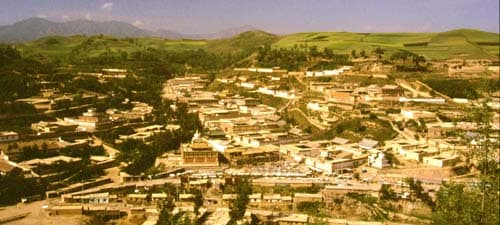
Kumbum Monastery
Kumbum Monastery, also known as Ta'er Temple, is a significant Tibetan Buddhist monastery founded in 1583 in Lusar, Qinghai, China. It holds a prominent place in Tibetan Buddhism, second only to Lhasa's Drepung Monastery. The monastery is renowned for its origins tied to Je Tsongkhapa, the founder of the Gelug school, and the miraculous "Tree of Great Merit" that grew from his birthplace.
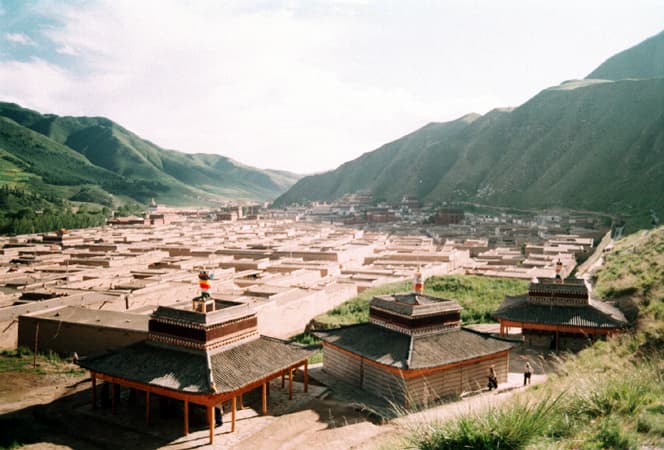
Labrang Monastery
Labrang Monastery, also known by its formal Tibetan name Genden Shédrup Dargyé Trashi Gyésu khyilwé Ling, is one of the six great monasteries of the Gelug school of Tibetan Buddhism. Founded in 1709 by Je Lama Tsongkhapa, it is the largest Tibetan Buddhist monastery outside the Tibet Autonomous Region and was a significant monastic university and regional power base in Amdo. The complex features a blend of Tibetan and Indian Vihara architectural styles and houses numerous halls, institutes of learning, and a museum.

Gonchen Monastery
Gonchen Monastery, also known as Derge Monastery, is a significant Sakya Tibetan Buddhist monastery situated in the town of Derge, within the Kham region of Sichuan, China. Founded by the renowned polymath Thang Tong Gyalpo, it is recognized for its unique architectural design and its association with the historic Derge Parkhang printing house, which continues to produce Buddhist scriptures using traditional methods. Though largely destroyed during the Cultural Revolution, the monastery was restored in the 1980s and remains a vital center for Tibetan Buddhism.