
Tashi Lhunpo Monastery
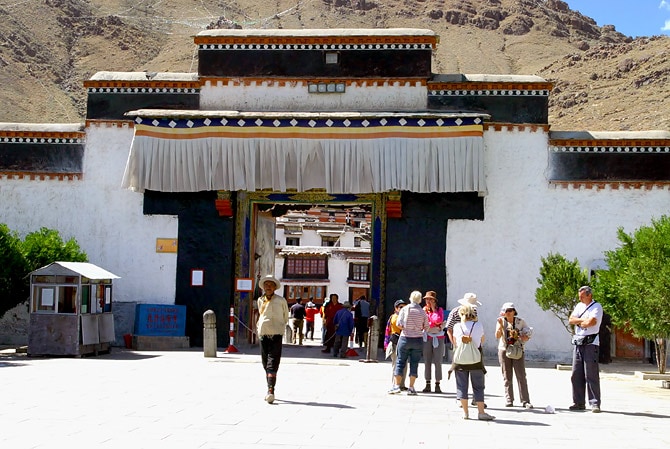
Tashi Lhunpo Monastery, founded in 1447, is a historically and culturally significant Buddhist monastery located in Shigatse, Tibet. It serves as the traditional monastic seat of the Panchen Lama, the second-highest-ranking spiritual leader in the Gelug tradition of Tibetan Buddhism, and has endured significant destruction and reconstruction throughout its history.
Key Facts
- ›Founded in 1447 by the 1st Dalai Lama, Gedun Drub.
- ›Traditional monastic seat of the Panchen Lama lineage.
- ›Sacked by the Gorkha Kingdom in 1791, with looting and destruction occurring.
- ›Suffered significant damage during the Chinese Cultural Revolution in 1966.
- ›Houses the tallest and largest bronze Jampa (Maitreya) Buddha statue in the world.
- ›Has a branch monastery established in Bylakuppe, India, by the Tibetan diaspora.
Important Relationships
- 1st Dalai Lama
- Panchen Lama
- Je Tsongkhapa
- Gorkha Kingdom
- Chinese Cultural Revolution
- 11th Panchen Lama Choekyi Gyalpo
- Tallest and Largest Bronze Jampa Buddha Statue In the World
- Sacred Path For Circumambulation
- Founded In 1447
- Sacked By the Gorkha Kingdom In 1791
- Damaged During the Chinese Cultural Revolution In 1966
- Construction of A New Stupa For the Relics of Panchen Lamas Began In 1985
- Enthronement of the 11th Panchen Lama Under Chinese Supervision In 1995
About Tashi Lhunpo Monastery
Tashi Lhunpo Monastery, situated in Shigatse, Tibet, is a historically and culturally vital center of Tibetan Buddhism. Founded in 1447 by Gedun Drub, who would later be recognized as the 1st Dalai Lama, the monastery has evolved into the traditional spiritual seat of the Panchen Lama, the second-highest-ranking tulku lineage within the Gelug tradition.
History and Significance
The monastery's history is marked by periods of expansion and devastation. Major expansions were undertaken by Lobsang Chökyi Gyalsten, the Fourth Panchen Lama, solidifying its role as the Panchen Lamas' residence. In 1791, Tashi Lhunpo faced significant damage when invaded by the Gorkha Kingdom, though its looted treasures were eventually recovered. A more profound period of destruction occurred during the Chinese Cultural Revolution in 1966, when much of the monastic buildings, particularly monks' residences, were destroyed, and sacred relics were desecrated. Despite this, efforts have been made towards reconstruction and preservation, including the construction of a new stupa for the relics of previous Panchen Lamas, consecrated shortly before the death of the 10th Panchen Lama in 1989.
Architectural and Religious Features
Tashi Lhunpo is renowned for housing the world's tallest and largest bronze statue of Jampa Buddha, also known as Maitreya Buddha, the future Buddha. This colossal statue, standing 26.2 meters high on a 3.5-meter lotus seat, is elaborately decorated with over 1,400 precious ornaments. Pilgrims often circumambulate the monastery on the sacred path, or lingkhor, located outside its walls, a practice central to devotion.
Modern Context
In addition to its historical significance, Tashi Lhunpo continues to hold importance in the present day. The 11th Panchen Lama, Choekyi Gyalpo, was enthroned at the monastery in 1995 under Chinese supervision. The monastery also has a presence in exile, with a branch established in Bylakuppe, India, by the Tibetan population in diaspora. Captain Samuel Turner, a British officer, described the monastery in the late 18th century as a magnificently gilded structure, its beauty enhanced by the rising sun.
Source: Wikipedia ↗
Frequently Asked Questions
When was Tashi Lhunpo Monastery founded?
Tashi Lhunpo Monastery was founded in 1447 CE. Its establishment was financed by donations from local nobles.
Who is the spiritual leader associated with Tashi Lhunpo Monastery?
The monastery is the traditional monastic seat of the Panchen Lama, who is the second highest-ranking spiritual leader in the Gelug tradition of Tibetan Buddhism.
What historical events have impacted Tashi Lhunpo Monastery?
The monastery was sacked by the Gorkha Kingdom in 1791. It also suffered significant destruction during the Chinese Cultural Revolution in 1966, though parts have since been rebuilt.
What notable religious figure is associated with its founding?
The monastery was founded by Gedun Drub, who was a disciple of Je Tsongkhapa and later recognized as the 1st Dalai Lama.
What significant artwork is housed at Tashi Lhunpo Monastery?
The monastery is home to the tallest and largest bronze Jampa Buddha statue in the world. This statue of Maitreya Buddha stands 26.2 meters high and is adorned with over 1,400 precious ornaments.
Related Buddhist Temples

Drepung Monastery
Drepung Monastery, meaning "Rice Heap Monastery," is one of Tibet's "great three" Gelug monasteries and was historically the largest monastery in the world, once housing up to 10,000 monks. Founded in 1416, it served as the principal seat of the Gelug school and was renowned for its high academic standards, often referred to as the Nalanda of Tibet. The Ganden Phodrang within Drepung was the residence of the Dalai Lamas until the Potala Palace was constructed.

Ganden Monastery
Ganden Monastery, founded in 1409 by Je Tsongkhapa, is one of the "great three" Gelug university monasteries in Tibet. It served as the spiritual and administrative center for the Gelug school, with its "throne-holder" being the head of the order. Although largely destroyed in the 1950s and 1960s, the monastery has been partially rebuilt and a new Ganden Monastery was established by Tibetan exiles in India.

Phugtal Monastery
Phugtal Monastery is a remarkable Buddhist monastery situated in a remote cave in the Lungnak Valley of Ladakh, Northern India. Its unique honeycomb-like structure built into a cliffside, combined with its spiritual significance and historical legacy, makes it a notable site for pilgrimage and cultural preservation. The monastery provides education and traditional medical care to the local community, embodying a holistic approach to spiritual and social well-being.