
Ganden Monastery
Ganden Monastery, founded in 1409 by Je Tsongkhapa, is one of the "great three" Gelug university monasteries in Tibet. It served as the spiritual and administrative center for the Gelug school, with its "throne-holder" being the head of the order. Although largely destroyed in the 1950s and 1960s, the monastery has been partially rebuilt and a new Ganden Monastery was established by Tibetan exiles in India.
Key Facts
- ›Founded in 1409 by Je Tsongkhapa Lozang-dragpa, the founder of the Gelug order.
- ›One of the three major Gelug university monasteries in Tibet, alongside Sera and Drepung.
- ›The "Ganden Tripa" or "throne-holder of Ganden" is the head of the Gelug school.
- ›The monastery was completely destroyed during the 1959 Tibetan uprising and the Cultural Revolution.
- ›Partially rebuilt since the 1980s, with a new Ganden Monastery established in India in 1966.
- ›The name "Ganden" translates to 'joyful' and refers to Tuṣita, the heaven of Maitreya.

Important Relationships
- Je Tsongkhapa Lozang-dragpa
- Gyeltsabjey
- Kaydrubjey
- Tenzin Gyatso, the 14th Dalai Lama
- Shatra
- Kunigaish Gedimin
- Karl Tõnisson (Brother Vahindra)
- Tsongkhapa's Preserved Body In A Silver and Gold Encrusted Tomb
- Tsokchen Assembly Hall
- Ngam Cho Khang Chapel
- Dramatic Views From the Kora Route
- Founded In 1409 By Je Tsongkhapa.
- Tsongkhapa Died At the Monastery In 1419.
- Destroyed During the 1959 Tibetan Uprising.
- Severely Shelled and Reduced To Rubble During the Cultural Revolution .
- Rebuilding Efforts Commenced In the 1980s.
- Monks Rioted In 1996 Following A Ban On Pictures of the Dalai Lama.
- Monks Participated In Demonstrations During the 2008 Tibetan Uprising Anniversary.
About Ganden Monastery
Ganden Monastery, also known as Gaden or Gandain, is a significant Gelug university monastery located in Dagzê County, Lhasa, Tibet. Founded in 1409 by Je Tsongkhapa Lozang-dragpa, the revered founder of the Gelug order, it stands as one of the "great three" Gelug monasteries, alongside Sera and Drepung. Ganden's name translates to 'joyful' and is the Tibetan name for Tuṣita, the heaven where the bodhisattva Maitreya is believed to reside, while 'Namgyal Ling' means 'victorious temple'.
History and Significance
Je Tsongkhapa himself established Ganden Monastery and resided there, dying within its walls in 1419. His preserved body was entombed in a precious silver and gold encrusted tomb, known as the Serdung, which remains a key relic. The monastery was divided into colleges, Jangtsey and Shartsey, which combined the study of sutra and tantra through rigorous methods of memorization, logic, and debate, granting degrees upon successful examination. The head of the Gelug school holds the title of Ganden Tripa, or "throne-holder of Ganden," a position established by Tsongkhapa before his death. Historically, Ganden, along with Sera and Drepung, wielded considerable political influence, capable of vetoing government decisions.
Destruction and Rebuilding
The monastery suffered extensive devastation during the 1959 Tibetan uprising and was further reduced to rubble by artillery fire and dynamite during the Cultural Revolution (1966–1976). Much of Tsongkhapa's mummified body was lost, though his skull and some ashes were saved. Since the 1980s, significant rebuilding efforts have been undertaken, with rapid progress made by 2012. A new Ganden Monastery was also established in Karnataka, India, in 1966 by Tibetan exiles, maintaining the original curriculum and traditions.
Notable Features and Recent Events
Ganden's structures historically included over two dozen major chapels and large Buddha statues. The Tsokchen Assembly Hall and the Ngam Cho Khang, where Tsongkhapa traditionally taught, are also significant sites. The monastery offers a guesthouse for visitors and provides dramatic views over the surrounding valleys from its kora route. In recent decades, Ganden has been the site of protests, including a riot in 1996 following a ban on images of the Dalai Lama and participation in demonstrations during the 2008 Tibetan uprising anniversary. As of 2012, the monastic population was around 400 monks.
Source: Wikipedia ↗
Frequently Asked Questions
When was Ganden Monastery founded?
Ganden Monastery was founded in 1409 by Je Tsongkhapa Lozang-dragpa, the visionary founder of the Gelug order of Tibetan Buddhism.
What is the significance of Ganden Monastery?
It is one of the three principal Gelug university monasteries in Tibet and served as the spiritual and administrative heart of the Gelug school. The head of the Gelug school is known as the Ganden Tripa.
What happened to Ganden Monastery after 1959?
The monastery was largely destroyed during the 1959 Tibetan uprising and subsequent Cultural Revolution. Significant rebuilding efforts have been underway since the 1980s.
Is there a Ganden Monastery outside of Tibet?
Yes, a Ganden Monastery was re-established in Karnataka, India, in 1966 by Tibetan exiles. This Indian branch continues the traditions of the original Tibetan monastery.
What are the main structures within Ganden Monastery?
Historically, Ganden contained numerous chapels and large Buddha statues. Key sights include the Serdung (Tsongkhapa's reliquary tomb), the Tsokchen Assembly Hall, and the Ngam Cho Khang (Tsongkhapa's teaching chapel).
Related Buddhist Temples

Drepung Monastery
Drepung Monastery, meaning "Rice Heap Monastery," is one of Tibet's "great three" Gelug monasteries and was historically the largest monastery in the world, once housing up to 10,000 monks. Founded in 1416, it served as the principal seat of the Gelug school and was renowned for its high academic standards, often referred to as the Nalanda of Tibet. The Ganden Phodrang within Drepung was the residence of the Dalai Lamas until the Potala Palace was constructed.
Tashi Lhunpo Monastery
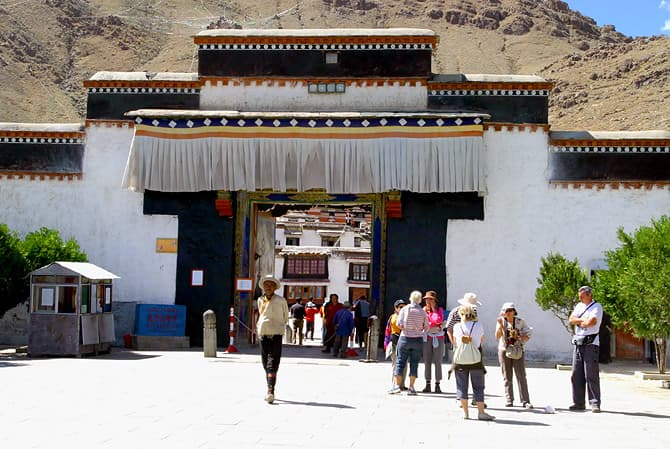
Tashi Lhunpo Monastery, founded in 1447, is a historically and culturally significant Buddhist monastery located in Shigatse, Tibet. It serves as the traditional monastic seat of the Panchen Lama, the second-highest-ranking spiritual leader in the Gelug tradition of Tibetan Buddhism, and has endured significant destruction and reconstruction throughout its history.

Phugtal Monastery
Phugtal Monastery is a remarkable Buddhist monastery situated in a remote cave in the Lungnak Valley of Ladakh, Northern India. Its unique honeycomb-like structure built into a cliffside, combined with its spiritual significance and historical legacy, makes it a notable site for pilgrimage and cultural preservation. The monastery provides education and traditional medical care to the local community, embodying a holistic approach to spiritual and social well-being.