
Dercongal Abbey
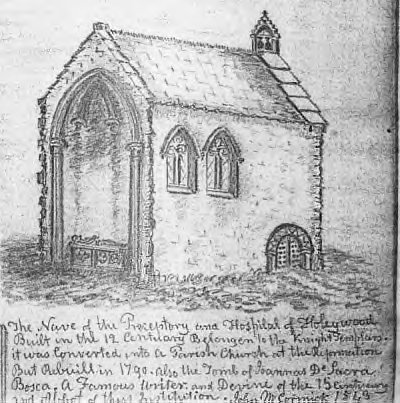
Dercongal Abbey, also known as Holywood Abbey, was a Premonstratensian monastic community in Dumfriesshire, Scotland. While its exact foundation date is unknown, it was active by 1225, with tradition suggesting a founding by Saint Vimin or Alan, Lord of Galloway. The abbey became secularized in the 16th century, and its ruins were largely demolished by the late 18th century, though fragments and a bell from 1505 survive.
Key Facts
- ›Active as a Premonstratensian community by 1225.
- ›Possible founders include Saint Vimin, Alan Lord of Galloway, or Devorgilla.
- ›Also known by the Latinized name 'Sacro Nemore' or English 'Holywood'.
- ›Became secularized in the 16th century and converted into a secular lordship.
- ›Ruins were demolished in the last quarter of the 18th century.
- ›A bell dated 1505, made by Abbot John Welsh, is a surviving artifact.
Gothic
Almshouses For Men Established In 1362, Bell From 1505
Holywood Abbey, Sacro Nemore
Saint Vimin, Alan, Lord of Galloway, Devorgilla, Archibald Douglas, Johannes De Sacrobosco, John Welsh
- Secularization In the 16th Century
- Conversion Into A Secular Lordship In the Early 17th Century
- Demolition of Ruins In the Last Quarter of the 18th Century
About Dercongal Abbey
Dercongal Abbey: A Premonstratensian Foundation in Scotland
Dercongal Abbey, also widely known as Holywood Abbey, was a significant Premonstratensian monastic community situated in Dumfriesshire, Scotland. While the precise year of its foundation remains unrecorded, historical evidence confirms its existence as an active Premonstratensian house by 1225. The abbey's origins are linked to several figures, with tradition attributing its founding to Saint Vimin, while historical accounts suggest Alan, Lord of Galloway, or his daughter Devorgilla as potential founders.
The name 'Holywood' is an English adaptation of its Latin designation, 'Sacro Nemore', which translates to 'of the Holy Wood'. This, in turn, derives from the Celtic name 'Doire Congaill', meaning 'Congall's oak-copse', honoring a local saint. The abbot of Dercongal subsequently adopted the title 'Abbot of the Holy Wood'.
History and Decline
Little detailed information survives regarding the day-to-day lives of the monks or the succession of its abbots. However, archaeological remains provide evidence of its past presence. The abbey's monastic life concluded with its secularization in the 16th century. Subsequently, in the early 17th century, the former monastic lands and buildings were repurposed as a secular lordship. The physical structure of the abbey faced further decline, with its ruins largely demolished by the end of the 18th century.
Despite its eventual ruin, remnants of Dercongal Abbey endure. A bell cast in 1505 by Abbot John Welsh of Holywood is a notable surviving artifact, now housed in the local parish church. The renowned medieval scholar and astronomer Johannes de Sacrobosco is also historically associated with the abbey as a former monk. Archibald Douglas, known as 'Archibald the Grim', established a hospital within the abbey precincts and endowed it with lands, further highlighting the site's historical importance.
Source: Wikipedia ↗
Frequently Asked Questions
When was Dercongal Abbey founded?
The exact date of Dercongal Abbey's foundation is not known. However, it is documented as being in existence as a Premonstratensian monastic community by 1225. Some traditions suggest a founding by Saint Vimin, while historical accounts also point to Alan, Lord of Galloway, or his daughter Devorgilla as potential founders.
What is the origin of the name 'Holywood Abbey'?
The name 'Holywood Abbey' is an English translation derived from its Latin name, 'Sacro Nemore', meaning 'of the Holy Wood'. This Latin name itself is a translation of the Celtic name 'Doire Congaill', which refers to 'Congall's oak-copse', a saint venerated in the area. The abbot of Dercongal was thus known as the abbot 'of the Holy Wood'.
What happened to Dercongal Abbey after its monastic period?
Dercongal Abbey was secularized in the 16th century. In the early 17th century, it was transformed into a secular lordship. The physical ruins of the abbey suffered further demolition in the last quarter of the 18th century.
Are there any surviving remnants of Dercongal Abbey?
While the abbey is largely in ruins, some fragments survived into the 20th century. A bell from the old abbey, bearing an inscription from 1505 and made by Abbot John Welsh, is now located in the replacement parish church. Archaeological remains of the abbey are also extant.
Who were some notable figures associated with Dercongal Abbey?
Johannes de Sacrobosco, a renowned medieval scholar and astronomer, is recorded as having been a monk at the abbey. Archibald Douglas, 'Archibald the Grim', Earl of Wigtown, built a hospital at the monastery and endowed it with lands. Devorgilla, mother of King John Balliol, is also considered a potential founder.
Related Monasteries
Dryburgh Abbey
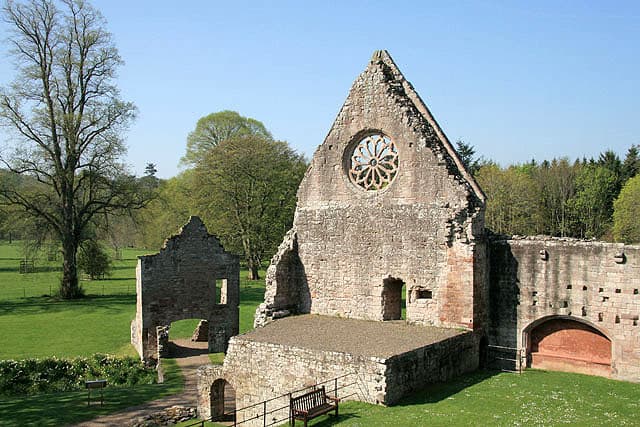
Dryburgh Abbey, situated near the River Tweed in the Scottish Borders, was founded in 1150 by Premonstratensian canons. Despite significant destruction from English raids in the 14th and 16th centuries, the abbey experienced periods of restoration and flourished in the 15th century. Today, it stands as a designated scheduled monument, with its grounds serving as the final resting place for notable figures like Sir Walter Scott and Douglas Haig.
Soulseat Abbey
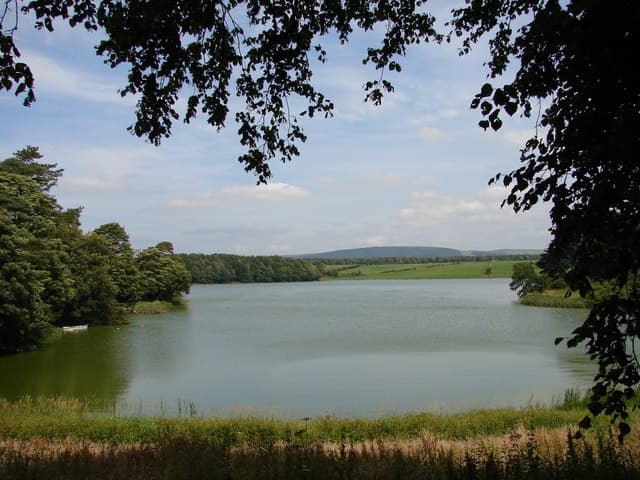
Soulseat Abbey was a Premonstratensian monastic community located in Wigtownshire, Scotland, founded by Fergus, Lord of Galloway, and potentially Bishop Christian of Galloway. While its exact foundation date is debated, it likely predates 1161 and may have originated from a Cistercian monastery established by St. Malachy. The abbey, named from the Gaelic "Sabhal" and later Latinized to "Sedes Animarum," was situated on a peninsula in Soulseat Loch and suffered devastation during 14th-century wars, eventually becoming secularized by the 15th century.
Tongland Abbey
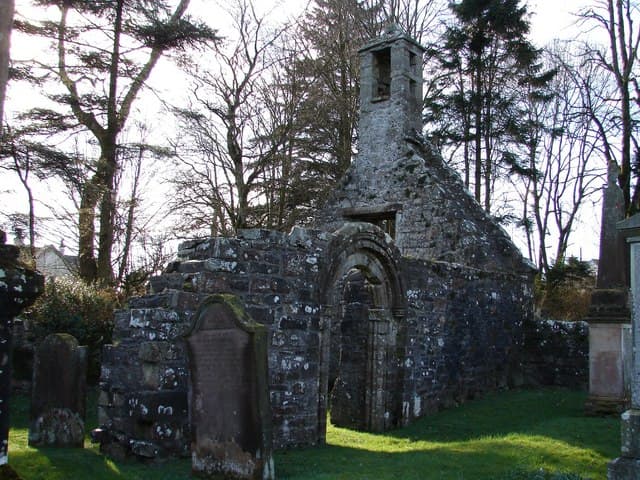
Tongland Abbey was a Premonstratensian monastic community in Scotland, likely founded around 1218. Its early history is largely obscure, though it gained some notoriety during the tenure of Abbot John Damian, an Italian alchemist. By the early 16th century, the abbey's fabric and discipline had declined significantly, leading to attempts at reform and eventual grant to the bishop of Galloway.