
Chudov Monastery
The Chudov Monastery, formally known as Alexius’ Archangel Michael Monastery, was a significant monastic complex within the Moscow Kremlin, founded in 1358 by Metropolitan Alexius. It served as a major center for Muscovite book culture and learning, traditionally used for baptizing royal children. The monastery was eventually closed in 1918 and completely dismantled by the Soviet government in 1929.
Key Facts
- ›Founded in 1358 by Metropolitan Alexius of Moscow within the Moscow Kremlin.
- ›Dedicated to the miracle of the Archangel Michael at Chonae.
- ›Was a major center of Muscovite book culture and learning, with prominent monks involved in translation and correction of religious texts.
- ›Traditionally used for the baptism of royal children, including future Tsars.
- ›Closed in 1918 and demolished in 1929 by the Soviet government.
- ›Site of the monastery was later used for the Red Commanders School.
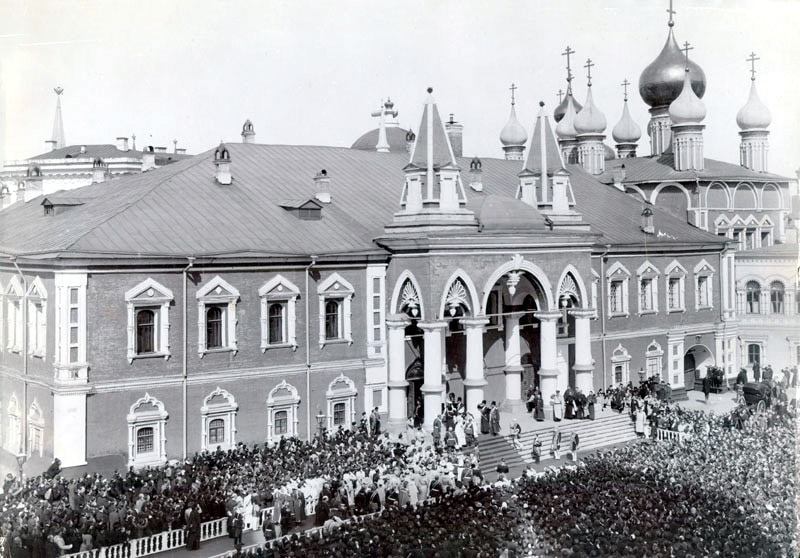
Katholikon, Church of St Alexius the Metropolitan, Church of the Annunciation, Church of Saint Andrew
Alexius’ Archangel Michael Monastery
Metropolitan Alexius of Moscow, Maximus the Greek, Yepifany Slavinetsky, Karion Istomin, Gennady of Novgorod, Patriarch Hermogenes, Patriarch Filaret, Marshal Louis-Nicolas Davout, Grand Duke Sergei Alexandrovich Romanov, Boris Kurakin
- Construction of the Monastery and Katholikon
- Replacement of the Katholikon
- Patriarch Hermogenes Starved To Death By Poles
- Opening of the Greek-Latin School
- Moscow Ecclesiastic Consistory Accommodated
- French Invasion of Russia
- Closure of the Monastery
- Dismantling of the Monastery Structures
About Chudov Monastery
The Chudov Monastery, formally known as Alexius’ Archangel Michael Monastery, was a significant monastic complex founded in 1358 by Metropolitan Alexius of Moscow within the walls of the Moscow Kremlin. Dedicated to the miracle of the Archangel Michael at Chonae, the monastery's construction, including its katholikon, was completed by 1365. Over time, the katholikon was rebuilt multiple times, with significant reconstructions occurring in 1431 and again from 1501 to 1503. The monastery held a prominent position in Russian religious and cultural life, traditionally serving as the site for the baptism of royal children, including future Tsars Feodor I, Aleksey I, and Peter the Great. Its hegumen was considered the foremost among all Russian monastic leaders until 1561.
History and Cultural Significance
Chudov Monastery was a vital hub of Muscovite book culture and scholarship, alongside the Simonov Monastery and Trinity–St. Sergius Lavra. Monks like Maximus the Greek, Yepifany Slavinetsky, and Karion Istomin were dedicated to translating and correcting ecclesiastic texts, contributing significantly to the preservation and dissemination of knowledge. Gennady, later Archbishop of Novgorod and patron of the first complete Slavic Bible codex in 1499, served as the monastery's hegumen prior to his archiepiscopate. The monastery also bore witness to tumultuous historical events; Patriarch Hermogenes was starved to death in its vaults by Polish forces in 1612 during the Time of Troubles. Following this period, the Greek-Latin School was established with support from Patriarch Filaret. Between 1744 and 1833, it housed the Moscow Ecclesiastic Consistory, and new churches, such as the Church of St Alexius the Metropolitan and the Church of the Annunciation (both built in 1680), were added to the complex.
Decline and Demolition
During the French invasion of Russia in 1812, Marshal Louis-Nicolas Davout reportedly commandeered the monastery for his personal use, with one painting depicting him desecrating the cathedral sanctuary as his office. The monastery's operational life concluded after the Bolshevik Revolution, when it was closed in 1918. In 1929, the Soviet government ordered the complete demolition of all its structures as part of its state atheism policy. The site was subsequently repurposed for the Red Commanders School, and the monastery's extensive collection of manuscripts from the 11th to 18th centuries was transferred to the State Historical Museum. The relics of Metropolitan Alexius and the remains of numerous other interments were lost, their whereabouts remaining unknown. Although discussions about potential restoration have occurred in recent years, as of 2026, no concrete plans were in place to rebuild the Chudov Monastery.
Source: Wikipedia ↗
Frequently Asked Questions
When was the Chudov Monastery founded?
The Chudov Monastery was founded in 1358 by Metropolitan Alexius of Moscow. The construction of the monastery and its main cathedral was completed in 1365.
What was the significance of the Chudov Monastery?
The monastery was a significant center of Muscovite book culture and learning, with monks dedicating themselves to translating and correcting ecclesiastic books. It also held the traditional role of baptizing royal children and was considered the first among the hegumens of all Russian monasteries until 1561.
What happened to the Chudov Monastery?
The Chudov Monastery was closed down in 1918 following the Bolshevik Revolution. All of its structures were demolished in 1929 by the Soviet government as part of their policy of state atheism.
What is located on the site of the former Chudov Monastery today?
On the site of the destroyed Chudov Monastery and the nearby Ascension Convent, the Soviet government built the Red Commanders School. While there have been discussions about restoring the historical appearance of the site, no concrete plans were in place as of 2026.
Were any notable figures buried at the Chudov Monastery?
Yes, several notable figures were buried at the Chudov Monastery, including Gennady of Novgorod, Alexius Metropolitan of Moscow, Patriarch Hermogenes, Grand Duke Sergei Alexandrovich Romanov, and Boris Kurakin.
Related Monasteries
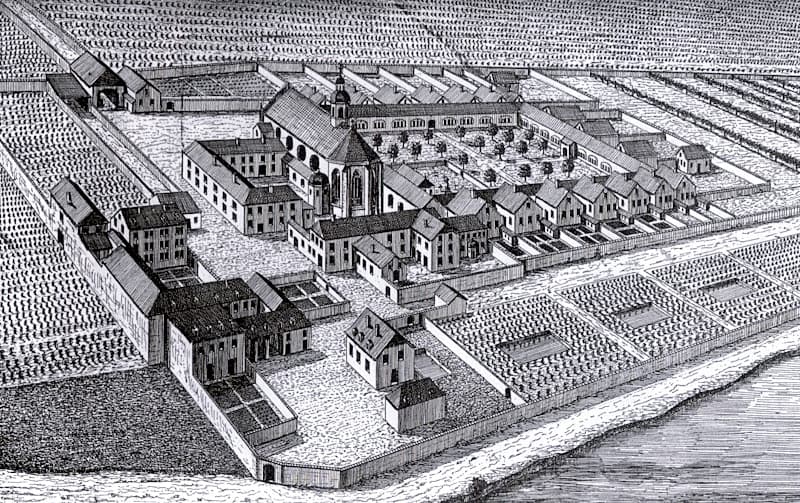
Mainz Charterhouse
Mainz Charterhouse was a former Carthusian monastery located in Mainz, Germany, dedicated to Saint Michael. Founded in 1320, it was the first Carthusian foundation in Germany and played a significant role in the history of the Carthusian Order. Despite being destroyed and rebuilt multiple times, it was ultimately dissolved in 1781 and its buildings demolished between 1790 and 1792, though its memory persists in the street name "Karthaus".
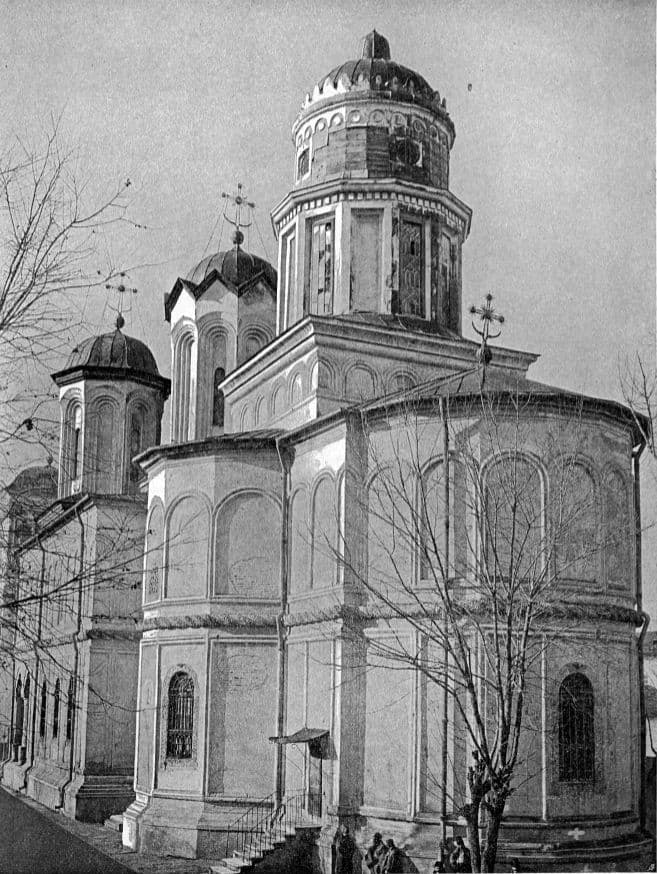
Văcărești Monastery
Văcărești Monastery was a significant religious and architectural complex in Bucharest, Romania, founded by ruler Nicholas Mavrocordatos between 1716 and 1736. It served as a royal residence, a center for culture with a notable library and printing press, and later as a prison before its complete demolition in 1986-1987 under Nicolae Ceaușescu's regime. The monastery was built in the Brâncovenesc style with influences of Mountainside Baroque and was dedicated to the Holy Trinity.

Ipatiev Monastery
The Ipatiev Monastery, also known as the Hypatian Monastery, is a male monastery located on the bank of the Kostroma River in Russia. Founded around 1330, it is dedicated to St. Hypatios of Gangra and has played a significant role in Russian history, particularly during the Time of Troubles and the early Romanov dynasty. The monastery is a notable center of learning and has been the site of important historical discoveries and events.