
Ipatiev Monastery
The Ipatiev Monastery, also known as the Hypatian Monastery, is a male monastery located on the bank of the Kostroma River in Russia. Founded around 1330, it is dedicated to St. Hypatios of Gangra and has played a significant role in Russian history, particularly during the Time of Troubles and the early Romanov dynasty. The monastery is a notable center of learning and has been the site of important historical discoveries and events.
Key Facts
- ›Founded around 1330 by Prince Chet, a Tatar convert.
- ›Dedicated to St. Hypatios of Gangra.
- ›During the Time of Troubles, it was a site where Mikhail Romanov was proclaimed Tsar in 1613.
- ›The Hypatian Codex, a crucial set of 14th-century chronicles including the Primary Chronicle, was discovered here.
- ›Most of its current buildings date from the 16th and 17th centuries.
- ›The church of the Nativity of the Mother of God, rebuilt by Konstantin Thon, was demolished in 1932 and rebuilt in 2013.

16th-Century Style, 17th-Century Style
Trinity Cathedral, Church of the Nativity of the Mother of God, Main Entrance From the Riverside, Private House of Mikhail Romanov
Hypatian Monastery
Prince Chet, Solomonia Saburova, Boris Godunov, Vasily Ii, Vasily Kosoy, Nikolay Karamzin, False Dmitriy Ii, Mikhail Romanov, Konstantin Thon, Nicholas I, Alexander Ii, Konstantin Pobedonostsev
- Peace Concluded Between Vasily Ii and Vasily Kosoy In 1435.
- Discovery of the Hypatian Codex.
- Occupation By Supporters of False Dmitriy Ii In 1609.
- Capture By the Muscovite Army After A Siege In 1609.
- Announcement of Mikhail Romanov As Tsar In 1613.
- Demolition of the Church of the Nativity of the Mother of God In 1932.
- Reconstruction of the Church of the Nativity of the Mother of God In 2013.
- Disbanded After the October Revolution In 1917.
- Property Returned To the Russian Orthodox Church In 1991.
- Transferred To the Kostroma Diocese In 2004.
About Ipatiev Monastery
The Ipatiev Monastery, also recognized as the Hypatian Monastery, is a significant male religious institution located on the banks of the Kostroma River, directly across from the city of Kostroma in Russia. Its founding is generally attributed to around 1330, with Prince Chet, a Tatar convert to Christianity, being credited as its progenitor. The monastery is dedicated to St. Hypatios of Gangra.
History and Significance
The monastery's history is deeply intertwined with key moments in Russian national development. Legend speaks of Prince Chet's miraculous healing inspiring him to build the monastery as an act of gratitude. While some historical accounts suggest an earlier founding in 1275, it is believed to have been revived by Chet. During the tumultuous Time of Troubles, the Ipatiev Monastery served as a crucial sanctuary. In 1613, the Zemsky Sobor convened here and announced Mikhail Romanov as the new Tsar, initiating the Romanov dynasty that would rule Russia for over three centuries. The monastery also gained renown as a center of learning; it was within its walls that Nikolay Karamzin discovered the Hypatian Codex, a vital collection of 14th-century chronicles that includes the Primary Chronicle, indispensable for understanding early Russian history.
Architecture and Later History
The majority of the monastery's present-day structures date from the 16th and 17th centuries. The Trinity Cathedral is particularly noted for its sumptuously painted interior. The Church of the Nativity of the Mother of God, a structure later rebuilt by the esteemed architect Konstantin Thon to commemorate the 250th anniversary of the Romanov family, was unfortunately demolished in 1932 under Soviet rule but has since been reconstructed in 2013. The monastery's operational status saw it disbanded after the 1917 revolution, but it was eventually returned to the Russian Orthodox Church in 1991 and officially transferred to the Kostroma Diocese in 2004, continuing its role as an active monastic community.
Source: Wikipedia ↗
Frequently Asked Questions
When was the Ipatiev Monastery founded?
The Ipatiev Monastery was founded around 1330. Some historians suggest it might have been established earlier, in 1275, and then revived by the founder, Prince Chet.
Who was the founder of the Ipatiev Monastery?
The main theory identifies Tatar Murza Chet, who was baptized as Zachary, as the founder. Legend attributes its founding to a miraculous vision of the Virgin Mary and saints.
What is the significance of the Ipatiev Monastery in Russian history?
The monastery was where Mikhail Romanov was announced as the Russian Tsar in 1613, marking the beginning of the Romanov dynasty. It was also a vital center for the preservation of historical chronicles.
What is the Hypatian Codex?
The Hypatian Codex is a collection of three 14th-century chronicles, including the Primary Chronicle, discovered at the Ipatiev Monastery. It is a crucial source for early Russian history.
What happened to the Ipatiev Monastery during the Soviet era?
The monastery was disbanded after the October Revolution in 1917. The church of the Nativity of the Mother of God was demolished in 1932 by Soviet authorities.
Is the Ipatiev Monastery still active?
Yes, the Ipatiev Monastery was returned to the Russian Orthodox Church in 1991 and is now under the Kostroma Diocese. It houses an active monastic community.
Related Monasteries
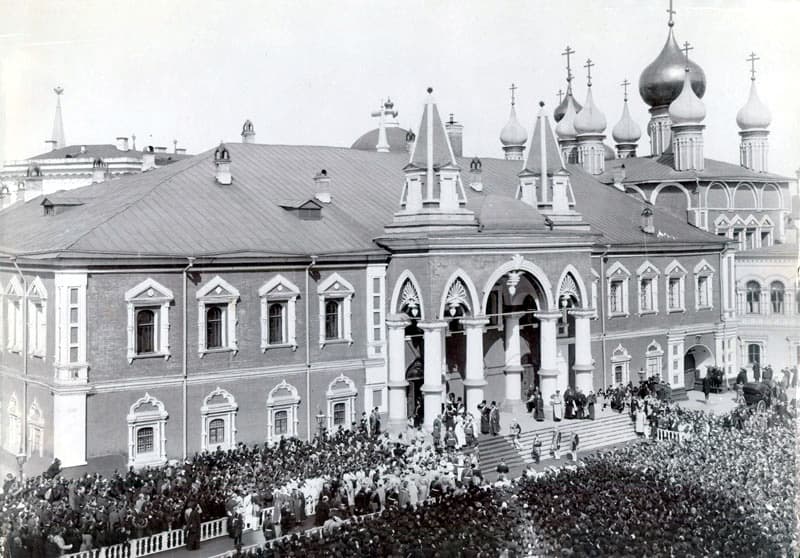
Chudov Monastery
The Chudov Monastery, formally known as Alexius’ Archangel Michael Monastery, was a significant monastic complex within the Moscow Kremlin, founded in 1358 by Metropolitan Alexius. It served as a major center for Muscovite book culture and learning, traditionally used for baptizing royal children. The monastery was eventually closed in 1918 and completely dismantled by the Soviet government in 1929.

Donskoy Monastery
The Donskoy Monastery in Moscow was founded in 1591 to commemorate the city's defense against an invasion by the Crimean Khan Kazy-Girey. It served as a strategic defense point for the Moscow Kremlin along a key highway. Over centuries, it evolved from a humble cloister to a significant religious and architectural complex, becoming a burial site for nobility and a repository for relics and artifacts from destroyed churches during the Soviet era.

Luzhetsky Monastery
The Luzhetsky Monastery, officially the Nativity of the Theotokos and St. Therapont Luzhetsky Monastery, is a historic fortified monastery located in Mozhaysk, Moscow Oblast, Russia. Founded in 1408 by St. Therapont of Belozersk, it played a significant role in the region's religious and architectural development. The monastery has endured periods of damage and closure but has been restored and returned to the Russian Orthodox Church, with the relics of its founder discovered in 1999.