
Văcărești Monastery
Văcărești Monastery was a significant religious and architectural complex in Bucharest, Romania, founded by ruler Nicholas Mavrocordatos between 1716 and 1736. It served as a royal residence, a center for culture with a notable library and printing press, and later as a prison before its complete demolition in 1986-1987 under Nicolae Ceaușescu's regime. The monastery was built in the Brâncovenesc style with influences of Mountainside Baroque and was dedicated to the Holy Trinity.
Key Facts
- ›Founded by Wallachian ruler Nicholas Mavrocordatos between 1716 and 1736.
- ›Included a large church dedicated to the Holy Trinity, a Greek language school, a printing press, and a significant library.
- ›Served as a prison for leaders of the Wallachian Revolution of 1848 and later as a public penitentiary.
- ›Demolished between December 1986 and early 1987 by order of Romanian dictator Nicolae Ceaușescu.
- ›The architectural style is described as Brâncovenesc with influences of Mountainside Baroque.
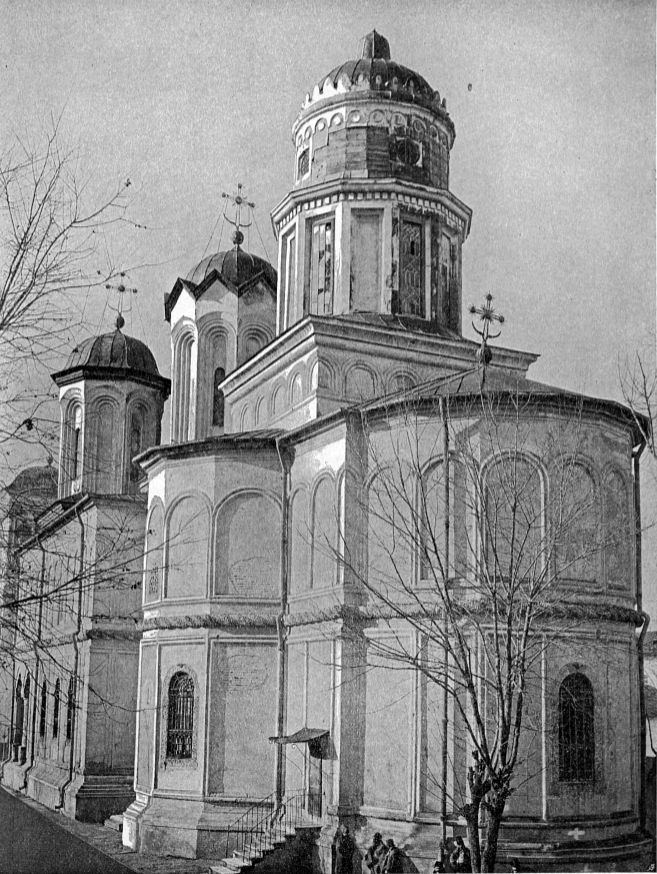
BrâNcovenesc, Mountainside Baroque
Church of the Holy Trinity, Greek Language School, Printing Press, Extensive Library, Royal Residence
Prison of VăCăReșTi
Nicholas Mavrocordatos, Constantine Mavrocordatos, Nicolae CeaușEscu
- Construction Began In 1716
- Church Consecrated In 1724
- Became A Prison For Leaders of the Wallachian Revolution of 1848
- Officially Became A Public Prison In 1868
- Demolished Between December 1986 and Early 1987
About Văcărești Monastery
Văcărești Monastery, also known as the Prison of Văcărești, was a prominent religious and architectural ensemble located in Bucharest, Romania. Its construction was initiated by the Phanariot ruler Nicholas Mavrocordatos between 1716 and 1736, following the Brâncovenesc style with influences of Mountainside Baroque. The monastery was intended to be a grand place of prayer, a royal residence, and a center of culture, featuring a significant library and a printing press.
History and Function
The complex began to take shape in 1716, with the first enclosure completed by 1722 and the church, dedicated to the Holy Trinity, consecrated in 1724. Nicholas Mavrocordatos himself was buried within the main church upon his death in 1730. His son, Constantine Mavrocordatos, added further structures in 1736. Following the 1848 Wallachian Revolution, Văcărești Monastery transitioned into a prison, initially housing revolutionaries and later becoming a public penitentiary from 1868.
Demolition and Legacy
In the latter half of the 20th century, there were proposals for the monastery's preservation and repurposing, including suggestions for a museum of religious art or the residence of the Romanian Patriarchate. Despite efforts by Romanian intellectuals to save it, the monastery was ordered to be demolished by dictator Nicolae Ceaușescu. The entire ensemble was razed to the ground between December 1986 and early 1987 to make way for a future complex for the Ministry of Justice, though construction on that project was later abandoned. The destruction of Văcărești Monastery is remembered as a significant loss to Romania's architectural and cultural heritage.
Source: Wikipedia ↗
Frequently Asked Questions
When was Văcărești Monastery built?
Construction of Văcărești Monastery began in 1716 under Nicholas Mavrocordatos and the first enclosure was finished by 1722. The church was consecrated in 1724, and further additions were made in 1736 by Constantine Mavrocordatos.
What was the architectural style of Văcărești Monastery?
The monastery was built in the Brâncovenesc style, incorporating elements of Mountainside Baroque. It was considered by some historians to be a culmination of the Brâncovenesc style in Wallachia.
What was the significance of Văcărești Monastery beyond its religious function?
Beyond its religious role, Văcărești Monastery was a center of culture, housing a Greek language school, a printing press that produced important books, and a library that was once among the largest in Europe. It also served as a royal residence and later as a prison.
Why was Văcărești Monastery demolished?
The monastery was demolished by order of dictator Nicolae Ceaușescu. The official reason was to free up land for future buildings for the Ministry of Justice, although there were earlier proposals for its use as a Patriarchate residence or a museum.
What happened to Văcărești Monastery after its construction?
After its initial construction and establishment as a cultural center, Văcărești Monastery became a prison for revolutionaries in 1848 and officially a public penitentiary from 1868. It underwent restoration attempts in the 20th century before its final demolition.
Related Monasteries
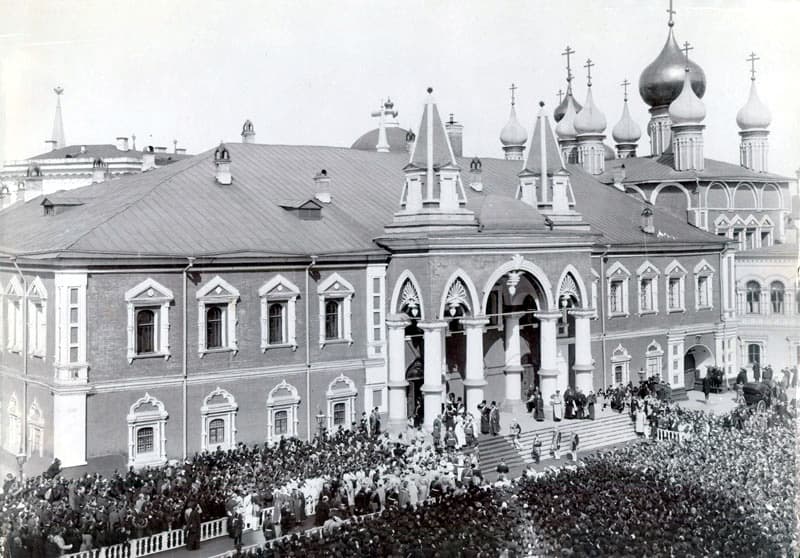
Chudov Monastery
The Chudov Monastery, formally known as Alexius’ Archangel Michael Monastery, was a significant monastic complex within the Moscow Kremlin, founded in 1358 by Metropolitan Alexius. It served as a major center for Muscovite book culture and learning, traditionally used for baptizing royal children. The monastery was eventually closed in 1918 and completely dismantled by the Soviet government in 1929.
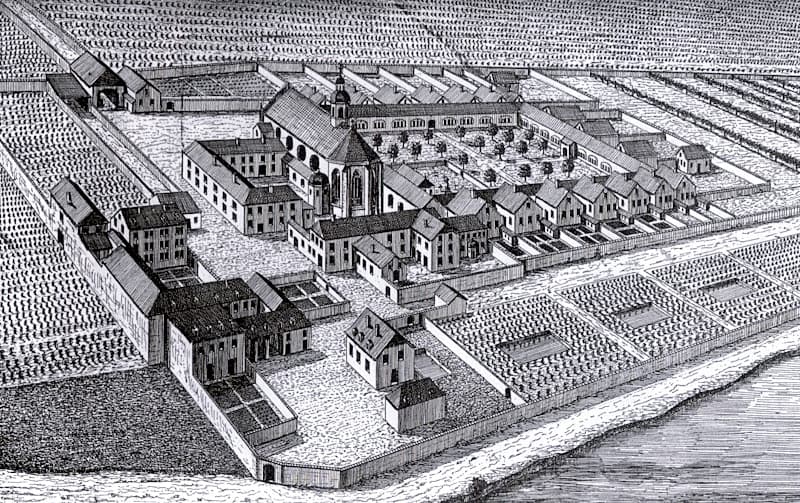
Mainz Charterhouse
Mainz Charterhouse was a former Carthusian monastery located in Mainz, Germany, dedicated to Saint Michael. Founded in 1320, it was the first Carthusian foundation in Germany and played a significant role in the history of the Carthusian Order. Despite being destroyed and rebuilt multiple times, it was ultimately dissolved in 1781 and its buildings demolished between 1790 and 1792, though its memory persists in the street name "Karthaus".

Serafimo-Diveevsky Monastery
The Serafimo-Diveevsky Monastery, also known as Saint Seraphim-Diveyevo Monastery, is a significant convent located in Diveyevo, Russia. It gained prominence due to its association with Saint Seraphim of Sarov, who served as Elder for its nuns and whose relics are now housed there. The monastery is also recognized for possessing the only contemporary portrait of Saint Seraphim.