
Canterbury Greyfriars
Christian·England·Museum/Gardens with active chapel services·13th century
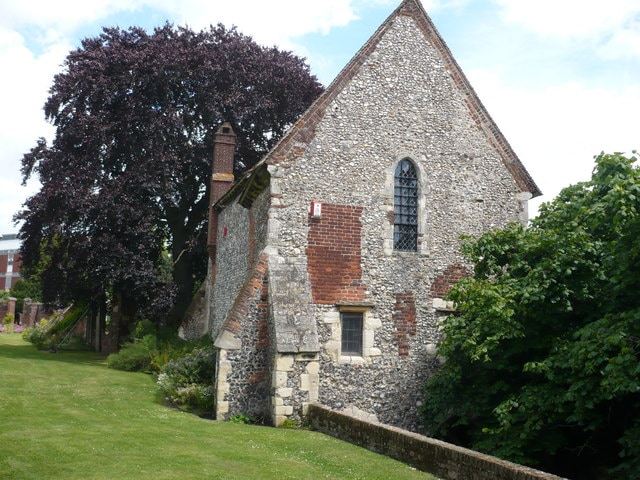
Canterbury Greyfriars was the first Franciscan friary established in England, founded shortly after the Order's arrival in 1224. Originally built of mean materials, the friary was re-erected in stone starting in 1267 and later became a province of the Observant Franciscans under King Henry VII's patronage. During the reign of Henry VIII, the friary faced persecution due to the brothers' refusal to accept the Royal Supremacy, with some brothers imprisoned and executed. Today, remnants of the friary, including a 13th-century building known as Greyfriars Chapel and the associated Franciscan Gardens, are maintained and accessible.
Key Facts
- ›Established as the first Franciscan friary in England.
- ›Initially founded shortly after the Franciscans' arrival in 1224.
- ›Rebuilt in stone starting in 1267 with land donation from Alderman John Digge.
- ›Confirmed as an Observant Franciscan province in 1498 under King Henry VII.
- ›Suffered persecution under Henry VIII, leading to imprisonment and execution of some friars.
- ›Surviving structures include the 13th-century Greyfriars Chapel and remnants of the friary church.
Medieval
Greyfriars Chapel, Franciscan Gardens, Remnants of Friary Church, Stone Bridge and Revetments, Inmate Carvings In Greyfriars Chapel
Greyfriars
St Francis of Assisi, Alderman John Digge, Archbishop Walter Reynolds, King Henry Vii of England, Henry Viii of England, Elizabeth Barton, Richard Yngworth, Thomas Spylman, Thomas Rolfe, William Lovelace, John Dudley, Major Hg James, Dr John Burgon Bickersteth, Harry Jackman Qc, Julian Bickersteth, Derek Smith
- Arrival of the First Franciscans In England
- Rebuilding of the Friary In Stone
- Consecration of the Great Church
- Confirmation As An Observant Franciscan Province
- Imprisonment and Execution of Friars For Refusing Royal Supremacy
- Surrender of Friaries To the Crown
- Conversion Into A Private House After the Dissolution
- Restoration Attempts of the Guesthouse
- Purchase By the Dean and Chapter of Canterbury Cathedral
- Sale To Eastbridge Hospital of St Thomas the Martyr
About Canterbury Greyfriars
Canterbury Greyfriars holds the distinction of being the first Franciscan friary established in England. The Order of Friars Minor, known as 'Greyfriars' due to their grey habits, arrived in the country in 1224, and the friary was founded soon after. Initially adhering to vows of poverty and living in modest structures, the friars recognized the practical need for more substantial buildings. Consequently, beginning in 1267, the Canterbury house was rebuilt in stone, supported by a land donation from Alderman John Digge. The central church within the friary complex was consecrated by Archbishop Walter Reynolds in 1325.
Historical Context and Decline
By 1498, the Canterbury friary was formally recognized as a province of the Observant Franciscans, a more rigorous branch of the order, and came under the patronage of King Henry VII. However, the friary's fortunes changed dramatically under his son, Henry VIII. The brothers faced persecution for their refusal to accept the Royal Supremacy over the Church of England. In 1534, several friars were imprisoned, and two, along with the Warden, Richard Risby, were executed for their defiance and for supporting the mystic Elizabeth Barton. The friary's lands and property were surrendered to the Crown in December 1538, with the remaining friars dispersed after receiving a small sum of money.
Surviving Structures and Modern Use
Following the Dissolution, the property was sold and converted into a private residence. Over centuries, the site has seen various ownerships and alterations. Archaeological excavations throughout the twentieth century have sought to uncover the precise layout of the original friary buildings. Elements still visible above ground include the 13th-century building spanning the river, known today as Greyfriars Chapel, which may have served as a guest house or warden's lodging. Remnants of the friary church are incorporated into the eastern boundary of the Franciscan Gardens, alongside parts of a stone bridge and its revetments. The chapel underwent modernization and now hosts weekly services, surrounded by the tranquil Franciscan Gardens, offering a peaceful space in the city. The site is managed by the Eastbridge Hospital of St Thomas the Martyr.
Source: Wikipedia ↗
Frequently Asked Questions
When was Canterbury Greyfriars founded?
The first Franciscans arrived in England in 1224, and the friary was established soon after that date. This marked the beginning of the Franciscan presence in the country.
What is the significance of Canterbury Greyfriars?
It holds historical significance as the very first Franciscan friary established in England. It was later confirmed as a province of the Observant Franciscans and played a role during the turbulent religious changes of the 16th century.
What happened to Canterbury Greyfriars during the Reformation?
Under Henry VIII, the friary faced severe persecution due to the brothers' refusal to accept the Royal Supremacy. Several friars were imprisoned, and two, along with the Warden, were executed for their opposition.
What remains of Canterbury Greyfriars today?
Several elements are still visible, including a 13th-century building known as Greyfriars Chapel, remnants of the friary church, and parts of a stone bridge and its revetments. The surrounding Franciscan Gardens are also a notable feature.
Who currently maintains Canterbury Greyfriars?
The Greyfriars Chapel and Franciscan Gardens were purchased by the Eastbridge Hospital of St Thomas the Martyr, Canterbury, in 2000. They currently oversee the maintenance and conduct weekly services in the chapel.
Related Monasteries

Beeston Regis Priory
Beeston Regis Priory was an Augustinian priory founded in 1216 by Lady Isabel de Cressey. Dissolved in 1538, its remains, particularly the priory church nave and transept, are a Grade I listed ruin. The priory's suppression is believed to have influenced the founding of Gresham's School, and its cloister garden is now part of Priory Farm.

Beverley Blackfriars
Beverley Blackfriars, also known as The Old Friary, originated as a Dominican priory established around 1240. Despite a devastating fire in 1449 and its dissolution in 1539, parts of the priory, particularly the guesthouse, survived. After centuries of varied private ownership and near demolition, significant preservation efforts led to its current status as a Grade II* listed building, housing a youth hostel since 1984.

Bristol Blackfriars
Bristol Blackfriars was a Dominican priory founded in the early 13th century by Maurice de Gaunt. Situated in Broadmead, Bristol, it played a role in religious life, notably burying Llywelyn ap Dafydd, the last native Prince of Wales. Following its dissolution in the 16th century, the priory's structures were adapted for various secular uses, including guildhalls, a workhouse, and a Quaker meeting house, with remnants surviving to this day.