
Bristol Blackfriars
Christian·England·partially extant, adapted for secular use·13th century
Bristol Blackfriars was a Dominican priory founded in the early 13th century by Maurice de Gaunt. Situated in Broadmead, Bristol, it played a role in religious life, notably burying Llywelyn ap Dafydd, the last native Prince of Wales. Following its dissolution in the 16th century, the priory's structures were adapted for various secular uses, including guildhalls, a workhouse, and a Quaker meeting house, with remnants surviving to this day.
Key Facts
- ›Founded in 1227 or 1228 by Maurice de Gaunt.
- ›The priory was part of the Dominican order, known for their black cloaks.
- ›Llywelyn ap Dafydd, the last native Prince of Wales, was buried in its cemetery.
- ›The priory was dissolved in 1538 during the Dissolution of the Monasteries.
- ›Surviving structures include the infirmary, dormitory, and fragments of a 13th-century hall.
- ›The site has been used as a guildhall, workhouse, Quaker meeting house, register office, and theatre.

Gothic
Monastery Infirmary, Friars' Dormitory, New Hall With 13th-Century Fragments, Site of Burial For Llywelyn Ap Dafydd
Quakers Friars
Maurice De Gaunt, Henry Iii, Llywelyn Ap Dafydd, John Hilsey, Thomas Cromwell, William Chester, John Hellier
Founding of the Priory, Royal Support For Construction, Grant of Water Conduit Rights, Burial of Llywelyn Ap Dafydd, Dissolution of the Monasteries, Acquisition By Smiths and Cutlers Company, Lease To Corporation For Workhouse, Acquisition By Religious Society of Friends, Attack On Meeting House During Persecution
About Bristol Blackfriars
Bristol Blackfriars was a significant Dominican priory established in Broadmead, Bristol, England. Its founding in 1227 or 1228 by Maurice de Gaunt marked the beginning of a religious institution that would exist for centuries. The priory's name derives from the distinctive black cloaks worn by the Dominican friars over their white habits. Royal patronage from Henry III played a crucial role in its construction, which spanned over forty years and involved sourcing materials like oak from the Forest of Dean.
Historical Context and Significance
The priory held historical importance beyond its religious functions. In 1287, it became the burial site for Llywelyn ap Dafydd, the last native Prince of Wales, who died in captivity. The priory also secured rights for fresh water supply through conduits, a vital resource for medieval towns. During the turbulent period of the Dissolution of the Monasteries in the 16th century, the four remaining friars surrendered the priory's buildings and possessions in 1538. Subsequently, the site was purchased by William Chester.
Transformation and Survival
Following its dissolution, the structures of Bristol Blackfriars underwent numerous transformations. During the reign of Elizabeth I, parts were acquired by the Smiths and Cutlers Company, and later leased to the Corporation for use as a workhouse. By 1669, the premises were bought by the Religious Society of Friends and began to serve as a Quaker meeting house, known colloquially as Quakers Friars. The site also experienced periods of unrest, including an attack on the meeting house in 1681. Today, three of the original structures—the infirmary, the dormitory, and fragments of a 13th-century hall—survive, albeit much altered by their subsequent uses. These buildings, along with the wider friary site, are recognized for their historical and legal protection.
Source: Wikipedia ↗
Frequently Asked Questions
When was Bristol Blackfriars founded?
Bristol Blackfriars was founded by Maurice de Gaunt around 1227 or 1228. The construction of the church and priory was supported by Henry III and took over forty years to complete.
What happened to Bristol Blackfriars after the Dissolution of the Monasteries?
Following the Dissolution in the 16th century, parts of the priory were repurposed. They served as guildhalls for various companies, a workhouse, and later as a meeting house for the Religious Society of Friends (Quakers).
What parts of the original priory still exist today?
Three of the original structures, though altered, survive and are listed buildings. These include the monastery infirmary (Bakers' Hall), the friars' dormitory (Cutlers' Hall), and New Hall, which retains fragments of a 13th-century hall.
Who was buried at Bristol Blackfriars?
Llywelyn ap Dafydd, who was the de jure Prince of Gwynedd and the last native Prince of Wales, was buried in the cemetery of the Blackfriars priory in 1287. He died in captivity in Bristol Castle.
What is the significance of the name 'Blackfriars'?
The name 'Blackfriars' refers to the Dominican friars themselves. It originates from the black hooded cloaks they wore over their white habits, distinguishing them within the monastic orders.
Related Monasteries

Beeston Regis Priory
Beeston Regis Priory was an Augustinian priory founded in 1216 by Lady Isabel de Cressey. Dissolved in 1538, its remains, particularly the priory church nave and transept, are a Grade I listed ruin. The priory's suppression is believed to have influenced the founding of Gresham's School, and its cloister garden is now part of Priory Farm.

Beverley Blackfriars
Beverley Blackfriars, also known as The Old Friary, originated as a Dominican priory established around 1240. Despite a devastating fire in 1449 and its dissolution in 1539, parts of the priory, particularly the guesthouse, survived. After centuries of varied private ownership and near demolition, significant preservation efforts led to its current status as a Grade II* listed building, housing a youth hostel since 1984.
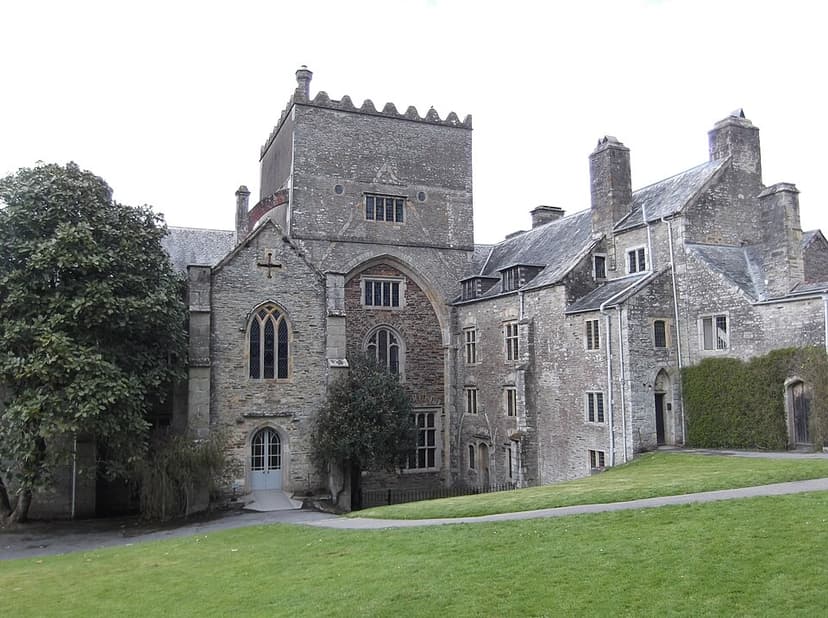
Buckland Abbey
Buckland Abbey, a Grade I listed historic house in Devon, England, was originally founded as a Cistercian abbey in 1278. After its dissolution under Henry VIII, it was converted into a private residence by Sir Richard Grenville and later owned by Sir Francis Drake. Today, it is managed by the National Trust and is open to the public, housing part of the Plymouth City Museum and Art Gallery's collection.