
Beverley Blackfriars
Christian·England·Youth hostel·13th century
Beverley Blackfriars, also known as The Old Friary, originated as a Dominican priory established around 1240. Despite a devastating fire in 1449 and its dissolution in 1539, parts of the priory, particularly the guesthouse, survived. After centuries of varied private ownership and near demolition, significant preservation efforts led to its current status as a Grade II* listed building, housing a youth hostel since 1984.
Key Facts
- ›Founded as a Dominican priory circa 1240.
- ›Suffered a major fire in 1449, destroying the dormitory and library.
- ›Dissolved in 1539, with many buildings demolished.
- ›The surviving guesthouse is thought to have escaped demolition.
- ›Became a youth hostel in 1984 and is a Grade II* listed building.
- ›Archaeological excavations have revealed parts of the church and cloisters.

Medieval, Tudor
- Grade Ii* Listed Building
- Surviving Doorway From the Early 14th Century
- Painted Wall Plasters Dating From Around the Time of the Dissolution
- Panelled Room From the Late 16th Or Early 17th Century
the Old Friary
Archbishop of York
Dissolution of the Monasteries, Fire of 1449
About Beverley Blackfriars
Beverley Blackfriars: A Historical Overview
Beverley Blackfriars, also known as The Old Friary, is a significant historical site located in Beverley, East Riding of Yorkshire, England. Its origins trace back to circa 1240 when a Dominican priory was established on land granted by the Archbishop of York. The initial priory was likely constructed of timber, with stone being incorporated as funds became available. The community flourished, leading to expansions, including a guest accommodation building in the early 14th century, which forms the core of the present structures and retains an original doorway.
By the late 14th century, the priory reached its maximum extent. However, the subsequent 150 years saw a gradual decline. A severe fire in 1449 destroyed the dormitory and library, necessitating restoration efforts supported by royal patronage. Despite the construction of two brick gateways in the 16th century, the friary's existence was curtailed in 1539 with the Dissolution of the Monasteries. Many of its buildings were demolished, but the guesthouse is thought to have been spared due to its non-religious function, or possibly was rebuilt on its site using salvaged materials.
History Since Dissolution
Following the Dissolution, the surviving guesthouse passed through several private owners, including John Pope, Anthony Foster, the Wharton family, the Earls of Yarborough, and the Whiting family, who retained ownership of a portion until 1960. During the 19th century, most of the remaining conventual buildings were demolished for the construction of a railway line. The guesthouse itself was divided into three separate dwellings. In the 1960s, the property was acquired by Armstrong Patents Co Ltd, who initially sought demolition permission. This was refused, and preservation orders were placed on the buildings, with restoration work commencing in 1974. Archaeological excavations between 1960 and 1987 uncovered remnants of the church and cloisters.
Owned today by East Riding of Yorkshire Council and maintained with assistance from the Beverley Friary Preservation Trust, the buildings have served as a youth hostel since 1984. They hold a Grade II* listing, recognizing their architectural and historical importance. Construction details reveal a mix of brick and stone, with some brickwork featuring a diaper pattern. The eastern portion may date from a rebuilding after the 1449 fire, potentially with royal patronage. Internal discoveries include painted wall plasters and a panelled room dating from the late 16th or early 17th century.
Source: Wikipedia ↗
Frequently Asked Questions
When was Beverley Blackfriars established?
A Dominican priory was first established in Beverley around 1240. The land was granted by the Archbishop of York.
What happened to Beverley Blackfriars during the Dissolution of the Monasteries?
The friars were expelled in 1539, and the priory was largely destroyed, with many buildings pulled down. The guesthouse is believed to have survived demolition.
What is the current use of the buildings at Beverley Blackfriars?
Since 1984, the buildings have been used as a youth hostel operated by YHA (England and Wales). They are also a Grade II* listed building.
What historical events impacted the priory?
A significant fire in 1449 destroyed the dormitory and library, requiring restoration with royal support. The priory was later dissolved in 1539.
What has been discovered through archaeological excavations at the site?
Excavations conducted between 1960 and 1987 revealed parts of the original church and two cloisters, providing insight into the priory's layout.
Related Monasteries

Beeston Regis Priory
Beeston Regis Priory was an Augustinian priory founded in 1216 by Lady Isabel de Cressey. Dissolved in 1538, its remains, particularly the priory church nave and transept, are a Grade I listed ruin. The priory's suppression is believed to have influenced the founding of Gresham's School, and its cloister garden is now part of Priory Farm.

Bristol Blackfriars
Bristol Blackfriars was a Dominican priory founded in the early 13th century by Maurice de Gaunt. Situated in Broadmead, Bristol, it played a role in religious life, notably burying Llywelyn ap Dafydd, the last native Prince of Wales. Following its dissolution in the 16th century, the priory's structures were adapted for various secular uses, including guildhalls, a workhouse, and a Quaker meeting house, with remnants surviving to this day.
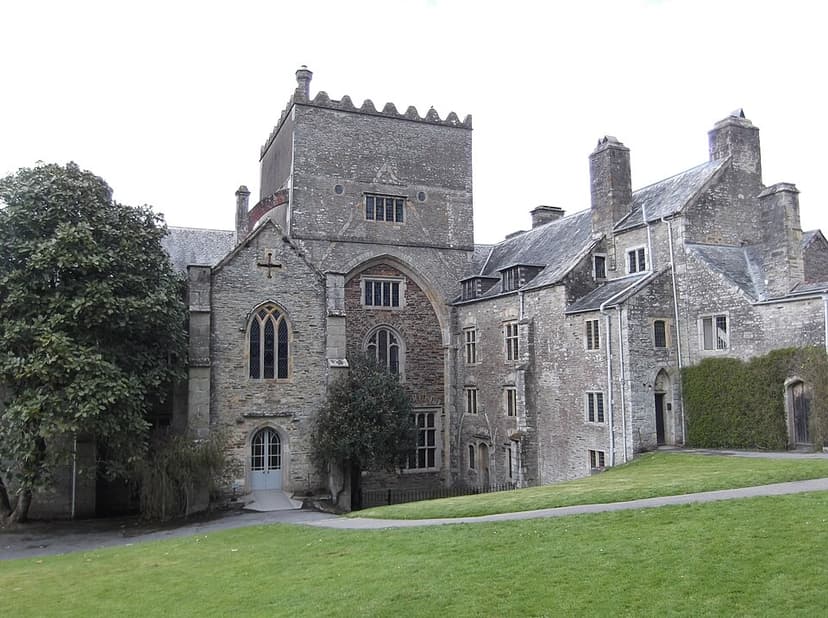
Buckland Abbey
Buckland Abbey, a Grade I listed historic house in Devon, England, was originally founded as a Cistercian abbey in 1278. After its dissolution under Henry VIII, it was converted into a private residence by Sir Richard Grenville and later owned by Sir Francis Drake. Today, it is managed by the National Trust and is open to the public, housing part of the Plymouth City Museum and Art Gallery's collection.