
Canonbie Priory
Christian·Scotland·Secularized·12th century
Canonbie Priory was a small Augustinian priory located in Dumfriesshire, Scotland. Founded between 1165 and 1170 from Jedburgh Abbey, it had a limited historical record and was eventually secularized in 1606. Its existence highlights the presence of Augustinian monasticism in medieval Scotland.
Key Facts
- ›Founded as a community of Augustinian canons.
- ›Established from Jedburgh Abbey.
- ›Grant confirmed by King William between 1165 and 1170.
- ›Located in Canonbie, Dumfriesshire, Scotland.
- ›Became a secular lordship in 1606.
- ›Described as a small and poorly recorded house.
Turgis De Rosdale, King William, Alexander, Lord Home
Founded From Jedburgh Abbey., Transformed Into A Secular Lordship In 1606.
About Canonbie Priory
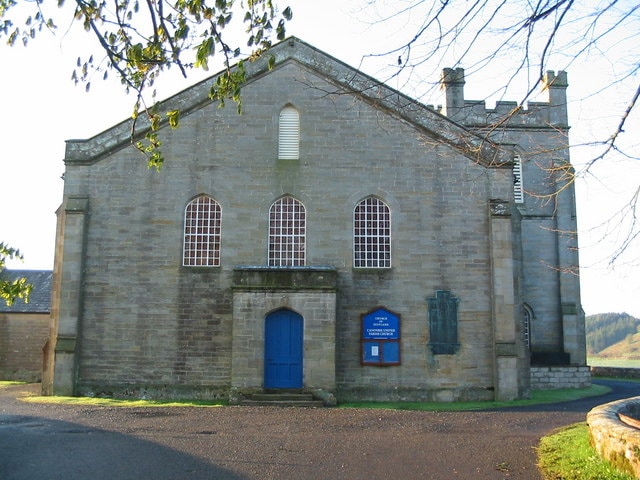
Canonbie Priory was a monastic establishment of Augustinian canons situated in Canonbie, Dumfriesshire, Scotland. Its foundation dates to the late 12th century, specifically between 1165 and 1170. The priory originated from Jedburgh Abbey, following a grant by a minor landowner, Turgis de Rosdale, which was subsequently confirmed by King William.
Historical records describe Canonbie Priory as a small institution with limited surviving documentation, making its detailed history challenging to reconstruct. Over centuries, its monastic function ceased. By 1606, the priory was converted into a secular lordship, a process that affected several monastic properties as part of broader ecclesiastical and land reforms. This transition marked the end of its religious life and the beginning of its secular administration, with Alexander, Lord Home, being granted the lordship.
While few architectural remnants or specific details about its daily life are widely known, Canonbie Priory represents a historical instance of Augustinian monasticism in southern Scotland during the medieval period. Its transformation into a secular lordship reflects the changing religious and political landscape of Scotland in the early modern era.
Source: Wikipedia ↗
Frequently Asked Questions
When was Canonbie Priory founded?
Canonbie Priory was founded between the years 1165 and 1170. The grant for its establishment was made by Turgis de Rosdale and confirmed by King William.
What religious order was Canonbie Priory a part of?
Canonbie Priory was a community of Augustinian canons. This order followed the Rule of Saint Augustine.
What happened to Canonbie Priory?
Canonbie Priory was dissolved and converted into a secular lordship in 1606. This transformation occurred as part of the secularization of Jedburgh Abbey's assets.
Where was Canonbie Priory located?
The priory was situated in Canonbie, a location within Dumfriesshire, Scotland. This places it in the southern part of the country.
Related Monasteries
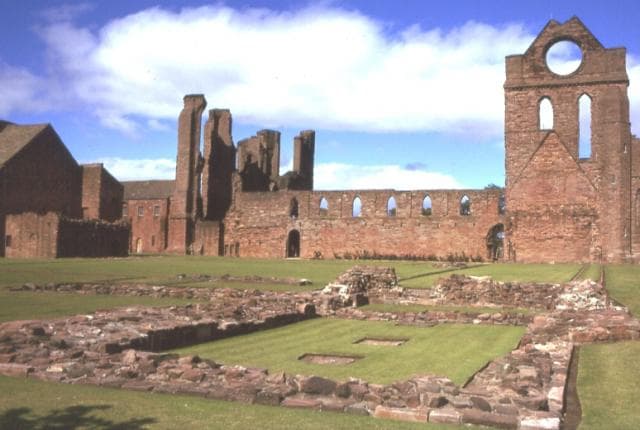
Arbroath Abbey
Arbroath Abbey, a ruined Cistercian monastery located in Arbroath, Scotland, was founded in 1178 by King William the Lion. It is renowned as the site where the Declaration of Scottish Independence was likely drafted in 1320. The Abbey, once the wealthiest in Scotland, is now managed by Historic Environment Scotland and is a popular tourist attraction, notable for its distinctive red sandstone ruins.
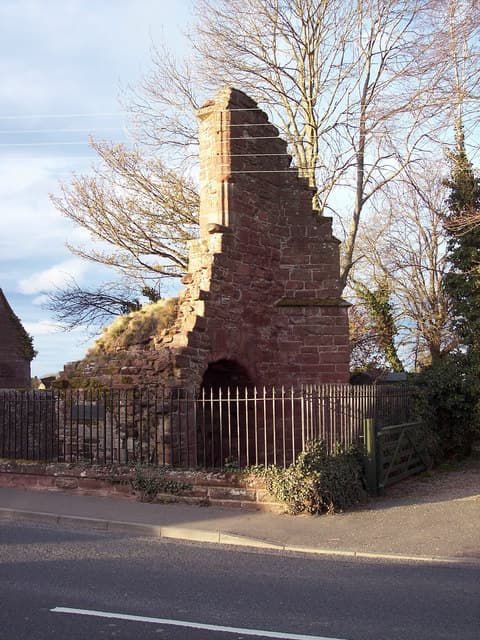
Coupar Angus Abbey
Coupar Angus Abbey was a significant Cistercian monastery founded in the mid-12th century in central Scotland. It grew to be a medium to large and wealthy institution, enduring over four centuries of monastic life before its dissolution and eventual dismantling. Today, only a ruined gatehouse and fragmented stonework remain, with its charters preserved as a notable survival.

Dundrennan Abbey
Dundrennan Abbey was a Cistercian monastery established in 1142 in Dundrennan, Scotland. Known for its Romanesque architecture, the abbey reflects the austere Cistercian ideal and is noted for the preservation of its original forms due to its hard-weathering grey sandstone construction. Although extensively ruined, it holds historical significance as the site where Mary, Queen of Scots, spent her final night in Scotland in 1568 before fleeing.