
Bélakút Abbey
Bélakút Abbey was a monastery founded in 1235 AD by King Béla IV of Hungary, who brought Cistercian monks from France. The abbey was built upon the remains of a Roman fortress and its walls were constructed between 1247 and 1252. While the abbey itself is no longer extant, its historical significance is tied to the broader history of Petrovaradin Fortress, which later became a major military stronghold.
Key Facts
- ›Founded in 1235 AD by King Béla IV of Hungary.
- ›Established by Cistercian monks brought from France.
- ›Built on the site of the Roman fortress of Cusum.
- ›Monastery walls constructed between 1247 and 1252.
- ›Represents medieval fortifications at the Petrovaradin site.

Built On Roman Fortress Remains, Medieval Defensive Walls
King BéLa Iv of Hungary
Founded By King BéLa Iv of Hungary, Construction of Monastery Walls, Site of Roman Fortress Cusum
About Bélakút Abbey
Bélakút Abbey was a significant monastic establishment founded in 1235 AD by King Béla IV of Hungary. The king invited a group of Cistercian monks from France to establish the abbey, which was strategically built upon the remnants of the earlier Roman fortress known as Cusum. This historical placement underscores the long-standing importance of the site for fortification and settlement.
History and Construction
The construction of the monastery's walls commenced between 1247 and 1252, solidifying its presence as part of the medieval defensive structures at what is now Petrovaradin. While the abbey itself is no longer standing, its existence is a crucial part of the historical narrative of Petrovaradin Fortress, a site that would later evolve into a formidable military stronghold. The abbey's founding signifies a period of royal patronage and the introduction of monastic orders to the region.
Religious Context
As a Cistercian foundation, Bélakút Abbey belonged to a prominent monastic order known for its austere lifestyle, manual labor, and architectural contributions. The order's presence in the region highlights the spread of Western European religious and cultural influences. Although no physical remains of the abbey are explicitly detailed, its historical record points to its role in the religious landscape of 13th-century Hungary.
Source: Wikipedia ↗
Frequently Asked Questions
When was Bélakút Abbey founded?
Bélakút Abbey was founded in 1235 AD. This occurred when King Béla IV of Hungary brought a group of Cistercian monks to the area.
Who founded Bélakút Abbey?
The abbey was founded by King Béla IV of Hungary. He invited Cistercian monks from France to establish it.
What religious order was associated with Bélakút Abbey?
Bélakút Abbey was associated with the Order of Cistercians. These monks were brought from France to build the monastery.
Where was Bélakút Abbey located?
Bélakút Abbey was built upon the remains of the Roman fortress of Cusum, which is the site of the present-day Petrovaradin Fortress in Serbia.
What is known about the construction of Bélakút Abbey?
The walls of Bélakút Abbey were constructed between 1247 and 1252. These walls formed part of the fortifications at the Petrovaradin site during the Middle Ages.
Related Monasteries

Bešenovo Monastery
Bešenovo Monastery is a Serbian Orthodox men's monastery located on the southern slopes of Fruška Gora in Vojvodina, Serbia. Traditionally founded by King Stefan Dragutin in the late 13th century, it is one of the 16 historic Fruška Gora monasteries. The monastery was destroyed during World War II and is currently undergoing reconstruction, with work initiated in the early 21st century.
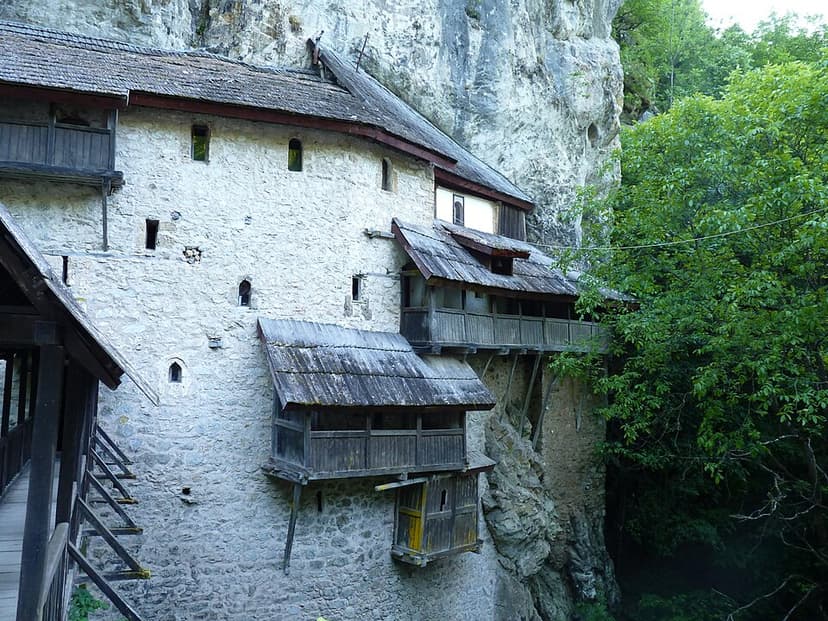
Crna Reka
Crna Reka Monastery is a 13th-century Serbian Orthodox monastery located in southwestern Serbia, near the village of Ribariće. It is distinguished by its cave-church dedicated to Archangel Michael, which features 16th-century frescoes and houses the relics of Saint Peter of Koriša. The monastery's secluded location in the gorges of Ibar Kolašin provided refuge for monks from Sopoćani during Ottoman attacks in the 16th century.
Crna Reka Monastery
Crna Reka Monastery, meaning "Black River Monastery," is a 13th-century Serbian Orthodox monastic complex located in southwestern Serbia. It is notable for its cave-church dedicated to Archangel Michael, which contains 16th-century frescoes and the relics of Saint Peter of Koriša. The monastery served as a refuge for monks from Sopoćani during 16th-century Ottoman attacks.