
Bešenovo Monastery
Serbian Orthodox·Serbia·under reconstruction·13th century
Bešenovo Monastery is a Serbian Orthodox men's monastery located on the southern slopes of Fruška Gora in Vojvodina, Serbia. Traditionally founded by King Stefan Dragutin in the late 13th century, it is one of the 16 historic Fruška Gora monasteries. The monastery was destroyed during World War II and is currently undergoing reconstruction, with work initiated in the early 21st century.
Key Facts
- ›Traditionally founded by Serbian King Stefan Dragutin at the end of the 13th century.
- ›The monastery church is dedicated to the Holy Archangels Michael and Gabriel.
- ›First reliable written records date back to Ottoman censuses from 1545/1548.
- ›Completely destroyed by the Ustaše and bombed in 1944 during World War II.
- ›Reconstruction efforts began in the early 21st century, with significant work starting in 2013.
- ›It is one of the 16 historic Fruška Gora monasteries.

- Original Monastery Bells Preserved and Returned To the New Bell Tower
- Fragments of the Iconostasis Preserved In Museums
манастир бешеново
King Stefan Dragutin, Stevan Aleksić, Kondo Vuk, Colonel Aleksandar RašKović, Nestor Jovanović, Aleksandar Radonović, Avakum žIvković, Sava Andrejević, Josif Mihailović, Arsenije Matić
- Destroyed During World War Ii
- Reconstruction Initiated In the Early 21st Century
About Bešenovo Monastery
Bešenovo Monastery is a significant Serbian Orthodox monastic complex situated in Vojvodina, Serbia, nestled on the southern slopes of the central Fruška Gora mountain range. Traditionally, its founding is attributed to Serbian King Stefan Dragutin at the close of the 13th century, intended as an act of devotion for his soul. The monastery is recognized as one of the historic sixteen Fruška Gora monasteries, each bearing testament to centuries of religious and cultural heritage in the region.
History and Destruction
The earliest verifiable written mentions of Bešenovo Monastery appear in Ottoman censuses from 1545 and 1548, noting its church dedicated to the Holy Archangels and its tax obligations. Historical inscriptions suggest the old church was painted in 1467. By the late 18th century, the monastery featured a brick church and, by 1783, a bell tower with an attached chapel. Residential quarters, known as konaks, were later constructed, forming a complex with an open western entrance.
During periods of conflict, Bešenovo Monastery provided refuge. Monks from the destroyed Vitovnica Monastery fled to Bešenovo, bringing with them valuable liturgical items, including a silver-bound Four Gospels from 1557, now housed in the Museum of the Serbian Orthodox Church in Belgrade. The monastery also served as the burial site for Colonel Aleksandar Rašković in the late 18th century.
The monastery's historical narrative took a tragic turn during World War II. It was subjected to looting and destruction by the Ustaše forces and was ultimately bombed and completely demolished in 1944. This catastrophic event left the monastery in ruins for many decades, with only remnants of its iconostasis preserved in various museum collections.
Reconstruction and Present Day
An initiative to rebuild Bešenovo Monastery commenced in the early 21st century. Site clearing began in 2012, and by 2013, a wooden bell tower was erected, marking the start of active reconstruction. Construction of the new monastery church, designed to echo the appearance of the original structure, commenced in September 2013. The preserved original bells were reinstalled in the new bell tower, and a cross was placed atop the new church in July 2015. The reconstruction remains an ongoing project, sustained through donations and the support of the faithful and benefactors.
Source: Wikipedia ↗
Frequently Asked Questions
When was Bešenovo Monastery founded?
According to tradition, Bešenovo Monastery was founded by the Serbian King Stefan Dragutin at the end of the 13th century. The earliest reliable written records confirming its existence date from Ottoman censuses in the mid-16th century.
What is the dedication of Bešenovo Monastery?
The church of Bešenovo Monastery is dedicated to the Holy Archangels Michael and Gabriel. This dedication is also known as the Synaxis of the Holy Archangels.
What happened to Bešenovo Monastery during World War II?
During World War II, Bešenovo Monastery suffered extensive devastation. It was looted and destroyed by the Ustaše, and completely demolished by bombing in 1944. Only fragments of its iconostasis survived.
Is Bešenovo Monastery currently active?
Bešenovo Monastery is currently undergoing reconstruction. While the site was cleared and rebuilding began in 2013, the process is ongoing and relies on donations and contributions.
Where is Bešenovo Monastery located?
Bešenovo Monastery is situated in Vojvodina, Serbia, on the southern slopes of the central part of Fruška Gora. It is located near the village of Bešenovački Prnjavor.
Related Monasteries
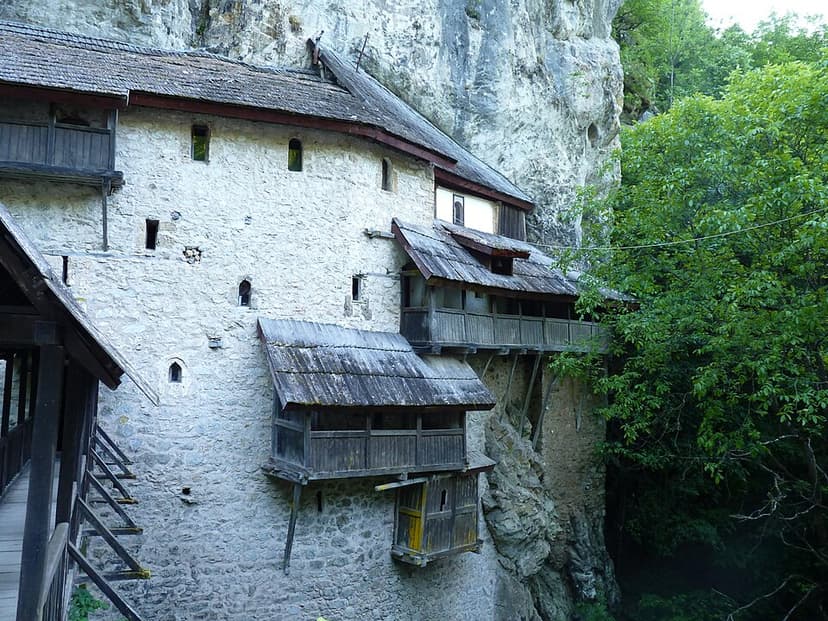
Crna Reka
Crna Reka Monastery is a 13th-century Serbian Orthodox monastery located in southwestern Serbia, near the village of Ribariće. It is distinguished by its cave-church dedicated to Archangel Michael, which features 16th-century frescoes and houses the relics of Saint Peter of Koriša. The monastery's secluded location in the gorges of Ibar Kolašin provided refuge for monks from Sopoćani during Ottoman attacks in the 16th century.
Crna Reka Monastery
Crna Reka Monastery, meaning "Black River Monastery," is a 13th-century Serbian Orthodox monastic complex located in southwestern Serbia. It is notable for its cave-church dedicated to Archangel Michael, which contains 16th-century frescoes and the relics of Saint Peter of Koriša. The monastery served as a refuge for monks from Sopoćani during 16th-century Ottoman attacks.
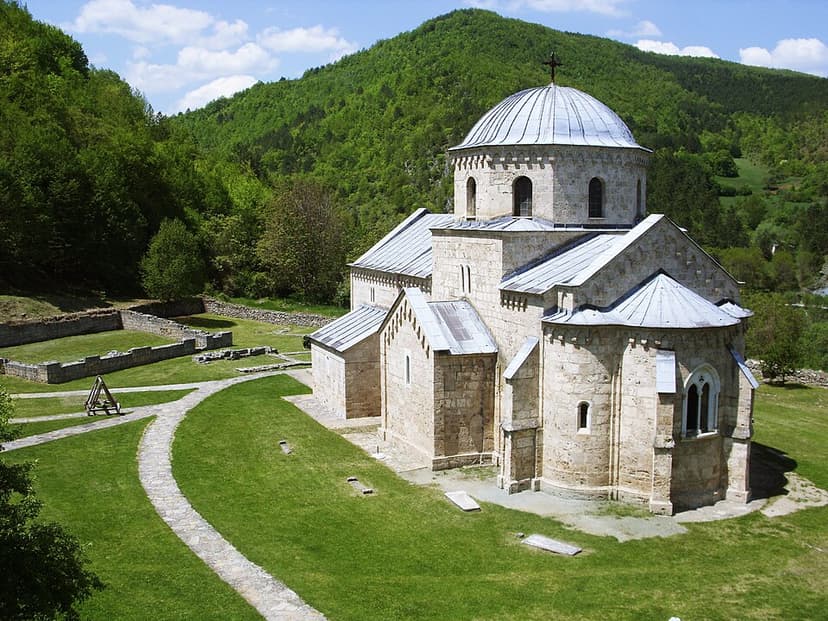
Gradac Monastery
Gradac Monastery is a Serbian Orthodox Monastery located on a plateau above the Gradačka River, built between 1277 and 1282 as an endowment of Queen Helen of Anjou. Known for its Serbian-Byzantine architecture with Gothic and Romanesque elements, the monastery suffered devastation and abandonment but underwent significant reconstruction in the late 20th century and is now a functioning nunnery. It holds the status of a Monument of Culture of Exceptional Importance in Serbia.