
Amiens
Amiens is a historic city in northern France, renowned for its monumental Gothic cathedral, the largest in France. Once a significant Roman settlement, it has a rich history marked by industrial development, particularly in textiles, and significant damage and rebuilding following both World Wars. Today, Amiens is a vibrant cultural and economic hub in the Hauts-de-France region, attracting tourism with its heritage sites and distinctive local cuisine.
Key Facts
- ›Amiens Cathedral is the largest Gothic cathedral in France.
- ›The city was a central settlement of the Ambiani tribe in Roman Gaul, known as Samarobriva.
- ›It played a crucial role in the 1918 Battle of Amiens, a key event in ending World War I.
- ›The city suffered significant damage in both World Wars and was rebuilt with wider streets.
- ›Amiens is known for its unique local foods, including 'macarons D'Amiens' and 'ficelle Picarde'.

Gothic
Amiens Cathedral, Hortillonnages, Jules Verne House, Tour Perret, MuséE De Picardie, Saint-Leu Neighborhood, Saint-Maurice Neighborhood
Samarobriva, Ambianum
Jules Verne, Emmanuel Macron
Siege of Amiens, Battle of Amiens, World War I, World War Ii
About Amiens
Amiens is a significant city in northern France, serving as the prefecture of the Somme department within the Hauts-de-France region. Its most prominent landmark is the Amiens Cathedral, celebrated as the largest Gothic cathedral in France, drawing considerable interest for its architectural grandeur and historical importance. The city's origins trace back to ancient times, first known as Samarobriva, the central settlement of the Ambiani tribe, and later as Ambianum under Roman rule. For centuries, Amiens has been a crossroads of European routes and a center for trade and culture.
Throughout its history, Amiens has experienced periods of both prosperity and conflict. The city's textile industry, particularly its production of velours, gained fame during the 18th and 19th centuries. Amiens was also a critical location during military campaigns; the 1918 Battle of Amiens was a pivotal moment that initiated the Hundred Days Offensive, leading directly to the Armistice that ended World War I. The city endured substantial damage during both World Wars, necessitating extensive post-war reconstruction. The rebuilding efforts, guided by plans that widened streets and modernized infrastructure, have shaped its contemporary urban landscape.
Beyond its monumental cathedral, Amiens offers a rich historical and cultural heritage that underpins its tourism. Visitors can explore attractions such as the unique hortillonnages (floating gardens), the former residence of author Jules Verne, the modern Tour Perret, and the Musée de Picardie. The city also retains charm in its historic neighborhoods like Saint-Leu and Saint-Maurice, which border the River Somme. Amiens is also recognized for its distinctive local gastronomy, featuring specialties like "macarons d'Amiens" and "la ficelle Picarde," contributing to its identity as a vibrant cultural and economic center.
Source: Wikipedia ↗
Frequently Asked Questions
What is the most famous landmark in Amiens?
The most prominent landmark in Amiens is its magnificent Gothic cathedral, which is the largest of its kind in France. This impressive structure is a major draw for tourists and a symbol of the city's rich architectural heritage.
What is the historical significance of Amiens?
Amiens has a long history, originating as the Roman settlement of Samarobriva. It was a strategic location throughout various conflicts, notably playing a critical role in the 1918 Battle of Amiens, which was instrumental in the Allied victory in World War I. The city also experienced significant rebuilding after extensive damage during both World Wars.
What is Amiens known for in terms of local cuisine?
Amiens boasts several distinctive local culinary specialties. These include 'macarons d'Amiens,' which are almond paste biscuits, and 'tuiles amienoises,' thin, curved biscuits flavored with chocolate and orange. Other popular dishes are 'pâté de canard d'Amiens,' a duck pâté in pastry, and 'la ficelle Picarde,' an oven-baked crêpe topped with cheese.
How did Amiens develop after World War II?
Following significant bombing during World War II, Amiens was rebuilt according to plans by Pierre Dufau. The reconstruction focused on widening streets to improve traffic flow, and the new structures were primarily constructed using brick, concrete, and white stone with slate roofs. The architect Auguste Perret also contributed to the city's post-war urban landscape with designs for the train station and Tour Perret.
Related Monasteries
Bourges
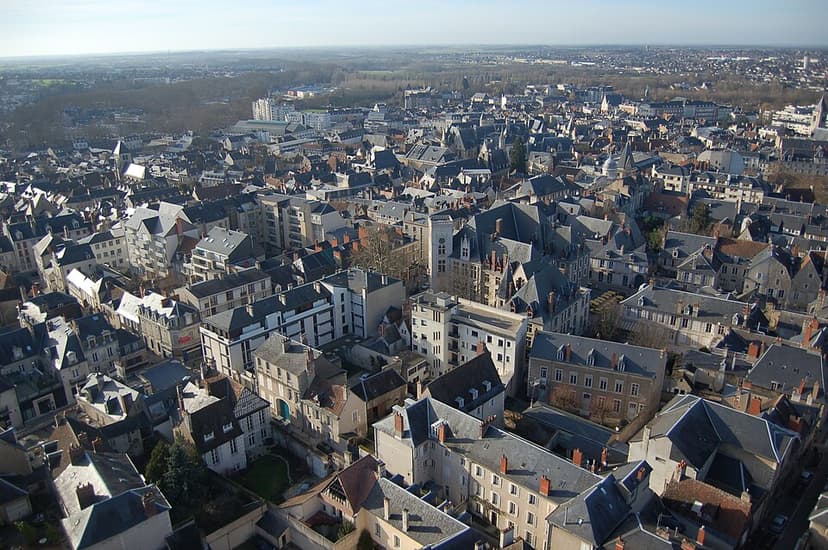
Bourges is a historic commune in central France, serving as the capital of the Cher department and the former province of Berry. Its origins trace back to the Gallic confederacy, enduring sieges and reconstructions by Romans and Franks. Throughout the Middle Ages and Renaissance, it served as a significant administrative and cultural center, notably as a refuge for Charles VII and a hub for alchemy. Today, Bourges is recognized for its stunning Gothic cathedral, a UNESCO World Heritage site, and its rich architectural heritage.

Fleury Abbey
Fleury Abbey, located in Saint-Benoît-sur-Loire, France, is a historically significant Benedictine monastery founded around 640 AD. It is renowned for housing the relics of Saint Benedict of Nursia, a claim that is disputed by the monks of Monte Cassino. The abbey played a vital role in Western European monasticism, boasting a renowned library and attracting scholars during its medieval heyday.

Frigolet Abbey
Frigolet Abbey is a significant Premonstratensian monastery complex located in Southern France, originally founded around 960. Over its history, it has been occupied by Benedictine monks, canons regular, and various Augustinian orders before being restored and canonically erected as an abbey by the Premonstratensians in the 19th century. The abbey has faced periods of suppression and expulsion, notably during the French Revolution and subsequent anti-clerical laws, but has persevered and continues to operate today.