
Abbeyknockmoy
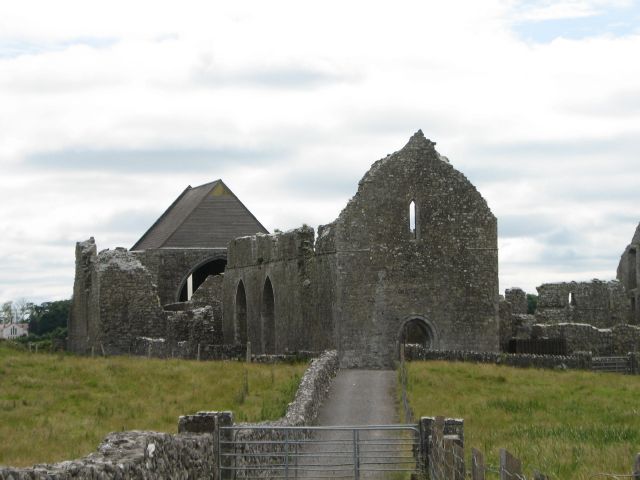
Abbeyknockmoy is a historic Cistercian abbey founded in 1190 in County Galway, Ireland, by the King of Connacht, Cathal Crobhdearg Ua Conchobair. The abbey served as the burial site for King Cathal and is renowned for its surviving medieval wall paintings and sculptures, which show connections to other Cistercian sites in western Ireland. Although now in ruins, it remains a significant historical and artistic monument.
Key Facts
- ›Founded in 1190 by King Cathal Crobhdearg Ua Conchobair.
- ›Established as a Cistercian abbey, with monks from Boyle Abbey.
- ›Served as the burial site for King Cathal Crobhdearg Ua Conchobair.
- ›Features surviving examples of medieval wall paintings depicting religious and secular scenes.
- ›Sculptural work is linked to that found at Boyle Abbey.
- ›Experienced plundering in 1200 and an abbot was accused of arson in 1483.
Romanesque
- Medieval Wall Paintings
- Sculptural Work
- Burial Site of King Cathal Crobhdearg Ua Conchobair
Mainistir Chnoc Muaidhe
Cathal Crobhdearg Ua Conchobair
Plundered By William De Burgo In 1200, Abbot Accused of Arson In 1483
About Abbeyknockmoy
Abbeyknockmoy, whose Irish name is Mainistir Chnoc Muaidhe, meaning 'Abbey of Muaidh's Hill,' is historically significant for its 12th-century Cistercian abbey ruins located in County Galway, Ireland. The abbey was founded in 1190 by King Cathal Crobhdearg Ua Conchobair of Connacht, who made a vow to establish it prior to a victory against English forces. Cathal himself, after becoming a Cistercian monk, was buried at the abbey in 1224. The site was originally settled by monks from Boyle Abbey, and its surviving structures reveal strong connections to other Cistercian monasteries in western Ireland.
Art and Architecture
The abbey is particularly noted for its surviving medieval artistic elements. Traces of wall paintings can still be seen in the presbytery, depicting subjects such as Saint Sebastian, the Crucifixion, and the Trinity, alongside a unique fragment showing a hunting scene, which offers insight into medieval Irish pastimes. The sculptors responsible for the work at Abbeyknockmoy are believed to be the same artisans who worked at Boyle Abbey. A notable carved head on a nave pier, described by Roger Stalley, is thought by him to potentially represent Ua Conchobair himself, perhaps as a tribute to his patronage.
Historical Context
Abbeyknockmoy was not immune to the turbulent history of medieval Ireland. In 1200, the monastery was plundered by William de Burgo. Later, in 1483, the abbot was accused of setting fire to the abbey, highlighting internal conflicts or external pressures of the period. Today, Abbeyknockmoy stands as a significant ruin, offering a glimpse into the religious and artistic life of medieval Ireland and the importance of the Cistercian order in the region.
Source: Wikipedia ↗
Frequently Asked Questions
When was Abbeyknockmoy founded?
Abbeyknockmoy was founded in 1190. It was established by the King of Connacht, Cathal Crobhdearg Ua Conchobair, as a fulfilment of a vow.
What religious order was Abbeyknockmoy a part of?
Abbeyknockmoy was a Cistercian abbey. It was initially occupied by Cistercian monks from Boyle Abbey.
What historical figures are associated with Abbeyknockmoy?
King Cathal Crobhdearg Ua Conchobair was a key figure, founding the abbey and being buried there. He is also believed to be depicted in a carved head at the site.
What notable art can be found at Abbeyknockmoy?
The abbey contains remnants of medieval wall paintings, including depictions of Saint Sebastian, the Crucifixion, and the Trinity. It also features a well-preserved sculptured head on a nave pier.
What is the current status of Abbeyknockmoy?
Abbeyknockmoy is known for its ruins, indicating it is no longer an active monastic community in its original form. Substantial parts of the abbey still remain.
What historical events affected Abbeyknockmoy?
The monastery was plundered by William de Burgo in 1200. In 1483, the abbot faced accusations of setting fire to the abbey.
Related Monasteries

Abbeymahon Abbey
Abbeymahon Abbey, also known as the Cistercian Abbey of St Mary de Fonte Vivo, is a ruined medieval Cistercian monastery located near Timoleague, County Cork, Ireland. Despite a "dearth of documentary evidence," it was a significant and wealthy institution until its suppression in the 16th century. The abbey's current site was established in the 1270s, relocating from an earlier foundation to a more spacious location on a salt-water estuary.

Baltinglass Abbey
Baltinglass Abbey, a ruined medieval Cistercian monastery in County Wicklow, Ireland, was founded in 1148 by Diarmait Mac Murchada. It served as a daughter house of Mellifont Abbey and later became the mother house of Jerpoint Abbey. The abbey was suppressed in 1536 during the Dissolution of the Monasteries and is now a National Monument.
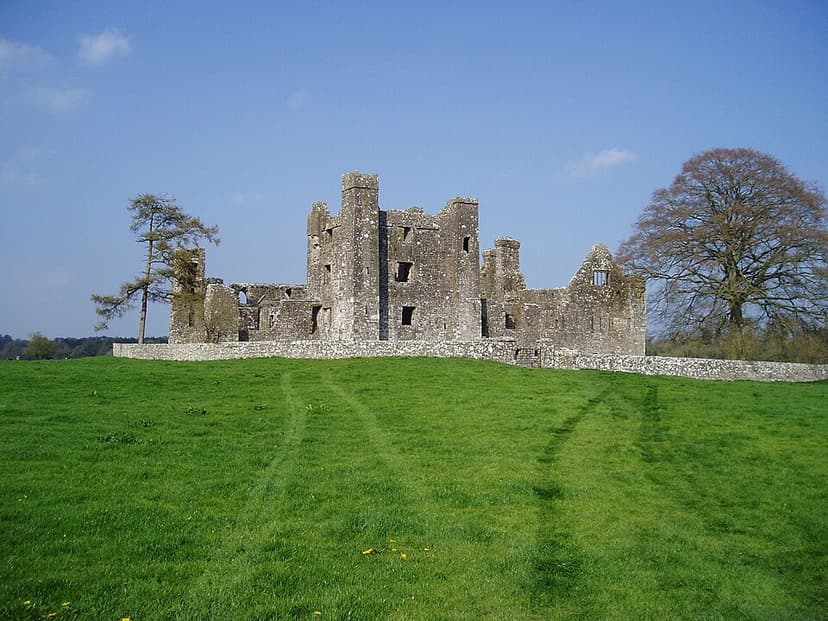
Bective Abbey
Bective Abbey is a well-preserved Cistercian abbey located on the River Boyne in County Meath, Ireland. Founded in 1147 as a daughter house of Mellifont Abbey, its remaining structures and ruins primarily date from the 15th century, though it also features an early 13th-century church and a 16th-century tower. The abbey's lands were confiscated during the Dissolution of the Monasteries and its buildings were later partially converted into a manor house.