
Abbeymahon Abbey
Abbeymahon Abbey, also known as the Cistercian Abbey of St Mary de Fonte Vivo, is a ruined medieval Cistercian monastery located near Timoleague, County Cork, Ireland. Despite a "dearth of documentary evidence," it was a significant and wealthy institution until its suppression in the 16th century. The abbey's current site was established in the 1270s, relocating from an earlier foundation to a more spacious location on a salt-water estuary.
Key Facts
- ›Founded as a Cistercian abbey in the 1270s, replacing an earlier 1172 foundation.
- ›Known by several names including Mainistir Ó mbána, St Mary de Fonte Vivo, and Abbey of Sancto Mauro.
- ›Located on the estuary of the Argideen River, unusually situated on a salt-water estuary rather than a freshwater river.
- ›Functioned as a parish church "since time immemorial" at the time of its dissolution.
- ›Suppressed between 1570 and 1587, with its property leased to Viscount Buttevant and later Nicholas Walsh.

Remains of Nave, Choir, and Transept Arches, Unique Location On A Salt-Water Estuary
Mainistir ó MbáNa, the Cistercian Abbey of St Mary De Fonte Vivo, Abbey of Sancto Mauro
Diarmait Mac Cormac Mac Carthaig, Diarmait Maccarthaig, James De Barry, 4th Viscount Buttevant, Nicholas Walsh
- Foundation of Original Abbey In 1172
- Relocation To New Site By 1278
- Abbots Rebuked For Not Attending General Chapter In the 13th Century
- Suppression of the Abbey Between 1570 and 1587
About Abbeymahon Abbey
Abbeymahon Abbey, also known by its Irish name Mainistir Ó mBána and its Cistercian designation St Mary de Fonte Vivo (or the Abbey of Sancto Mauro), is a ruined medieval monastery located near Timoleague in County Cork, Ireland. Despite a scarcity of documentary evidence, historical records indicate that it was a flourishing and wealthy Cistercian institution until its suppression in the 16th century.
History and Founding
The current site of Abbeymahon Abbey was established in the 1270s, succeeding an earlier abbey founded in 1172 by Diarmait Mac Cormac Mac Carthaig, the king of Desmond. This original settlement was populated by Cistercian monks from Baltinglass. Around a century later, the monks relocated to a more spacious site on the estuary of the Argideen River, approximately a mile east-south-east of Timoleague. This move is believed to have occurred by 1278, as Diarmait MacCarthaig, son of Domnall Cairbrech, was buried in the "new monastery" that year.
Operational and Financial Context
Throughout the 13th century, the abbots of Abbeymahon faced rebukes for failing to attend the General Chapter, likely due to the lengthy and costly journey. The abbey's income, valued at £4 in the 1302-1306 taxation and estimated at a meager £18 annually in the 15th and 16th centuries, would have barely covered such expenses. By the time of the Dissolution, the abbey had been functioning as the parish church for an extended period, and its other buildings were utilized by local farmers.
Suppression and Later History
Abbeymahon Abbey was likely protected by James de Barry, the 4th Viscount Buttevant, which may explain why it was not dissolved until sometime between 1570 and 1587. A Henrician survey listed it as the most valuable monastery in the diocese of Ross. In 1568, the property was leased to Viscount Buttevant, and by 1584, the lease was transferred to Nicholas Walsh, a Justice of Munster, who was granted the site "forever" in 1587.
Architecture and Site
Very little of Abbeymahon Abbey remains today, consistent with its initial construction as a relatively small structure. Visible remnants include parts of the nave, choir, and transept arches. An unusual characteristic of the site is its location on the shore of a salt-water estuary, rather than beside a freshwater river, which was typical for Cistercian foundations. The limited surviving architectural features make it challenging to reconstruct the abbey's physical evolution.
Source: Wikipedia ↗
Frequently Asked Questions
When was Abbeymahon Abbey founded?
The abbey was built in the 1270s to replace an earlier abbey founded in 1172. The monks had moved to the new site at Abbeymahon by 1278.
What is the religious tradition of Abbeymahon Abbey?
Abbeymahon Abbey was a Cistercian monastery, belonging to the Cistercian order.
What is the current status of Abbeymahon Abbey?
Abbeymahon Abbey is a ruined medieval monastery. While the structures are in ruins, the site itself remains.
Where is Abbeymahon Abbey located?
It is situated near Timoleague, County Cork, Ireland, on the estuary of the Argideen River.
What is known about the architecture of Abbeymahon Abbey?
Little remains of the abbey, which was a small structure. Only parts of the nave, choir, and transept arches are still visible today. The lack of architectural features like doors or windows makes it difficult to determine specific changes.
Why is there limited information about Abbeymahon Abbey's history?
Historical documentation about Abbeymahon Abbey is scarce, described as a "dearth of documentary evidence." This lack of records means little is definitively known about its early history and development.
Related Monasteries
Abbeyknockmoy
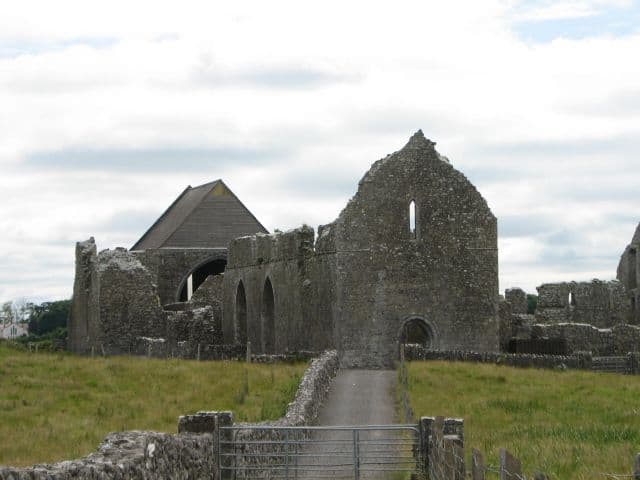
Abbeyknockmoy is a historic Cistercian abbey founded in 1190 in County Galway, Ireland, by the King of Connacht, Cathal Crobhdearg Ua Conchobair. The abbey served as the burial site for King Cathal and is renowned for its surviving medieval wall paintings and sculptures, which show connections to other Cistercian sites in western Ireland. Although now in ruins, it remains a significant historical and artistic monument.

Baltinglass Abbey
Baltinglass Abbey, a ruined medieval Cistercian monastery in County Wicklow, Ireland, was founded in 1148 by Diarmait Mac Murchada. It served as a daughter house of Mellifont Abbey and later became the mother house of Jerpoint Abbey. The abbey was suppressed in 1536 during the Dissolution of the Monasteries and is now a National Monument.
Bective Abbey
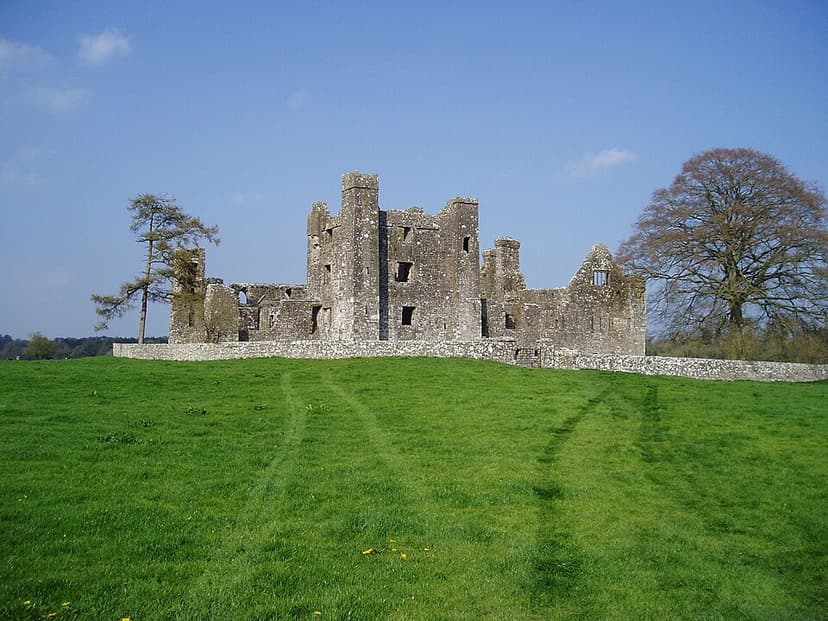
Bective Abbey is a well-preserved Cistercian abbey located on the River Boyne in County Meath, Ireland. Founded in 1147 as a daughter house of Mellifont Abbey, its remaining structures and ruins primarily date from the 15th century, though it also features an early 13th-century church and a 16th-century tower. The abbey's lands were confiscated during the Dissolution of the Monasteries and its buildings were later partially converted into a manor house.