
Vāyu
Vayu is the Hindu god of the winds and the divine messenger of the gods, revered as the "life breath of the world." He is a significant Vedic deity, closely associated with Indra, and later described as a guardian of the north-west direction. Vayu is also known for being the father of Hanuman and Bhima, and is considered a principal deity in traditions like Madhva's, who see him as an incarnate being.
Key Facts
- ›Vayu is the Hindu deity of winds and the divine messenger of the gods.
- ›He is also known by the names Vata and Pavana.
- ›In Vedic scriptures, Vayu is closely associated with Indra and is the first to drink Soma.
- ›Upanishads refer to him as Prana, the 'life breath of the world'.
- ›Later Hindu texts identify him as a dikpala guarding the north-west direction.
- ›He is considered the father of Hanuman and Bhima.
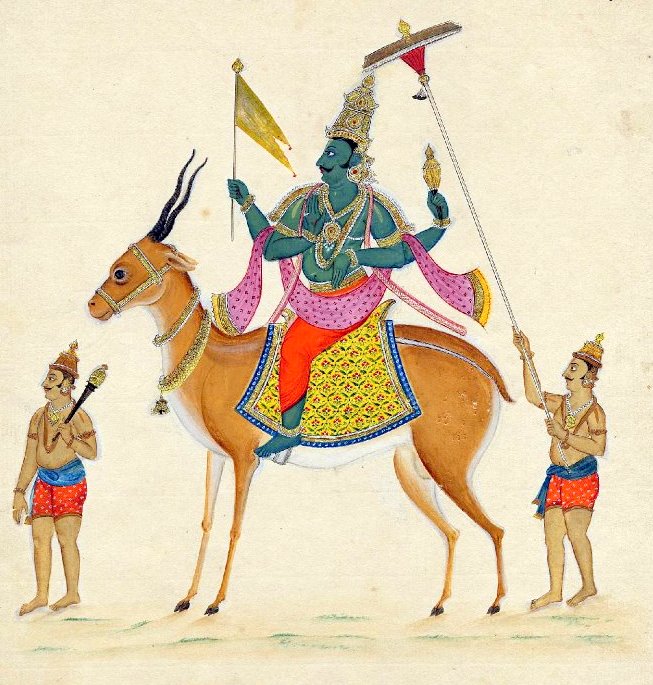
Vata, Pavana, Anila, Mukhya-Vayu, Mukhya Prana, Matharishwa, Fengtian (in Chinese Buddhism), Fūten (in Japanese Buddhism)
Shining Coach, Driven By White and Purple Horses, White Banner
Rigveda, Upanishads, Ramayana, Mahabharata
Father of Hanuman, Father of Bhima
Hanuman, Bhima
God of Wind, Divine Messenger
Deity, Guardian, Incarnation
About Vāyu
Vayu
Vayu is the Hindu god of the winds, also recognized as the divine messenger of the gods. He is revered as the "life breath of the world" and holds a significant place in Vedic scriptures, where he is closely associated with Indra, the king of the gods. Vayu is often described as being born from the breath of the Supreme Being Vishvapurusha and was the first deity to partake in Soma.
Significance and Role
In the Upanishads, Vayu is praised as Prana, representing the vital life force. He is also recognized as a dikpala, one of the guardians of the cardinal directions, specifically overseeing the north-west. Later Hindu epics identify him as the father of the heroic figures Hanuman and Bhima. In certain traditions, such as that of the 13th-century saint Madhva, Vayu is considered an incarnation who accompanies Vishnu to aid in preserving dharma.
Iconography and Attributes
In hymns, Vayu is depicted with "exceptional beauty," moving swiftly in a shining coach pulled by numerous white and purple horses, often accompanied by a white banner. He is characterized as a powerful and heroic fighter and destroyer, embodying the elemental force of air and wind. The Sanskrit words for air (vāyu) and wind (pavana) are fundamental elements in Hinduism, with Vayu also being synonymous with Prana, the breath of life.
Source: Wikipedia ↗
Frequently Asked Questions
Who is Vayu in Hinduism?
Vayu is the Hindu god of the winds and the divine messenger of the gods. He is also known as Vata and Pavana and is considered the 'life breath of the world'.
What is Vayu's role in Vedic scriptures?
In the Rigveda, Vayu is an important deity associated with the winds and the Maruts. He is described as the first god to receive Soma in ritual and shares the first drink with Indra. He is depicted as powerful, heroic, and beautiful, moving in a shining coach.
How is Vayu significant in the Upanishads?
The Upanishads praise Vayu as Prana, the 'life breath of the world'. Texts like the Brihadaranyaka Upanishad illustrate his supreme importance, showing that other deities function only when empowered by him. The Chandogya Upanishad states that Brahman cannot be known without knowing Vayu as the udgitha.
What is Vayu's role as a Dikpala?
In later Hindu scriptures, Vayu is described as a dikpala, one of the guardians of the cardinal directions. He is specifically assigned to look over the north-west direction.
Who are Vayu's notable children?
The Hindu epics describe Vayu as the father of the god Hanuman, whose stories are told in the Ramayana, and Bhima, one of the Pandavas in the Mahabharata. Hanuman is often called Pavanaputra, meaning 'son of Pavana'.
What are the avatars associated with Vayu?
According to traditions, the first avatar of Vayu is Hanuman, the second is Bhima, and the third is Madhvacharya, the founder of the Dvaita Vedanta school. These figures are seen as aiding in the preservation of dharma.
Related Hindu deities
Vamana
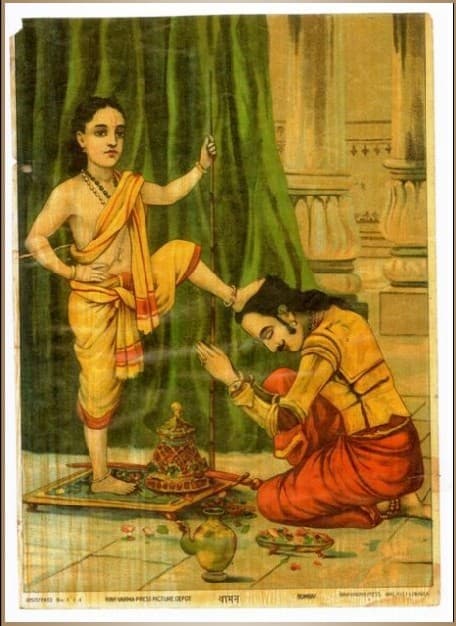
Vamana, meaning 'dwarf', is a significant avatar of the Hindu deity Vishnu, recognized as the fifth and first Dashavatara. He is primarily known for his myth where he appears as a dwarf to King Mahabali and, by taking three colossal steps, reclaims the three worlds, restoring cosmic order. This act symbolizes Vishnu's power to maintain balance and uphold dharma.

Kaushiki
Kaushiki is a Hindu goddess who emerged from the sheath of Parvati. She is primarily known for her role in defeating the asura brothers Shumbha and Nishumbha, and her emergence also led to the creation of the Matrikas. Kaushiki is considered an incarnation of Mahasaraswati and is also known by epithets such as Ambika and Chandika.

Soma
Chandra, also known as Soma, is the Hindu god of the Moon, revered for his association with the night, plants, and vegetation. He is a significant figure within the Navagraha, the nine celestial bodies influencing destiny in Hindu astrology. Chandra is celebrated for his role in the cosmic balance and his influence on the natural world and human emotions.