
Vamana
Vamana, meaning 'dwarf', is a significant avatar of the Hindu deity Vishnu, recognized as the fifth and first Dashavatara. He is primarily known for his myth where he appears as a dwarf to King Mahabali and, by taking three colossal steps, reclaims the three worlds, restoring cosmic order. This act symbolizes Vishnu's power to maintain balance and uphold dharma.
Key Facts
- ›Vamana is the fifth avatar of Vishnu and the first of the Dashavatara.
- ›He is known for regaining the three worlds from the daitya-king Mahabali.
- ›His primary action involves taking three steps to cover the earth, atmosphere, and heavens.
- ›Vamana is also referred to by epithets such as Trivikrama, Urukrama, and Upendra.
- ›He is considered the son of sage Kashyapa and his wife Aditi.
- ›The legend of Vamana is first mentioned in the Vedas and elaborated in later epics and Puranas.
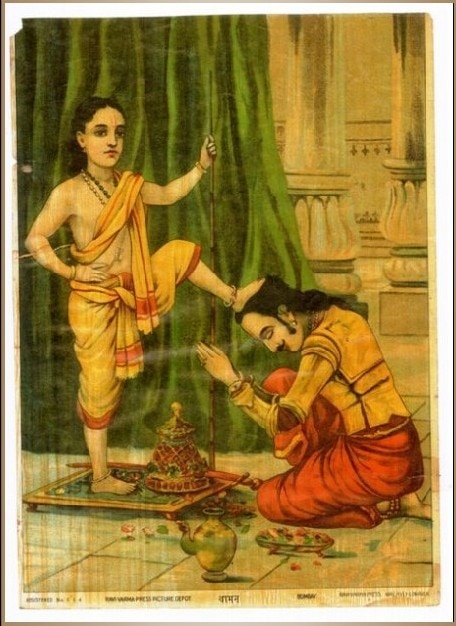
Trivikrama, Urukrama, Upendra, Dadhivamana, Ulagalanthan, Balibandhana
Dwarf Form, Cosmic Form, Carrying A Water Pot, Carrying An Umbrella
Vedas, Upanishads, Mahabharata, Puranas
Son of Kashyapa and Aditi, Brother of Indra
Onam
About Vamana
Vamana, meaning 'dwarf' in Sanskrit, is a significant avatar of the Hindu deity Vishnu, celebrated as the fifth incarnation in the Dashavatara sequence and the first in the Treta Yuga. He is also known by epithets such as Trivikrama ('three steps') and Urukrama ('far-stepping'). The legend of Vamana is first alluded to in the Vedas and is extensively detailed in the Hindu epics and Puranas, where he plays a crucial role in restoring cosmic balance.
Legend and Significance
The central myth of Vamana involves his intervention to help Indra, the king of the devas, regain his dominion after being defeated by the daitya-king Mahabali. Vishnu incarnated as Vamana, the dwarf son of sage Kashyapa and Aditi, and approached Mahabali during a grand sacrifice. Vamana requested a gift of three paces of land. Mahabali, despite warnings from his preceptor Shukra, generously agreed. Vamana then miraculously expanded to a colossal size, with his first step covering the Earth and the underworld (Patala), and his second step encompassing the heavens. When asked where to place the third step, Mahabali humbly offered his own head. Vishnu then placed his third step on Mahabali's head, banishing him to the netherworld and restoring Indra to his throne. This act symbolizes Vishnu's power to maintain dharma and cosmic order by overcoming pride and greed.
Vedic Roots and Symbolism
While the full narrative of Vamana appears in later texts, the concept of Vishnu's three strides is present in the Rigveda, suggesting an ancient origin for the myth. These strides have been interpreted in various ways: as representing the three positions of the sun (rising, zenith, setting), the three planes of existence (earth, atmosphere, sky), or even the three states of consciousness (waking, dreaming, deep sleep). The sacrifice of Mahabali's dominion and his subsequent banishment highlight themes of humility, devotion, and the consequences of ego. The story underscores Vishnu's role as the preserver of the universe, capable of intervening to correct imbalances through his divine avatars.
Source: Wikipedia ↗
Frequently Asked Questions
Who is Vamana?
Vamana is an avatar of the Hindu deity Vishnu, known for his dwarf form. He is the fifth avatar in the Dashavatara sequence and is central to a famous myth about reclaiming the three worlds.
What is the main story associated with Vamana?
Vamana's most prominent legend involves his encounter with the daitya-king Mahabali. Mahabali was performing a grand sacrifice, and Vamana, appearing as a dwarf, asked for three feet of land. Bali agreed, but Vamana grew to cosmic size and covered the Earth, atmosphere, and heavens in two steps, pushing Bali to the netherworld with the third.
What is the significance of Vamana's three steps?
Vamana's three steps are interpreted in various ways, symbolizing the measurement of the entire universe. They represent the three planes of existence (earth, atmosphere, sky) or the three states of consciousness (waking, dreaming, deep sleep). The act ultimately re-establishes cosmic order.
What are some other names for Vamana?
Vamana is known by several other names and epithets, including Trivikrama (meaning 'three steps'), Urukrama ('far-stepping'), Upendra ('younger brother of Indra' or 'superior to Indra'), and Balibandhana ('binder of Bali').
Where is the story of Vamana first mentioned?
The precursor to the Vamana legend, concerning Vishnu's three strides, is first mentioned in the Vedas, particularly the Rigveda. Later texts like the Brahmanas, epics, and Puranas further develop the narrative of his dwarf incarnation.
Related Hindu deities

Kurma
Kurma is the second avatar of the Hindu preserver deity Vishnu, most famously appearing in the legend of the churning of the Ocean of Milk. He is also identified with Kashyapa, a Vedic sage and progenitor of all life, and Akupara, the cosmic turtle that supports the Earth. Kurma symbolizes steadfastness, spiritual regeneration, and the churning of the mind through meditation.
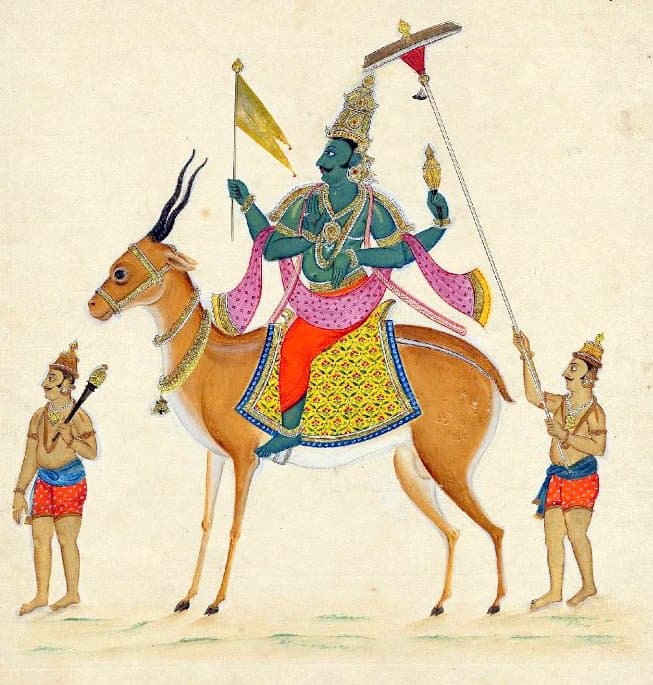
Vāyu
Vayu is the Hindu god of the winds and the divine messenger of the gods, revered as the "life breath of the world." He is a significant Vedic deity, closely associated with Indra, and later described as a guardian of the north-west direction. Vayu is also known for being the father of Hanuman and Bhima, and is considered a principal deity in traditions like Madhva's, who see him as an incarnate being.

Kaushiki
Kaushiki is a Hindu goddess who emerged from the sheath of Parvati. She is primarily known for her role in defeating the asura brothers Shumbha and Nishumbha, and her emergence also led to the creation of the Matrikas. Kaushiki is considered an incarnation of Mahasaraswati and is also known by epithets such as Ambika and Chandika.