
Vaidishvara
Vaidishvara, also known as Vaitheeswaran, is a Hindu deity primarily worshipped as Shiva in the form of the "God of Healing." He is revered for his ability to cure diseases, and his temple in Vaitheeswarankoil, Tamil Nadu, is a significant pilgrimage site. Vaidishvara is also associated with the planet Mars and is considered a major deity within Shaivism.
Key Facts
- ›Vaidishvara is a manifestation of Shiva as the "God of Healing" or "Doctor God."
- ›His temple in Vaitheeswarankoil is renowned for its healing waters and prayers believed to cure ailments.
- ›He is associated with the planet Mars (Angaraka) and is one of the nine Navagraha deities.
- ›The temple is revered by the Tevaram hymns of 7th-century Saiva Nayanars.
- ›Legend states that Rama, Lakshmana, and Saptarishi worshipped Vaidishvara.
- ›The temple is maintained by the Dharmapuram Adheenam, a Saivite monastic institution.

Vaitheeswaran, Vaidyanathar, God of Healing, Doctor God
- Lingam
- Metal Image of Subramanya
- Stone Sculptures of Durga, Dakshinamoorthy, Surya, Jatayu, Sampati
- Image of Thaiyalnayaki With Medicinal Oil
Tevaram Hymns
Consort of Parvati, Father of Subramanya
Brahmotsavam, Karthigai Festival, Kantha Sashti
Vaitheeswarankoil Temple, Siddhamirtham Tank, Jatayu Kundam
Vel
Jatayu, Sampati
Navagraha Deity
About Vaidishvara
Vaidishvara, predominantly known as Vaitheeswaran, is a significant Hindu deity, revered as a manifestation of Shiva, the "God of Healing." The name itself is a Tamil construction combining 'vaidya' (doctor) and 'Ishvara' (God/Master), underscoring his primary role as a divine physician.
Significance and Worship
The deity is most famously worshipped at the Vaitheeswarankoil temple in Tamil Nadu, India. This temple is a major pilgrimage destination, particularly for those seeking cures for illnesses. The holy waters of the Siddhamirtham tank within the temple complex are believed to possess potent healing properties, and a dip in them is said to alleviate diseases. Prayers offered to Vaidishvara are widely believed to bring about recovery and well-being.
Vaidishvara holds a special place within the Navagraha (nine planets) tradition, being associated with the planet Mars (Angaraka). According to legend, Angaraka suffered from leprosy and was cured by Vaidyanathar, establishing the temple as a key site for worship related to this planetary influence.
Legends and History
Mythological narratives connect Vaidishvara to pivotal events in Hindu epics. It is said that during the Ramayana period, Lord Rama, Lakshmana, and the Saptarishis worshipped the deity at this location. Another legend highlights Shiva appearing as Vaitheeswaran to heal the injured army of his son, Subramanya, after a battle with demons. The temple's history is marked by contributions from various rulers, including the Cholas, Pandyas, and Nayaks, with inscriptions dating back to the 11th and 12th centuries CE. The temple is reverently mentioned in the 7th-century Tevaram hymns by Saiva Nayanars, classifying it as a Paadal Petra Sthalam.
Iconography and Architecture
The presiding deity, Vaidishvara, is primarily represented as a lingam in the innermost sanctum. The temple architecture features a five-tiered gopuram and extensive precincts. Other significant icons within the complex include metal images of Subramanya (as Muthukumara Swamy) and stone sculptures of deities like Durga, Dakshinamoorthy, and Surya. The shrine of Thayalnayaki, the consort of Vaidishvara, depicts her holding medicinal oil, reinforcing the deity's healing attributes. The Sthala Vriksha, or temple tree, is the margosa tree, known for its medicinal properties.
Source: Wikipedia ↗
Frequently Asked Questions
Who is Vaidishvara?
Vaidishvara is a form of the Hindu deity Shiva, primarily worshipped as the "God of Healing." His name is a Tamil derivative combining 'vaidya' (doctor) and 'Ishvara' (God/Master). He is believed to possess the power to cure diseases.
What is the significance of the Vaitheeswarankoil temple?
The Vaitheeswarankoil temple, dedicated to Vaidishvara, is a major pilgrimage site in Tamil Nadu, India. It is particularly known for its holy waters, believed to cure all diseases, and for prayers offered to the deity for healing.
What is Vaidishvara's connection to the Navagrahas?
Vaidishvara is considered one of the nine Navagraha (nine planets) temples and is specifically associated with the planet Mars, known as Angaraka. It is believed that Angaraka was cured of leprosy by Vaidyanathar (Vaidishvara).
What legends are associated with Vaidishvara?
Legends state that during the Ramayana period, Rama and Lakshmana worshipped the deity. Another legend narrates how Shiva, as Vaitheeswaran, cured the wounds of Subramanya's army after a battle with demons. Angaraka also sought and received healing from Vaidishvara.
What are the notable features of Vaidishvara's iconography?
Vaidishvara is primarily worshipped as a lingam in the inner sanctum. The temple complex also houses metal images of deities like Subramanya and stone sculptures of Durga, Dakshinamoorthy, and Surya. The shrine of Thaiyalnayaki depicts her offering medicinal oil.
What are the primary worship practices at Vaidishvara's temple?
Devotees often take a holy dip in the temple tank before worshipping Vaidishvara. Practices include dissolving jaggery in the water for skin diseases, tonsure ceremonies for children, and offering prayers with specific cloths, grains, and lamps associated with Angaraka.
Related Hindu deities
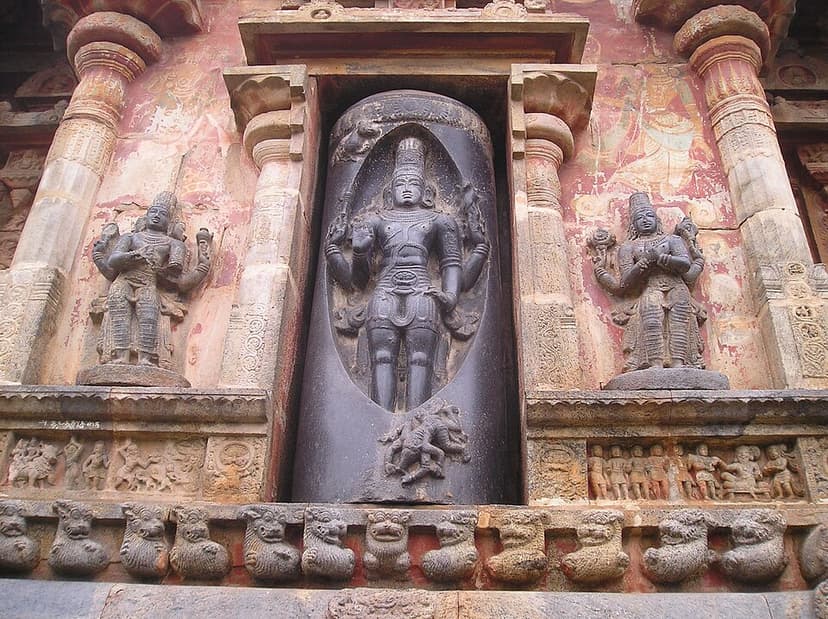
Lingodbhava
Lingodbhava, meaning "the emergence of the Linga," is an iconic representation of the Hindu god Shiva, particularly prevalent in temples in Tamil Nadu. It depicts Shiva emerging from a pillar of light, symbolizing his aniconic representation and the origin of the lingam. This representation illustrates a legend where Shiva appeared as a pillar of light to end a dispute between Vishnu and Brahma about their supremacy.

Ashvins
The Ashvins are twin Vedic deities associated with medicine, health, healing, sciences, and the twilight. They are depicted as youthful divine horsemen who travel in a swift chariot, known for rescuing mortals and aiding them in various situations. The Ashvins are prominent in the Rigveda and play significant roles in later Hindu scriptures.

Bholenath
Bholenath, meaning 'lord of innocence,' is a popular epithet for the Hindu deity Shiva. This name highlights Shiva's aspect as the benevolent and guileless lord. The epithet is often invoked in narratives emphasizing Shiva's vulnerability and divine protection.