
Svaha
Svaha is a significant goddess in Hinduism, primarily known as the consort of Agni, the god of fire. She is also recognized as a ritualistic invocation used in mantras and sacrifices, symbolizing an auspicious ending and the power that cannot be consumed by fire. Her legends often involve her deep love for Agni and her role in the birth of their son, Skanda.
Key Facts
- ›Svaha is the Hindu goddess of sacrifices and the consort of Agni, the god of fire.
- ›The term 'Svaha' is also used as a ritualistic incantation in mantras and rituals in Hinduism and Mahayana Buddhism.
- ›She is considered an aspect of Prakriti (nature) and is essential for Agni's sustenance.
- ›Svaha is believed to be the mother of Skanda (Kartikeya) and Agneya (daughter of Agni).
- ›Her body is said to be composed of the four Vedas.
- ›She is worshipped in Thailand as Mae Phra pheling, the goddess of fire.

Manyanti
- Body Composed of the Four Vedas
- Six Limbs Are Considered the Six Angas of the Vedas
Rigveda, Yajur Veda, Brahmavaivarta Purana, Brahmanda Purana, Devi Bhagavata Purana, Mahabharata Vana Parva
Consort of Agni, Daughter of Daksha, Daughter of Brihaspati, Mother of Skanda, Mother of Agneya
- Kuan Yin Inter-Religious Park, Phetchaburi, Thailand
- Baan Sukhawadee, Chonburi, Thailand
- Courtyard Five Benjathevi , Bang Saen, Chonburi Province, Thailand
Skanda, Agneya, PavamāNa, PāVaka, śUci
Goddess, Sacrifice
About Svaha
Svaha: Goddess of Sacrifice and Ritual Invocation
Svaha is a prominent figure in Indian religions, recognized both as a goddess and as a crucial ritualistic incantation. In Hinduism, she is revered as the goddess of sacrifices and is famously known as the consort of Agni, the god of fire. Her name is intrinsically linked to the act of offering, symbolizing an auspicious conclusion to rituals and prayers. Svaha is also understood as an embodiment of Prakriti (nature), possessing a power that even Agni cannot consume, making her an essential element in Vedic ceremonies.
Legends and Mythology
Svaha's most compelling narratives revolve around her profound love for Agni. According to tradition, she yearned to be with him and, in a significant legend found in the Mahabharata, she aided Agni in fathering Skanda by taking the forms of the wives of the Saptarishis. This act led to the birth of Skanda, who is considered one of her sons, alongside Agneya, the daughter of Agni. Her divine body is said to be composed of the four Vedas, with her six limbs representing the six Angas of the Vedas, underscoring her deep connection to sacred knowledge.
Ritual Significance
Beyond her divine personification, Svaha is a vital term in Hindu and Mahayana Buddhist rituals. The word 'Svaha' (स्वाहा) is chanted during offerings to the sacred fire, often following the name of the deity to whom the oblation is made, such as 'Agnaye svaha' (to Agni, Svaha). It signifies the acceptance of the offering and is believed to bring success and blessings. The term's etymology suggests a meaning of "well spoken" or "good calling," aligning with its function as a potent and auspicious invocation. In modern practice, Svaha is often appended to mantras during yajna (fire sacrifices), japa (meditative chanting), and other forms of worship, ensuring the efficacy and auspicious conclusion of the ritual.
Source: Wikipedia ↗
Frequently Asked Questions
Who is Svaha in Hinduism?
Svaha is a Hindu goddess primarily known as the consort of Agni, the god of fire. She is also recognized as a ritualistic invocation used in mantras and sacrifices, symbolizing an auspicious ending and the power that cannot be consumed by fire.
What is the significance of the word 'Svaha'?
In Hinduism and Mahayana Buddhism, 'Svaha' is used as a ritualistic or mantric invocation, often uttered during offerings to the sacred fire. It is also considered an auspicious ending and a term of blessing.
What are the legends associated with Svaha?
Legends describe Svaha's deep love for Agni and her desire to dwell with him. In one popular story, she takes the forms of the wives of the Saptarishis to unite with Agni, leading to the birth of Skanda.
Who are Svaha's parents and children?
Depending on the literary tradition, Svaha is considered the daughter of either Daksha or Brihaspati. She is known as the mother of Skanda (Kartikeya) and Agneya, the daughter of Agni.
How is Svaha worshipped?
Svaha is worshipped through mantras and ritualistic offerings, particularly in fire sacrifices (yajna). In Thailand, she is revered as Mae Phra pheling, the goddess of fire, and invoked as a protector in various rituals.
Related Hindu deities
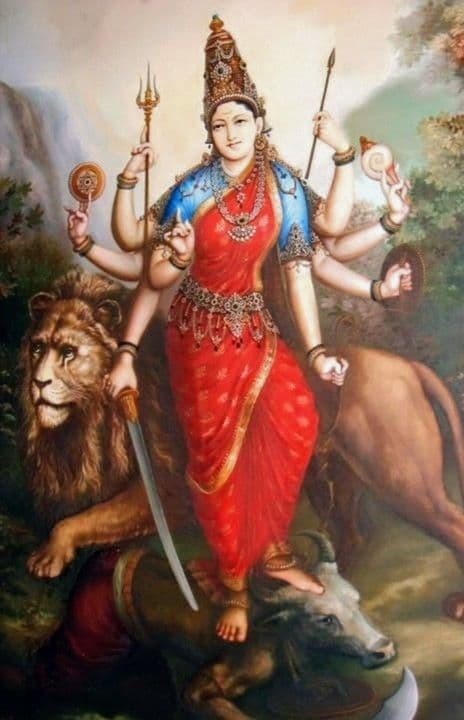
Durga
Durga is a prominent Hindu deity, widely worshipped in Shaktism as the principal aspect of Mahadevi, the Ultimate Reality. She is revered for her protective, motherly, and warrior attributes, symbolizing the triumph of good over evil. Legends often depict her battling demonic forces that threaten cosmic order, and she is a central figure in festivals like Durga Puja and Navaratri.

Chamunda
Chamunda is a fierce and formidable form of the Hindu mother goddess, Mahadevi, and is counted among the seven Matrikas (mother goddesses). Her name derives from the demons Chanda and Munda, whom she vanquished. She is known for her terrifying iconography and is often associated with cremation grounds and fierce rituals.
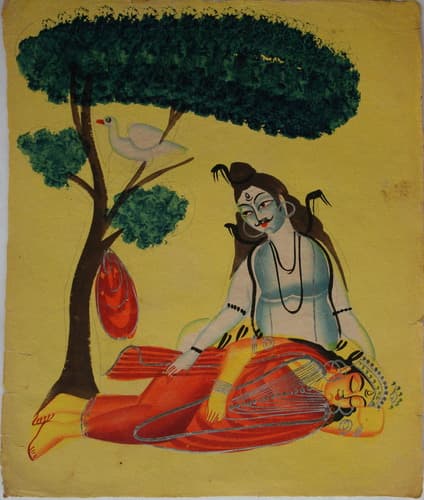
Sati
Sati, also known as Dakshayani, is a prominent Hindu goddess revered as an aspect of the mother goddess Shakti. She is primarily known as the first wife of Shiva and the daughter of Daksha. Her most significant legend involves her self-immolation to protest her father's insult to her husband, Shiva, which ultimately led to the formation of the sacred Shakti Pithas.