
Chamunda
Chamunda is a fierce and formidable form of the Hindu mother goddess, Mahadevi, and is counted among the seven Matrikas (mother goddesses). Her name derives from the demons Chanda and Munda, whom she vanquished. She is known for her terrifying iconography and is often associated with cremation grounds and fierce rituals.
Key Facts
- ›Chamunda is a fearsome aspect of the Hindu mother goddess, Mahadevi.
- ›She is one of the seven Matrikas, a group of divine mothers.
- ›Her name originates from her slaying of the demons Chanda and Munda.
- ›Chamunda is often depicted as a skeletal old woman with up to twelve arms.
- ›She is associated with cremation grounds, animal sacrifices, and offerings of wine.
- ›Chamunda is also recognized in Vajrayana Buddhism as a wrathful deity.

Chamundeshwari, Chamundi, Chandi
- Skeletal Old Woman
- Sunken Eyes
- Dishevelled Hair
- Black Or Red Complexion
- Garland of Severed Heads Or Skulls
- Up To Twelve Arms
- Holding Damaru , Trishula , Sword, Snake, Skull Mace , Thunderbolt, Severed Head, Skull-Bowl
- Standing Or Sitting On A Corpse Or Vanquished Demon
- Three Eyes
- Protruding Teeth
- Long Nails
- Sagging Breasts
- Sunken Belly
- Ornaments Made of Bones, Skulls, Snakes, Scorpions
- Sacred Thread of Skulls
- Headdress of Matted Hair
- Crescent Moon On Headdress
- Eye Sockets Described As Setting the World Ablaze With Flames
Devi Mahatmya, Mahabharata, Varaha Purana, Matsya Purana, Devi Purana, Vishnudharmottara Purana
Durga Puja, Dussehra
Chamunda Devi Temple, Chamunda Nandikeshwar Dham, Chamunda Shrines On Chotila and Parnera Hills, Baitala Deula, Mohini Temple, Chitrakarini Temple, Kichakeshwari Temple, Charchika Temple, Chamundeshwari Temple, Chamunda Mataji Temple, Sri Chamundeshwari Kshetram, Sree Shakthan Kulangara Temple, Chamunda Mata Temple, Sachiya Mata Temple
Trishula, Sword, Skull Mace, Thunderbolt
Jackals, Owl, Buffalo, Dhole, Eagle
About Chamunda
Chamunda is a fearsome and powerful aspect of the Hindu mother goddess, Mahadevi, and is recognized as one of the seven Matrikas, or divine mothers. Her name is derived from the demons Chanda and Munda, whom she is credited with slaying. This fierce goddess is often depicted in terrifying iconography and is associated with cremation grounds and the overcoming of malevolent forces.
Origins and Mythology
Scholars suggest that Chamunda may have originated as a tribal goddess worshipped in the Vindhya mountains, where rituals involving animal and human sacrifices, along with liquor, were practiced. These practices are believed to have been integrated into her Tantric worship as she became assimilated into mainstream Hinduism. Her fierce nature is often linked to her association with Shiva, particularly his destructive aspects.
Legends recount Chamunda's emergence from the brow of Goddess Kaushiki or from the frown of Parvati, tasked with eliminating demons. In other narratives, such as in the Devi Mahatmya, she is identified with Kali and plays a crucial role in defeating demons like Raktabija by consuming their blood, preventing their regeneration. The Matsya Purana describes her creation by Shiva to aid in the battle against the demon Andhakasura.
Iconography and Symbolism
Chamunda's iconography is striking and often unsettling, emphasizing her role as a destroyer of evil. She is frequently depicted as a skeletal old woman with sunken eyes, dishevelled hair, and a black or red complexion. Her adornments typically include a garland of skulls or severed heads, and she may possess up to twelve arms, each holding symbolic weapons or ritualistic objects such as a trident, sword, skull-bowl, and drum. She is often shown standing or sitting on a corpse or a vanquished demon, further highlighting her dominion over death and destruction. Her terrifying visage, with protruding teeth and long nails, symbolizes the inevitability of old age, decay, and death.
Worship and Significance
Chamunda is worshipped through various rituals, historically including animal sacrifices and offerings of wine, though Vaishnavite influences have led to a decline in some of these practices. She is a significant deity in Tantric traditions and is often included in the Sandhi Puja during Durga Puja. Numerous temples are dedicated to her across India, particularly in Himachal Pradesh, Gujarat, Odisha, and Rajasthan. Her fierce form is also recognized in Vajrayana Buddhism as a protective deity associated with Palden Lhamo.
Chamunda's association with the Matrikas underscores her role as a protector, particularly against the ills that afflicted children. While other Matrikas are often seen as emanations of male deities, Chamunda is considered a Shakti of the Great Goddess Devi, signifying her independent power and significance within the Hindu pantheon.
Source: Wikipedia ↗
Frequently Asked Questions
Who is Chamunda?
Chamunda is a fearsome form of the Hindu mother goddess, Mahadevi, and is one of the seven Matrikas. She is known for her terrifying appearance and fierce nature, often associated with destruction and the overcoming of evil.
What is the origin of Chamunda's name?
The name Chamunda is a combination of 'Chanda' and 'Munda,' two demons whom she killed. This act of vanquishing powerful adversaries is central to her mythology and significance.
What are Chamunda's key iconographic features?
Chamunda is typically depicted as a skeletal old woman with sunken eyes and disheveled hair, often black or red in color. She wears a garland of skulls and may have up to twelve arms, holding various symbolic objects.
Where is Chamunda typically depicted as residing?
Chamunda is often portrayed as residing in cremation grounds or near holy fig trees. These locations emphasize her connection to death, decay, and the liminal spaces of existence.
What is Chamunda's association with the Matrikas?
Chamunda is a prominent member of the Saptamatrikas, the Seven Mothers, who are divine mothers often associated with protection and warding off childhood illnesses. While other Matrikas are seen as Shaktis of male deities, Chamunda is considered a Shakti of the Great Goddess Devi.
What are some of the legends surrounding Chamunda?
Legends describe Chamunda emerging from the eyebrow of Goddess Kaushiki to kill Chanda and Munda, or being created from Durga's frown. In some narratives, she is associated with drinking the blood of demons like Raktabija and Andhakasura, a characteristic shared by other Matrikas.
Related Hindu deities
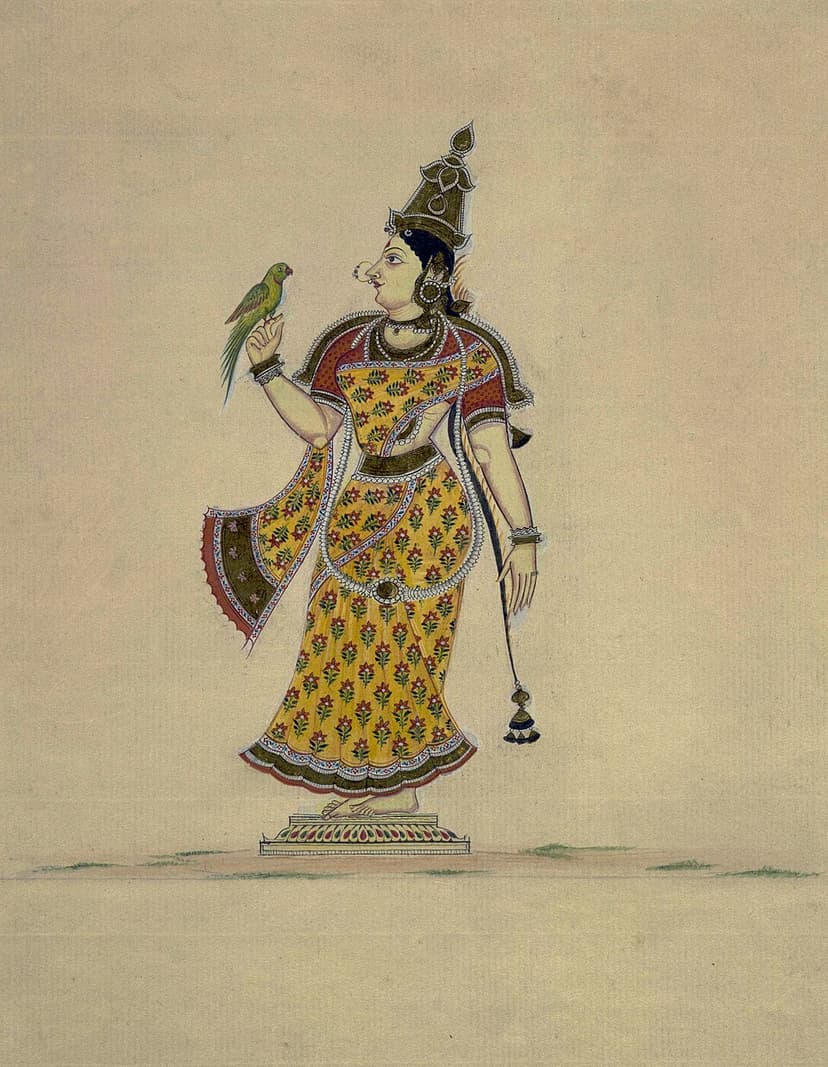
Meenakshi
Meenakshi is a prominent Hindu goddess, primarily worshipped in South India, and is considered a form of Parvati. She is the tutelary deity of Madurai and is often depicted as the divine consort of Sundaresvarar (a form of Shiva). Meenakshi is revered as a warrior queen from ancient Tamil literature and is a central figure in the Meenakshi Temple in Madurai, one of Hinduism's most significant pilgrimage sites.
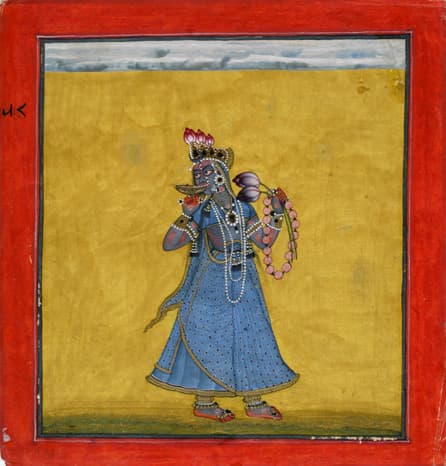
Bhadrakali
Bhadrakali is a fierce and auspicious form of the Hindu supreme goddess Adi Shakti, primarily worshipped in South India, particularly Kerala. She is associated with divine wrath, protection, and the bestowal of spiritual knowledge, often depicted as a powerful warrior goddess who vanquishes evil.
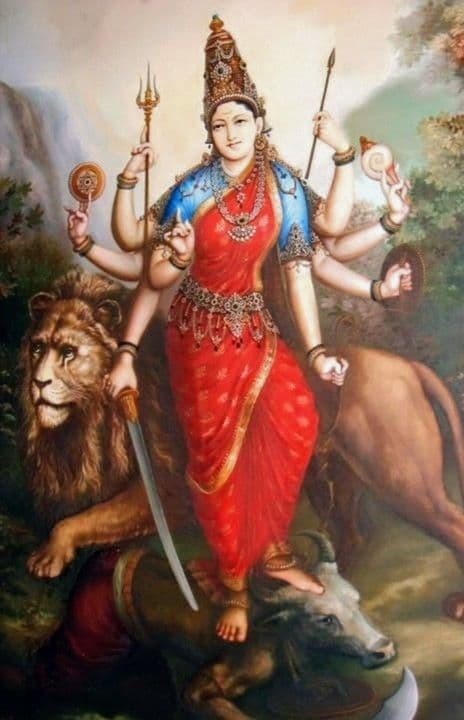
Durga
Durga is a prominent Hindu deity, widely worshipped in Shaktism as the principal aspect of Mahadevi, the Ultimate Reality. She is revered for her protective, motherly, and warrior attributes, symbolizing the triumph of good over evil. Legends often depict her battling demonic forces that threaten cosmic order, and she is a central figure in festivals like Durga Puja and Navaratri.