
Meenakshi
Meenakshi is a prominent Hindu goddess, primarily worshipped in South India, and is considered a form of Parvati. She is the tutelary deity of Madurai and is often depicted as the divine consort of Sundaresvarar (a form of Shiva). Meenakshi is revered as a warrior queen from ancient Tamil literature and is a central figure in the Meenakshi Temple in Madurai, one of Hinduism's most significant pilgrimage sites.
Key Facts
- ›Meenakshi is a form of the goddess Parvati and the tutelary deity of Madurai.
- ›She is one of the three avatars of Adi Shakti, alongside Kamakshi and Visalakshi.
- ›Meenakshi is depicted as the divine consort of Sundaresvarar (Shiva) and the sister of Alagar (Vishnu).
- ›She is known as a warrior queen from ancient Pandya kingdom legends and was later deified.
- ›Her primary temple, the Meenakshi Temple in Madurai, is a major pilgrimage destination.
- ›The name Meenakshi is derived from Sanskrit and means 'fish-eyed'.
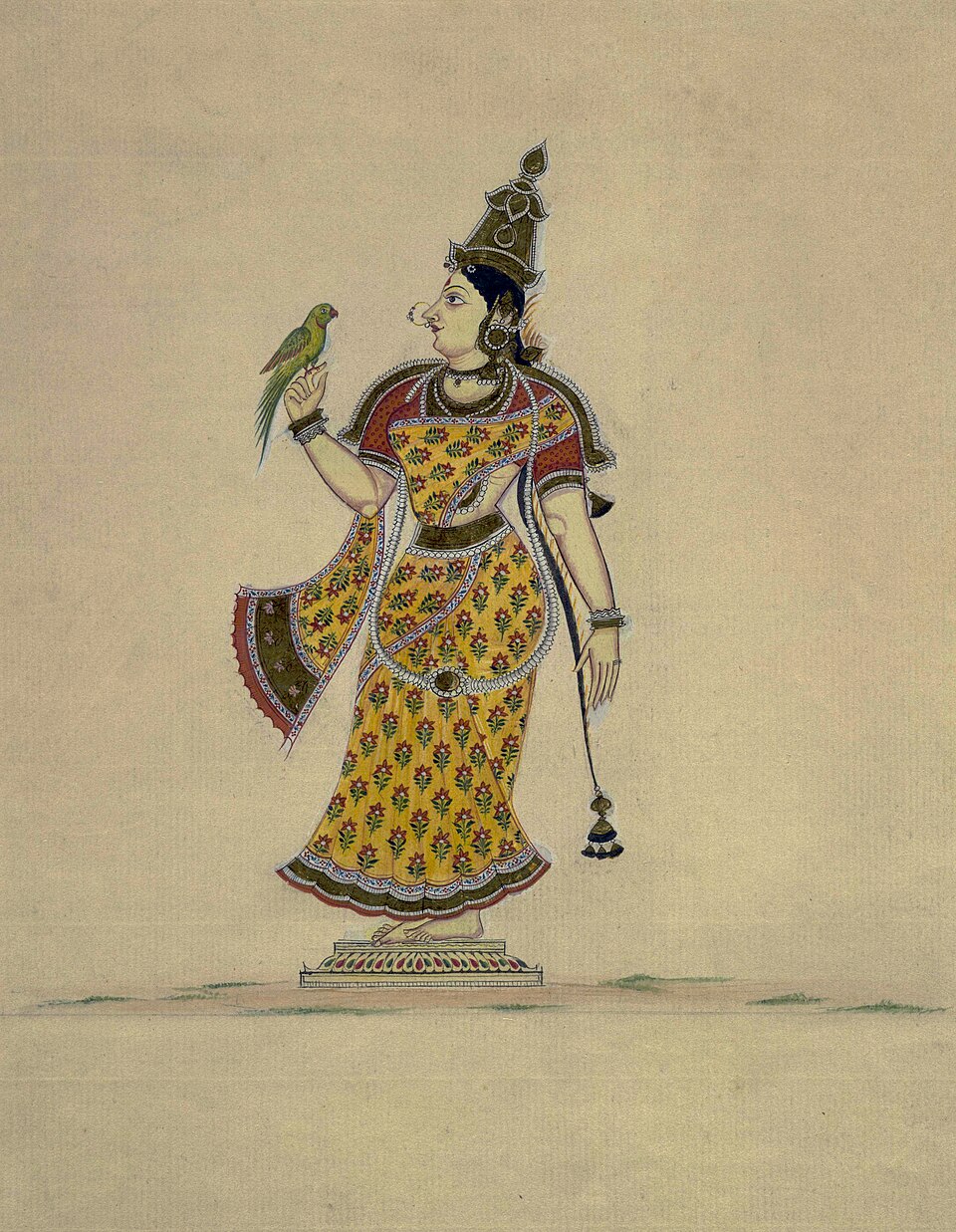
Minakshi, Mīnāṭci, Aṅgayaṟkaṇṇi, Aṅgayaṟkaṇṇammai, Taḍādakai
Raised Right Hand Holding A Lotus, Green Parrot Sitting On the Lotus, Left Hand Hanging By Her Side, Three Breasts
Thiruvilayadal Puranam, Meenakshi Pancharatnam
Consort of Sundaresvarar, Sister of Alagar, Form of Parvati, Avatar of Adi Shakti
Meenakshi Tirukalyanam, Chithirai Festival
Madurai, Meenakshi Temple
Fish
Warrior Queen, Goddess
Tutelary Deity, Deified Queen
About Meenakshi
Meenakshi is a significant Hindu goddess, primarily venerated in South India, and is regarded as a manifestation of the goddess Parvati. She holds the esteemed position of the tutelary deity of Madurai, a historic city in Tamil Nadu. Meenakshi is recognized as one of the three principal avatars of Adi Shakti, alongside Kamakshi of Kanchipuram and Visalakshi of Varanasi. She is traditionally depicted as the divine consort of Sundaresvarar, a form of Lord Shiva, and is also known as the sister of Alagar, a form of Lord Vishnu.
Legend and Significance
Ancient Tamil literature portrays Meenakshi as a formidable warrior queen who once ruled the Pandya kingdom before her deification. Her primary place of worship is the magnificent Meenakshi Temple in Madurai, which stands as one of the most important pilgrimage sites in Hinduism. The goddess is typically visualized with a raised right hand holding a lotus flower, often with a green parrot perched upon it, while her left hand rests by her side. The celebration of Meenakshi Tirukalyanam, which commemorates her divine marriage to Shiva, is observed as a major festival.
Etymology and Iconography
The name 'Meenakshi' originates from Sanskrit, meaning 'fish-eyed,' a combination of 'mīna' (fish) and 'akṣī' (eye). This appellation is also found in early Tamil literature as Taḍādakai. Interpretations of the name vary, suggesting her eyes are large and brilliant like a fish's, or that the name signifies the fish emblem of the Pandya dynasty. The symbolism of the fish's unblinking eyes is also associated with the goddess, representing her constant vigilance over her devotees. Adi Shankara also extolled her as Shri Vidya.
Texts and Worship
While Meenakshi does not appear directly in the Lalita Sahasranama, she is referenced in a line describing a face with fish-like eyes. The "Meenakshi Pancharatnam" is a devotional hymn composed by Adi Shankara. Tamil literature often presents Meenakshi as embodying both domesticity and divinity. The Meenakshi Temple itself, though mentioned in earlier texts, was extensively developed during the Pandya rule and later rebuilt and expanded by subsequent dynasties, becoming a vibrant center of worship and a major tourist attraction.
Source: Wikipedia ↗
Frequently Asked Questions
What does the name Meenakshi mean?
Meenakshi is a Sanskrit term meaning 'fish-eyed'. This name is derived from the words 'mīna' (fish) and 'akṣī' (eye). It is also known by Tamil names with similar meanings, such as Taḍādakai and Aṅgayaṟkaṇṇi.
Who is Meenakshi considered a form of?
Meenakshi is considered a form of the goddess Parvati. Along with Kamakshi and Visalakshi, she is recognized as one of the three avatars of Adi Shakti.
What is Meenakshi's role in relation to other deities?
Meenakshi is primarily known as the divine consort of Sundaresvarar, who is a form of Shiva. She is also referred to as the sister of Alagar, a form of Vishnu.
Where is Meenakshi primarily worshipped?
Meenakshi is mainly worshipped in South India. Her most prominent temple is located in Madurai, Tamil Nadu, which is a major pilgrimage destination.
What is the significance of the Meenakshi Temple?
The Meenakshi Temple in Madurai is dedicated to Meenakshi and her consort Sundaresvarar. It is a vast complex, a prominent landmark in Madurai, and attracts millions of pilgrims and visitors annually, especially during the Chithirai festival.
What is the legend behind Meenakshi's birth?
According to legend, King Malayadhwaja Pandya and his wife performed a yajna and a daughter with three breasts appeared from the fire. Advised by a divine voice, they raised her, and she lost her third breast upon meeting Shiva, revealing her true form as Meenakshi, an incarnation of Parvati.
Related Hindu deities

Chamunda
Chamunda is a fierce and formidable form of the Hindu mother goddess, Mahadevi, and is counted among the seven Matrikas (mother goddesses). Her name derives from the demons Chanda and Munda, whom she vanquished. She is known for her terrifying iconography and is often associated with cremation grounds and fierce rituals.
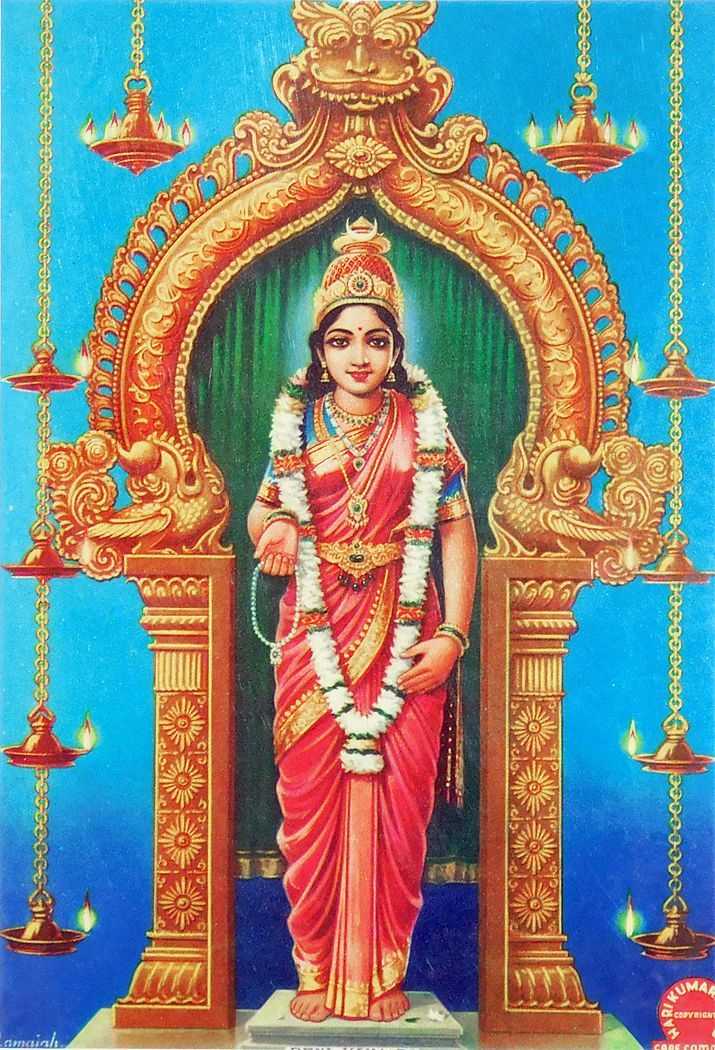
Devi Kanya Kumari
Devi Kanya Kumari is a prominent Hindu goddess, a manifestation of Mahadevi in the form of an adolescent girl. She is revered as a form of Parvati or Lakshmi, and is particularly known for her role in slaying the demon Banasura. Her worship is deeply tied to the town of Kanyakumari at the southernmost tip of India.

Chandraghanta
Chandraghanta is a powerful form of the Hindu goddess Mahadevi, revered as the destroyer of demons and the protector of her devotees. She is the third of the Navadurga and is prominently worshipped on the third day of Navaratri. Her name, meaning 'adorned with the moon as her bell,' refers to the crescent moon on her forehead, and she is depicted with ten arms holding various weapons and a bell.