
Shakambhari
Shakambhari, also known as Shatakshi, is the Hindu goddess of nourishment, considered a form of Mahadevi and identified with Durga. She is revered for appearing during a time of great scarcity, when the earth was deprived of food and the Vedas were forgotten, to provide sustenance in the form of fruits and vegetables.
Key Facts
- ›Shakambhari is the goddess of nourishment and sustenance.
- ›She is a form of Mahadevi and identified with Goddess Durga.
- ›Her name, Shakambhari, translates to 'she who bears vegetables'.
- ›She appeared to end a century of drought and scarcity caused by the asura Durgamasura.
- ›She is said to have offered fruits, vegetables, flowers, and roots to restore strength.
- ›She is also referred to by the name Shatakshi, meaning 'she of the hundred eyes'.
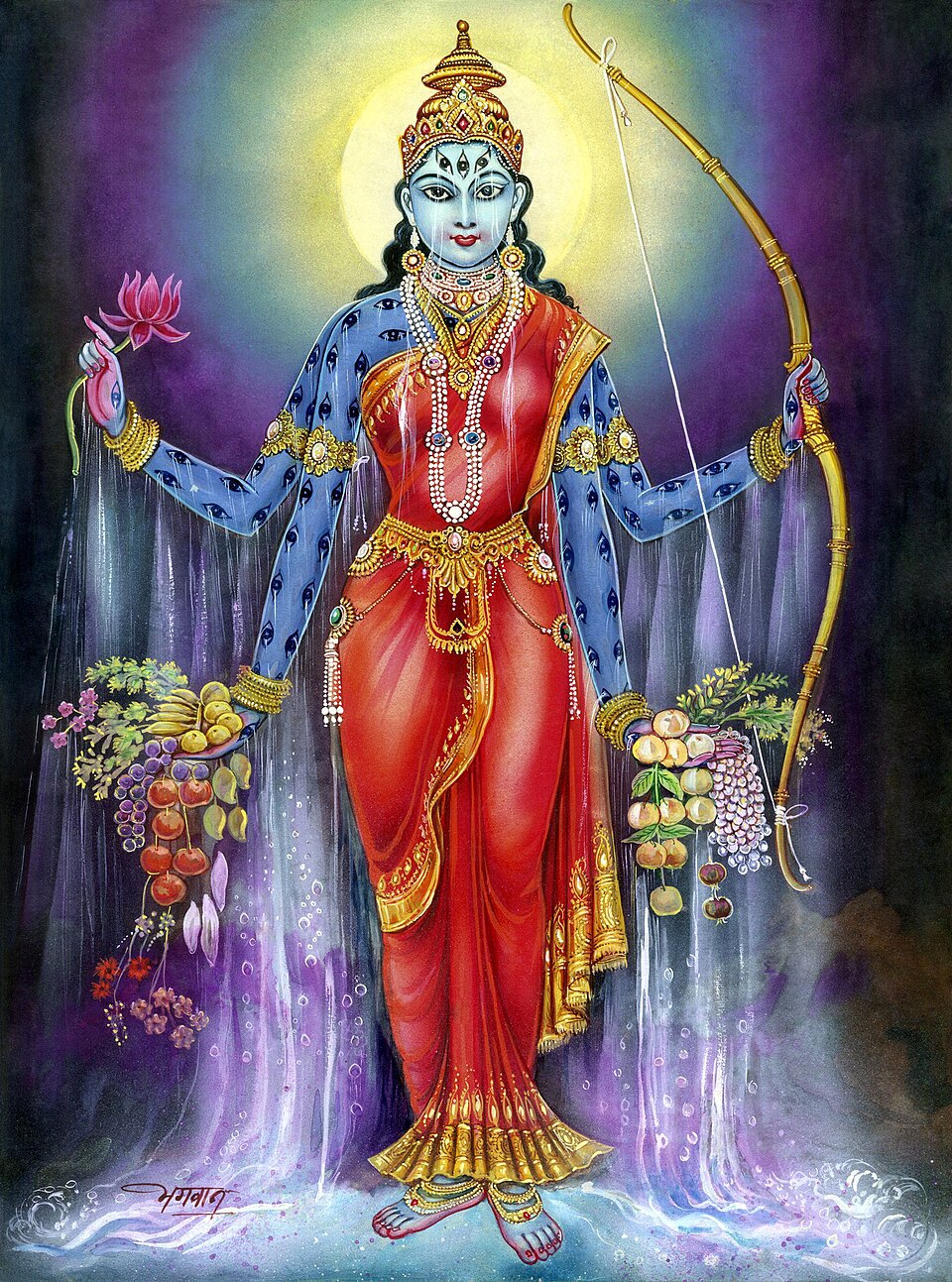
Shatakshi
- Dark-Hued Blue Form
- Hundred Eyes
- Four-Handed
- Bearing A Lotus
- Bearing Arrows
- Bearing A Great Bow
- Bearing Vegetables, Fruits, Flowers, and Roots
Devi Bhagavata Purana, Shiva Purana, Skanda Purana
Form of Mahadevi, Identified With Durga, Manifestation of Parvati
Saharanpur, Uttar Pradesh, Near Sambhar Lake, Rajasthan, Badami
Arrows, Great Bow
About Shakambhari
Who is Shakambhari?
Shakambhari, also known by the name Shatakshi, is a revered Hindu goddess celebrated as the divine embodiment of nourishment. She is considered a manifestation of Mahadevi, the Great Goddess, and is often identified with Durga, the warrior goddess. Shakambhari's significance lies in her role as a provider of sustenance, particularly during times of great hardship.
Legend and Significance
The mythology surrounding Shakambhari tells of a devastating period when the malevolent asura Durgamasura plunged the earth into drought and scarcity, causing the sages to forget the sacred Vedas. In response to the immense suffering, the goddess Parvati, in her Shakambhari form, appeared to restore balance. Emerging with her hundred eyes, she showered the world with an abundance of fruits, vegetables, flowers, and roots, thereby nourishing humanity and the devas and re-establishing life.
Etymology and Iconography
The name 'Shakambhari' itself is derived from Sanskrit, meaning 'she who bears vegetables' or 'she who nourishes with vegetables.' This name directly reflects her primary association with food and sustenance. Iconographically, she is depicted as a dark-hued blue goddess, often portrayed with a hundred eyes, symbolizing her all-seeing nature and compassion. She is typically shown with four arms, wielding a lotus, arrows, and a great bow, while also holding various types of produce.
Worship and Temples
Shakambhari is a significant deity within the Shaktism tradition. Several temples are dedicated to her worship across India, with prominent sites located in Saharanpur, Uttar Pradesh; near Sambhar Lake in Rajasthan; and in Badami. These temples serve as important centers for devotees to honor and seek blessings from the goddess of nourishment.
Source: Wikipedia ↗
Frequently Asked Questions
Who is Shakambhari?
Shakambhari is the Hindu goddess of nourishment and sustenance. She is considered a form of Mahadevi and is identified with Goddess Durga. Her name signifies her role as a provider of food.
What is Shakambhari known for?
Shakambhari is known for her divine intervention during a severe drought and famine that afflicted the earth. She appeared to provide abundant fruits and vegetables, restoring nourishment and strength to humans and deities.
What is the meaning of Shakambhari's name?
The name Shakambhari is derived from Sanskrit words meaning 'she who bears vegetables' or 'she who nourishes with vegetables'. It reflects her divine ability to provide food and sustenance.
What is Shakambhari's connection to Durga?
Shakambhari is regarded as a form of Mahadevi and is identified with Goddess Durga. In legends, she is sometimes described as a manifestation of Parvati, who is another form of Durga.
What is the legend behind Shakambhari?
According to legend, the asura Durgamasura caused a great scarcity and made sages forget the Vedas. Shakambhari, with her hundred eyes, appeared and showered the world with fruits and vegetables, ending the suffering and restoring nourishment.
Related Hindu deities
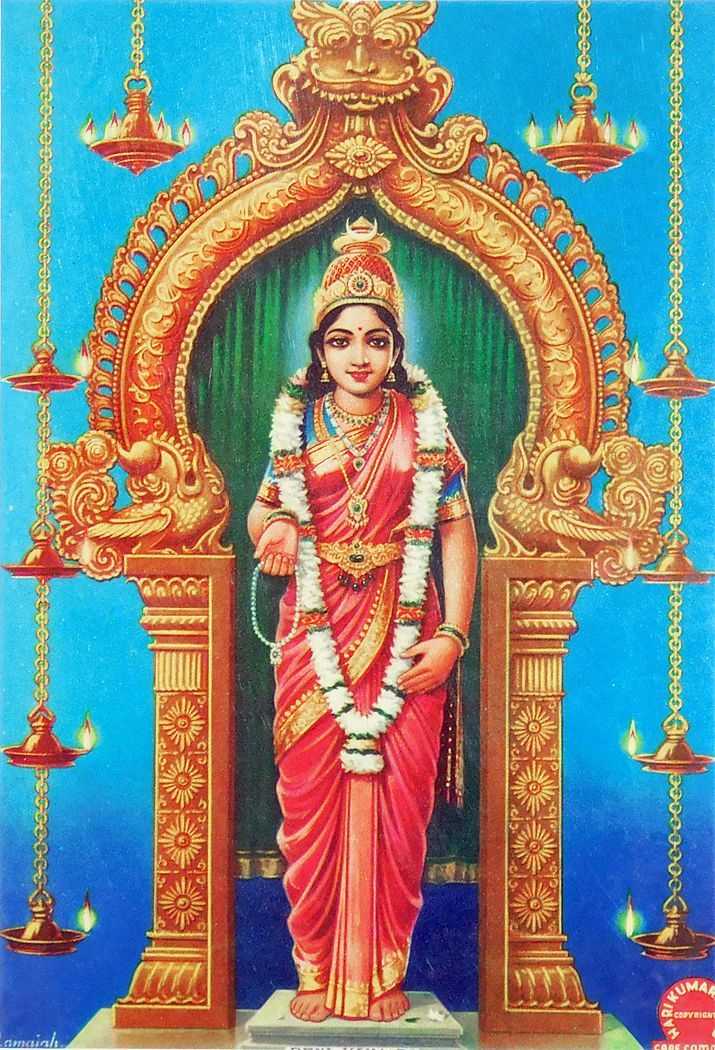
Devi Kanya Kumari
Devi Kanya Kumari is a prominent Hindu goddess, a manifestation of Mahadevi in the form of an adolescent girl. She is revered as a form of Parvati or Lakshmi, and is particularly known for her role in slaying the demon Banasura. Her worship is deeply tied to the town of Kanyakumari at the southernmost tip of India.

Chandraghanta
Chandraghanta is a powerful form of the Hindu goddess Mahadevi, revered as the destroyer of demons and the protector of her devotees. She is the third of the Navadurga and is prominently worshipped on the third day of Navaratri. Her name, meaning 'adorned with the moon as her bell,' refers to the crescent moon on her forehead, and she is depicted with ten arms holding various weapons and a bell.
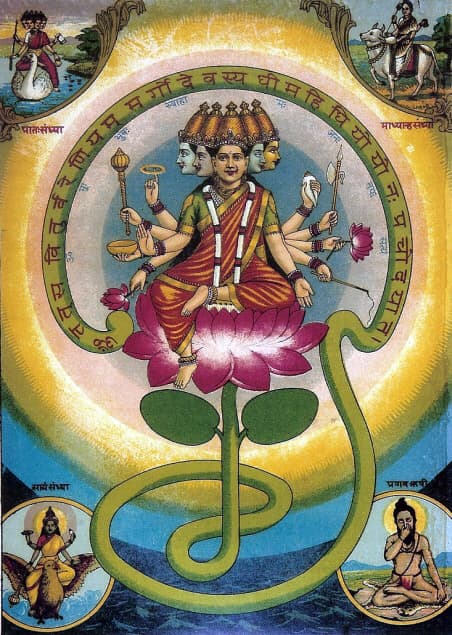
Gayatri
Gayatri is the personified form of the Gayatri Mantra, a significant hymn from Vedic texts, and is also known as Savitri and Vedamata ('mother of the Vedas'). She is considered a manifestation of Saraswati and is often associated with the solar deity Savitṛi, with whom she is sometimes depicted as the consort of the creator god Brahma in Puranic traditions. Gayatri is revered as the Supreme pure consciousness and a powerful goddess.