
Shailaputri
Shailaputri is a powerful form of the Hindu goddess Mahadevi, venerated as Parvati. She is known as the daughter of the mountain king Himavat and is the first of the Navadurga, worshipped on the first day of Navaratri. Her name, meaning "daughter of the mountain," reflects her divine parentage and connection to the earth's foundations.
Key Facts
- ›She is the first of the nine forms of the goddess Durga, collectively known as the Navadurga.
- ›Shailaputri is worshipped on the first day of the Hindu festival of Navaratri.
- ›Her name literally translates to "daughter of the mountain."
- ›She is considered an embodiment of the combined powers of Brahma, Vishnu, and Shiva.
- ›In a previous life, she was Sati, the first wife of Shiva, who immolated herself due to an insult from her father, Daksha.
- ›She is associated with the root chakra (Muladhara) in yogic traditions.

Sati Bhavani, Parvati, Himavati
Two Hands, Crescent Moon On Her Forehead, Trident In Her Right Hand, Lotus Flower In Her Left Hand
Daughter of Himavat, Consort of Shiva
Navaratri
- Shailaputri Temple, Varanasi, Uttar Pradesh, India
- Hedavde Mahalaxmi, Vasai Virar Region, Maharashtra, India
- Shailaputri Temple, Baramulla, Jammu and Kashmir, India
- Shailaputri Zewan, Srinagar, India
- Devi Shailputri Temple, Sianj Village, Mandi District, Himachal Pradesh, India
Trident
About Shailaputri
Shailaputri is a significant form of the Hindu goddess Mahadevi, widely venerated as a manifestation of Parvati. She is recognized as the daughter of the mighty mountain king Himavat. As the first of the Navadurga, the nine distinct forms of Durga, she holds a place of great importance and is traditionally worshipped on the very first day of the Navaratri festival.
Name and Parentage
The name "Shailaputri" itself carries profound meaning, literally translating from Sanskrit as "daughter of the mountain." This appellation underscores her divine lineage, linking her directly to the personification of the Himalayas. She is also known by other names such as Sati Bhavani, Parvati, and Himavati, all referencing her celestial parentage and divine essence.
Mythological Significance
Shailaputri embodies immense power, often described as the embodiment of the combined energies of the principal Hindu deities Brahma, Vishnu, and Shiva. Her mythological narrative is deeply intertwined with the story of Sati, her previous incarnation. As Sati, she was the daughter of Daksha, who organized a great yagna but deliberately excluded her husband, Shiva. Unable to bear the insult to Shiva, Sati immolated herself in the sacrificial fire. In her subsequent birth, she was reborn as Parvati, the daughter of Himalaya, and once again married Shiva, symbolizing divine continuity and resilience.
Iconography and Worship
Iconographically, Goddess Shailaputri is depicted with two hands, a crescent moon adorning her forehead, and riding upon the sacred bull, Nandi, her vahana. She carries a trident in her right hand and a lotus flower in her left, symbols of her divine authority and purity. Her worship is central to the initial rituals of Navaratri, where the Ghatasthapana ritual, symbolizing Shakti, is performed. In yogic traditions, she is associated with the Muladhara chakra, the root chakra, and her awakening is seen as the commencement of a spiritual ascent towards higher consciousness.
Sacred Sites
Devotion to Shailaputri is expressed in various sacred sites across India, including temples in Varanasi (Uttar Pradesh), the Vasai Virar region (Maharashtra), Baramulla and Srinagar (Jammu and Kashmir), and Sianj village in Mandi district (Himachal Pradesh), where she is worshipped in diverse forms, from traditional murti to natural stone formations.
Source: Wikipedia ↗
Frequently Asked Questions
Who is Shailaputri?
Shailaputri is a prominent form of the Hindu goddess Mahadevi, specifically a manifestation of Parvati. She is revered as the daughter of the mountain king Himavat and is considered the first of the nine forms of Durga, known as the Navadurga.
What does the name Shailaputri mean?
The name "Shailaputri" is derived from Sanskrit, where "shaila" means mountain and "putri" means daughter. Therefore, Shailaputri literally translates to "daughter of the mountain."
What is Shailaputri known for in mythology?
Mythologically, Shailaputri is known for her previous birth as Sati, the daughter of Daksha. After her father insulted her husband Shiva, Sati immolated herself in a sacrificial fire, leading to her rebirth as Parvati, the daughter of Himalaya. She embodies divine feminine power and resilience.
How is Shailaputri depicted in iconography?
Goddess Shailaputri is typically depicted with two hands, a crescent moon adorning her forehead, and riding on the bull Nandi. She carries a trident in her right hand and a lotus flower in her left.
When is Shailaputri worshipped?
Shailaputri is specifically worshipped on the first day of Navaratri, a significant nine-night festival dedicated to the worship of the divine feminine. Her worship marks the beginning of these auspicious celebrations.
What is the significance of Shailaputri in yoga?
In yoga and spiritual traditions, Shailaputri is associated with the root chakra, Muladhara. Her worship is believed to initiate the spiritual journey upwards towards higher consciousness, culminating at the Sahasrara chakra.
Related Hindu deities

Manjunatha
Shiva, also known as Mahadeva and Hara, is a principal deity in Hinduism and the Supreme Being in Shaivism. He is revered as the creator, protector, and transformer of the universe, and is also known as The Destroyer within the Trimurti. Shiva embodies both benevolent and fearsome aspects, often depicted as an ascetic yogi or a householder, and is considered the patron god of yoga, meditation, and the arts.
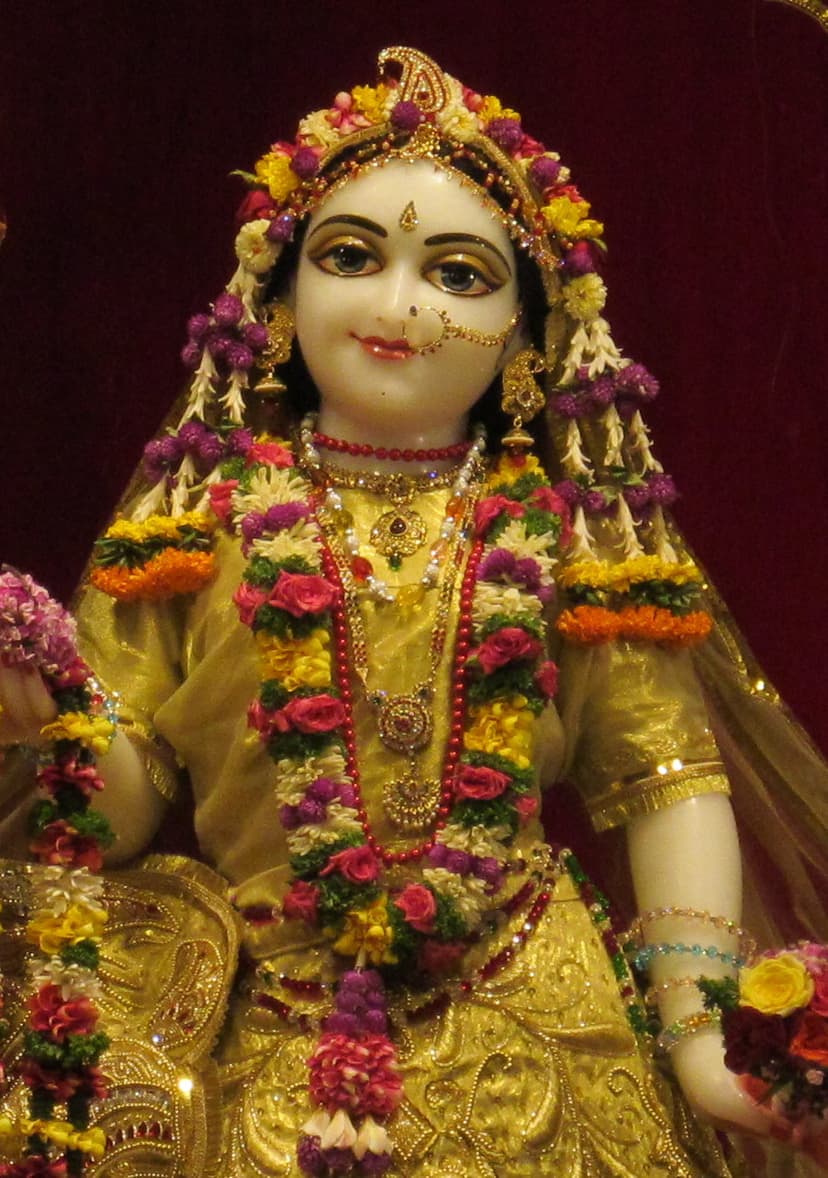
Radha
Radha is a principal Hindu goddess and the chief consort of Krishna. Revered as the goddess of love, compassion, and devotion, she is often depicted as an avatar of Lakshmi or as the supreme feminine energy of Krishna. Her profound love for Krishna has inspired countless devotional traditions, literary works, and artistic expressions.

Hanuman
Hanuman is a divine vanara and a devoted companion of Lord Rama in Hinduism, central to the epic Ramayana. Revered for his unwavering devotion, he is considered a chiranjivi (immortal) and is traditionally believed to be the spiritual offspring of the wind-god Vayu. Hanuman embodies a fusion of immense strength, heroic initiative, and loving devotion, and is often depicted as a patron of martial arts and scholarly pursuits.