
Savitr
Savitṛ is a Vedic deity, an Aditya, whose name signifies "impeller" or "vivifier." He is often associated with the Sun, sometimes identified as the divine influence or vivifying power of the Sun, particularly before sunrise. Savitṛ plays a crucial role in creation and is invoked for spiritual progress, bestowing immortality, and upholding cosmic order.
Key Facts
- ›Savitṛ is an Aditya, an offspring of the primordial goddess Aditi.
- ›His name translates to "impeller" or "vivifier" in Vedic Sanskrit.
- ›He is closely associated with the Sun, sometimes representing its vivifying power before sunrise.
- ›Savitṛ is prominently featured in the Rig Veda, with eleven dedicated hymns.
- ›He is credited with upholding cosmic order (Ṛta) and bestowing immortality.
- ›Savitṛ's influence is seen in creation, assisting Indra in shaping the universe.
Savitā, Savitur, Savitar, Sāvitrī, Apam napat, Prajapati, Mitra, Bhaga, Pusan
Golden Arms, Broad-Handed Or Beautiful-Handed, Pleasant-Tongued Or Beautiful-Tongued, Iron-Jawed, Golden Eyes, Yellow-Haired, Tawny Garb, Golden Chariot With A Golden Axle
Rig Veda, Yajur Veda, Satapatha Brahmana, Taittiriya Brahmana
Offspring of Aditi
Aditya
About Savitr
Savitṛ is a significant deity in Vedic scriptures, recognized as an Aditya, meaning an "offspring" of the primeval goddess Aditi. His name, derived from a Sanskrit verbal root, conveys the meaning of "impeller," "rouser," or "vivifier." Savitṛ is intimately connected with the Sun, often conceptualized as its divine influence or vivifying power, particularly in the period before sunrise. The distinction is made that the Sun before sunrise is known as Savitr, and from sunrise until sunset, it is referred to as Sūrya.
Role and Significance
Savitṛ is venerated throughout the Rig Veda, the oldest layer of Vedic scripture. He is described as a patron deity with golden arms, golden eyes, and yellow hair, traveling in a golden chariot drawn by radiant steeds. His primary functions include upholding the cosmic order (Ṛta), acting as a protector of all beings, and being a source of immortality for gods and length of life for humans. He is also invoked to stimulate prayers and rituals, making him central to the performance of sacrifices, as stated in the Yajur Veda.
Abstract and Solar Aspects
Savitṛ belongs to a class of "functional gods" or "agent gods" in the Rig Veda, whose names denote a specific action or role. While closely linked to the Sun, the exact nature of this relationship has been a subject of scholarly discussion, with some positing that he might have originated as an epithet of Surya that later gained independent status. His association extends to the abstract concept of stimulation and creation, and he is sometimes identified with Prajapati, the Lord of Creatures, particularly in later Vedic texts like the Brahmanas.
Legacy
Although Savitṛ's prominence as an independent deity waned after the Vedic period, disappearing from Pauranic Hinduism, he remains a figure of worship in modern Hinduism, often referred to as Sāvitrī. Modern spiritual thinkers sometimes interpret Vedic deities like Savitr symbolically, seeing them as forces within the human intellect and psyche that aid spiritual progress. The Gayatri mantra, a foundational chant in Hinduism, is a direct invocation to Savitr, highlighting his enduring importance.
Source: Wikipedia ↗
Frequently Asked Questions
Who is Savitr in Vedic scriptures?
Savitṛ is a Vedic deity, considered an Aditya, whose name means "impeller" or "vivifier." He is venerated for his role in creation and for bestowing life and immortality.
What is the relationship between Savitr and the Sun god Surya?
Savitṛ is closely associated with Surya, the Sun god. Sometimes they are identified, with Savitr representing the vivifying power of the Sun before its full rise, while Surya represents the Sun from sunrise to sunset.
What are Savitr's main functions?
Savitṛ is known for upholding cosmic order (Ṛta), protecting beings, and bestowing immortality. He is also seen as an impeller or stimulator for actions, including prayers and rituals.
Is Savitr still worshipped today?
Yes, Savitr, referred to as Sāvitrī, continues to be worshipped in modern Hinduism, though he disappeared as an independent deity from the mainstream pantheon after the Vedic period.
What is the significance of the Gayatri mantra in relation to Savitr?
The Gayatri mantra, or Rig Veda 3.62.10, is a celebrated invocation to Savitr. It is traditionally recited at the beginning of Vedic study and is used to invoke Savitr's stimulating brilliance.
Related Hindu deities
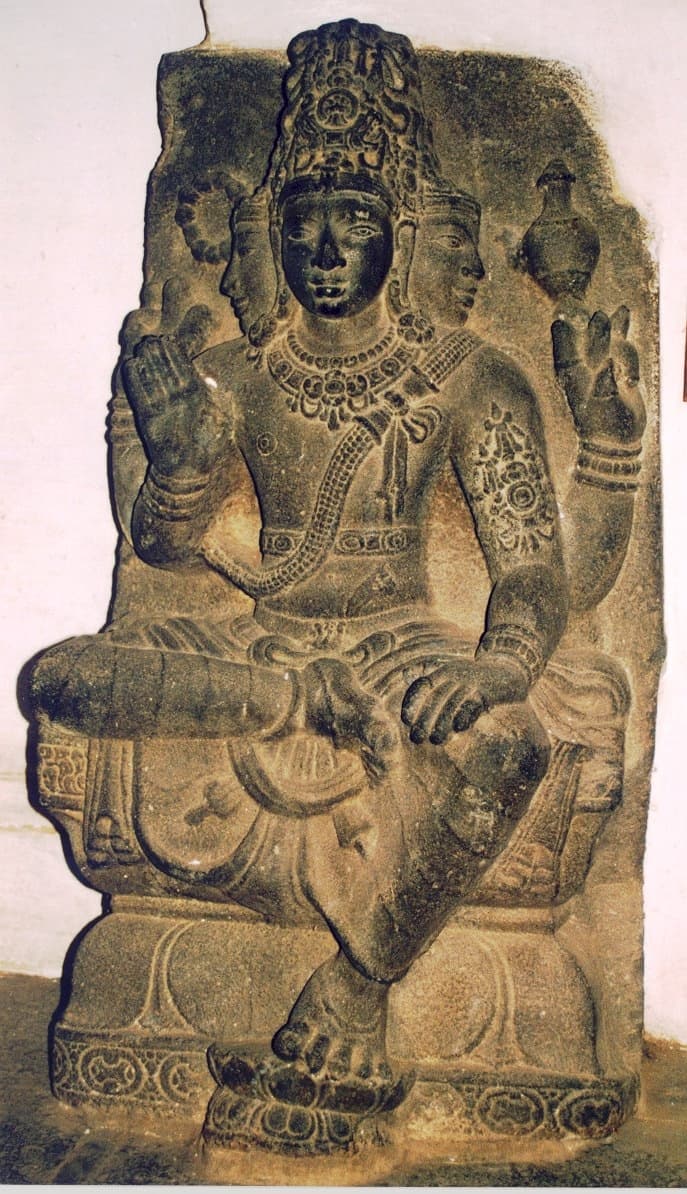
Prajapati
Prajapati is a significant deity in ancient Vedic religion, primarily known as a creator god and often identified with Brahma. The name "Prajapati" translates to "Lord of the people" or "lord of all born beings" and was applied to various figures in Hindu creation myths, including deities like Agni, Indra, and Vishwakarma, as well as celestial sages. In later traditions, Prajapati also represents the metaphysical concept of Brahman as the primordial matter from which creation arises.

Narayana
Narayana is a significant form and epithet of the Hindu deity Vishnu, often depicted in yogic slumber on the cosmic ocean. He symbolizes the masculine principle and is revered as the Supreme Being in Vaishnavism, also known as Purushottama. His name is associated with the primordial waters and his role as the foundation of all existence.

Kushmanda
Kushmanda is a powerful form of the Hindu goddess Mahadevi, revered as the creator of the universe. She is particularly known for her role in liberating the sun's energy for all of creation and is worshipped on the fourth day of the Navaratri festival. Her iconography often depicts her with multiple hands holding various divine weapons and symbols.