
Kushmanda
Kushmanda is a powerful form of the Hindu goddess Mahadevi, revered as the creator of the universe. She is particularly known for her role in liberating the sun's energy for all of creation and is worshipped on the fourth day of the Navaratri festival. Her iconography often depicts her with multiple hands holding various divine weapons and symbols.
Key Facts
- ›Kushmanda is considered the creator of the universe in Hindu mythology.
- ›She is the fourth of the Navadurga, a group of nine forms of the goddess Durga.
- ›Worshipped on the fourth day of Navaratri, a major Hindu festival.
- ›Depicted with eight to ten hands holding significant divine implements.
- ›Her mount is a tiger, symbolizing power and ferocity.
- ›Known for liberating the energy of the Sun to the rest of creation.

Eight To Ten Hands, Trishula, Discus, Sword, Hook, Mace, Bow, Arrow, Two Jars of Amrita, Two Jars of Blood, Abhayamudra Gesture
- Form of Mahadevi
- Considered To Have Emerged From A Sphere of Fire and Light Created By Parvati
Navaratri
Trishula, Discus, Sword, Hook, Mace, Bow, Arrow
About Kushmanda
Kushmanda is a significant form of the Hindu goddess Mahadevi, revered as the primordial creator of the universe. Her name, derived from Sanskrit, translates to 'little hot egg', symbolizing her cosmic generative power. She is particularly celebrated for her role in liberating the sun's energy, which sustains all of creation, and is worshipped on the fourth day of Navaratri, a prominent Hindu festival.
Iconography and Symbolism
Kushmanda's iconography is striking, often depicting her with eight to ten hands. These hands hold a variety of powerful implements, including a trident, discus, sword, hook, mace, bow, and arrow. She also carries two jars, one containing amrita (the nectar of immortality) and the other filled with blood, signifying both sustenance and life force. One hand is often shown in the abhayamudra gesture, offering blessings and protection to her devotees. Her mount is a tiger, an animal that symbolizes her immense power, ferocity, and dominion over the wild.
Mythological Role
According to legend, Kushmanda emerged from a radiant sphere of fire and light created by the goddess Parvati to restore order to the cosmos. This occurred after the sun god Surya was rendered unconscious, plunging the universe into darkness. Kushmanda's appearance helped to revive Surya and re-establish the sun's vital role. In gratitude, Surya requested that Kushmanda reside within the sun, ensuring its continued radiance and directional movement, thus solidifying her connection to cosmic energy and creation.
Source: Wikipedia ↗
Frequently Asked Questions
Who is Kushmanda?
Kushmanda is a form of the Hindu goddess Mahadevi, recognized as the creator of the universe. She is venerated for her role in releasing the sun's energy into the cosmos, making life possible.
When is Kushmanda worshipped?
Kushmanda is specifically worshipped on the fourth day of Navaratri, a significant nine-night festival dedicated to the goddess Durga and her various forms.
What does Kushmanda's name mean?
The name Kushmanda is derived from Sanskrit and literally translates to 'little hot egg'. This name is symbolic of her role in cosmic creation.
How is Kushmanda depicted in iconography?
Kushmanda is typically shown with eight to ten hands, holding a variety of divine weapons and objects. These include a trident, discus, sword, hook, mace, bow, arrow, and jars of amrita and blood. She also displays the abhayamudra gesture, offering blessings.
What is Kushmanda's role in the legend involving Surya?
In a legend, after Surya was rendered unconscious, causing universal darkness, Kushmanda emerged from a sphere of fire and light created by Parvati to restore order. She played a role in reviving Surya and was asked to reside within the Sun to continue providing its radiance.
Related Hindu deities
Prajapati
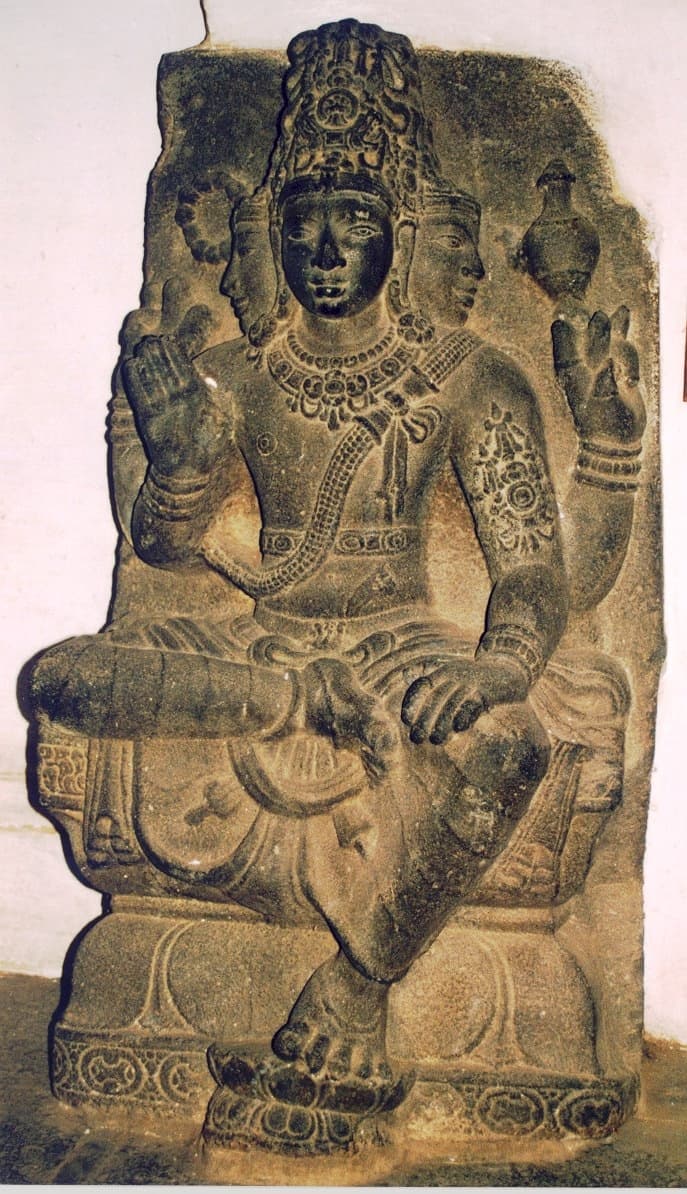
Prajapati is a significant deity in ancient Vedic religion, primarily known as a creator god and often identified with Brahma. The name "Prajapati" translates to "Lord of the people" or "lord of all born beings" and was applied to various figures in Hindu creation myths, including deities like Agni, Indra, and Vishwakarma, as well as celestial sages. In later traditions, Prajapati also represents the metaphysical concept of Brahman as the primordial matter from which creation arises.
Savitr
Savitṛ is a Vedic deity, an Aditya, whose name signifies "impeller" or "vivifier." He is often associated with the Sun, sometimes identified as the divine influence or vivifying power of the Sun, particularly before sunrise. Savitṛ plays a crucial role in creation and is invoked for spiritual progress, bestowing immortality, and upholding cosmic order.

Narayana
Narayana is a significant form and epithet of the Hindu deity Vishnu, often depicted in yogic slumber on the cosmic ocean. He symbolizes the masculine principle and is revered as the Supreme Being in Vaishnavism, also known as Purushottama. His name is associated with the primordial waters and his role as the foundation of all existence.