
Ravananugraha
Ravananugraha depicts a benevolent aspect of the Hindu god Shiva, showing him seated on Mount Kailash with his consort Parvati while the demon-king Ravana attempts to uproot the mountain. Shiva, angered by Ravana's actions, traps him beneath Kailash, where Ravana eventually sings hymns in praise of Shiva and is ultimately forgiven and blessed. This theme is a popular motif in Indian art, dating back to the Gupta-Pallava era.
Key Facts
- ›Ravananugraha represents a benevolent form of Lord Shiva.
- ›The iconography features Shiva and Parvati on Mount Kailash, with Ravana attempting to lift it.
- ›Ravana's attempt to lift Kailash was a consequence of insulting Nandi, Shiva's attendant.
- ›Shiva trapped Ravana under the mountain with his toe and later forgave him.
- ›Ravana's thousand-year penance and hymns to Shiva led to his release and blessings.
- ›The theme has been popular in Indian art since the Gupta-Pallava period.
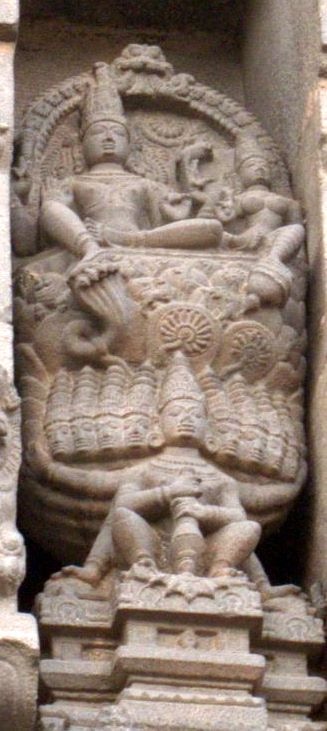
Ravananugraha-murti
- Shiva and Parvati Seated On Mount Kailash
- Ravana Lifting the Mountain
- Shiva With Four Arms, Holding A Trishula
- Parvati Embracing Shiva
- Ravana Depicted With Ten Heads and Multiple Arms
- Mount Kailash Depicted As A Pile of Rocks Or An Elaborate Structure
Ramayana, Tevaram
Consort of Parvati, Son of Ganesha, Son of Kartikeya
Mount Kailash, Gokarna
Ganesha, Kartikeya
Trishula
Bull, Lion
About Ravananugraha
Who is Ravananugraha?
Ravananugraha, also known as Ravananugraha-murti, represents a benevolent aspect of the Hindu god Shiva. This depiction illustrates a dramatic event from Hindu mythology where the demon-king Ravana attempts to uproot Mount Kailash, Shiva's divine abode. The theme highlights Shiva's power and compassion, as he ultimately forgives Ravana after the demon's prolonged penance.
Legend and Significance
The legend, found in scriptures like the Uttara Kanda of the Ramayana, details Ravana's encounter with Shiva's attendant Nandi. After insulting Nandi, Ravana, in a fit of rage, attempts to lift Mount Kailash. Shiva, with a mere press of his toe, traps Ravana beneath the mountain. For a thousand years, Ravana sings hymns of praise to Shiva. Pleased by Ravana's devotion, Shiva eventually releases him and grants him a powerful sword. This narrative emphasizes themes of divine justice, penance, and forgiveness, and the story has been a popular subject in Indian art and sculpture since the Gupta-Pallava era (300–600 CE).
Iconography and Depiction
In artistic representations, Ravananugraha typically shows Shiva and his consort Parvati seated serenely on Mount Kailash, which is often depicted as a multi-tiered structure or a simple pile of rocks. Parvati is often shown clinging to Shiva, fearful of the mountain's tremor. Ravana is depicted below, exerting all his strength to lift the mountain, usually with multiple heads and arms. Shiva, commonly shown with four arms, may hold his trident and offer a gesture of reassurance (abhayamudra) to Parvati. The detailed iconography captures the tension and divine power involved in the event.
Source: Wikipedia ↗
Frequently Asked Questions
What does Ravananugraha mean?
Ravananugraha translates to 'form showing favour to Ravana'. It depicts a benevolent aspect of Lord Shiva related to an event involving the demon-king Ravana.
What is the story behind Ravananugraha?
The legend describes Ravana attempting to lift Mount Kailash, the abode of Shiva and Parvati, in anger. Shiva then pressed the mountain down with his toe, trapping Ravana beneath it for a thousand years. During this time, Ravana sang hymns praising Shiva, who eventually forgave him and granted him blessings.
What is depicted in the iconography of Ravananugraha?
Iconographically, Shiva and Parvati are shown seated on Mount Kailash, often with Parvati clinging to Shiva in fear. Ravana is depicted in the lower register, straining to lift the mountain with his many arms. Shiva is often shown with his trident and in a gesture of reassurance.
What was Ravana's punishment and eventual fate in this legend?
Ravana was trapped under Mount Kailash for a thousand years, causing him immense pain, from which he earned the name 'Ravana' (one who cried). After his penance and hymns, Shiva not only forgave him but also granted him an invincible sword.
Where is the legend of Ravananugraha depicted in art?
The theme of Ravananugraha is popular in Indian art and sculptures. Notable examples include a large relief at the Kailasha Temple of Ellora and a sculpture at the Albert Hall Museum in Jaipur.
Related Hindu deities

Padmanabha
Padmanabha is a form of the Hindu deity Vishnu, prominently featured in the Padmanabhaswamy Temple in Thiruvananthapuram, Kerala. He is depicted in a state of yogic sleep on his serpent mount, Shesha, and is the tutelary deity of the Travancore royal family. The deity is revered as one of the 108 Divya Desams, sacred sites in the Sri Vaishnava tradition.

Nataraja
Nataraja is a depiction of the Hindu deity Shiva as the divine cosmic dancer, known for his tandava dance. This iconic form symbolizes Shiva's cosmic functions of creation, preservation, and destruction, and is widely revered as one of the highest forms of Shiva, particularly in Tamil Nadu. The Nataraja sculpture is a significant symbol of Indian culture and Hindu art, representing the interconnectedness of religion and the arts.
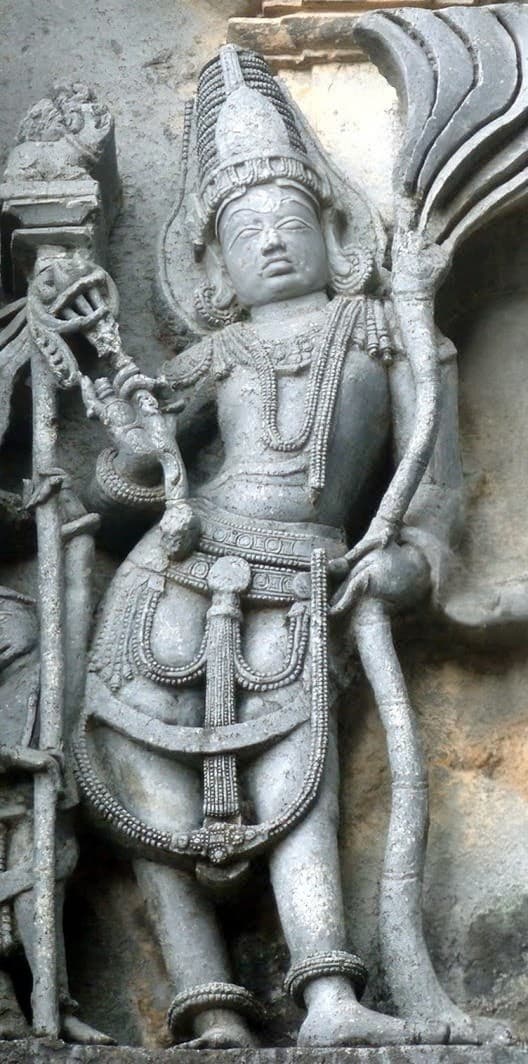
Kamadeva
Kamadeva is the Hindu god of love, attraction, pleasure, and beauty, as well as the personification of kāma (desire). He is depicted as a handsome youth armed with a bow of sugarcane and flower arrows, often accompanied by his consort Rati. Kamadeva's mythology is prominent in the Puranas, where he is known for being incinerated by Shiva's third eye and subsequently reborn as Pradyumna.